
Brown marmorated stink bug
Halyomorpha halys · Stink bugs
A brown, shield-shaped true bug that is a widespread agricultural pest and a common overwintering nuisance in houses.
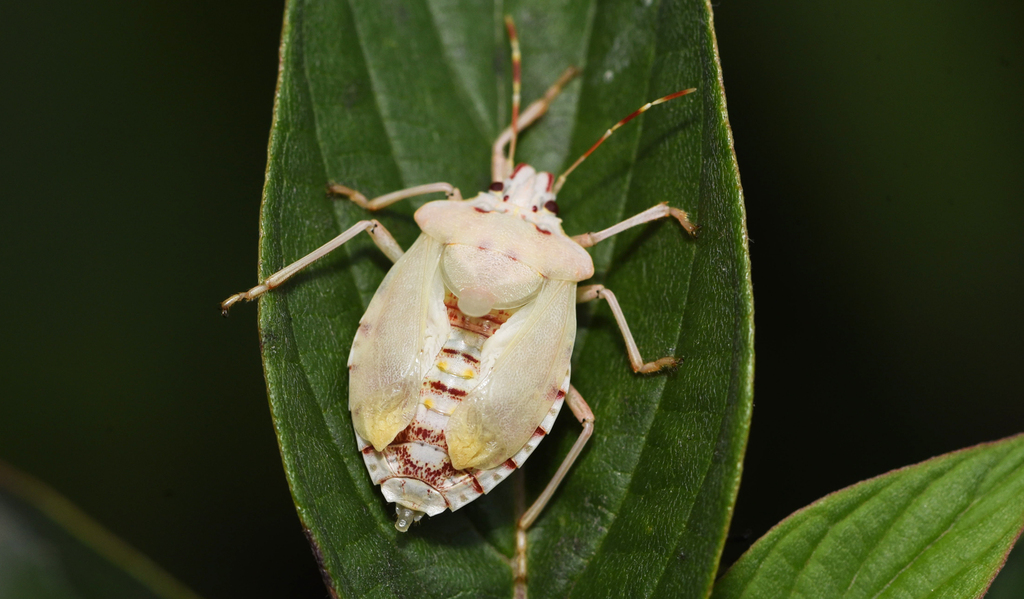
!Is the brown marmorated stink bug dangerous?
Only mildly. Halyomorpha halys is not venomous and does not spread human disease. It can release a strong, unpleasant odor when crushed or handled; this odor can cause nausea or irritation in some people. They may probe human skin with mouthparts but documented biting of people is rare and not medically significant. First aid: wash area with soap and water if handled and avoid crushing the bug to prevent odor.
Pets
Generally harmless to pets. Large numbers may cause mild stomach upset if a pet eats many stink bugs. The odor can be unpleasant but is not known to be toxic to dogs or cats.
📖Overview
Halyomorpha halys is a medium-sized shield-shaped true bug native to East Asia that has become an invasive pest in North America, Europe, and parts of South America. It feeds by piercing plant tissues and sucking sap from many fruit trees, vegetables, and ornamental plants, causing blemishes, deformities and crop losses. In temperate regions adults seek sheltered sites to overwinter and commonly enter buildings in large numbers, where they are a nuisance but not dangerous to people.
Adults produce a characteristic pungent odor when disturbed (hence 'stink bug'). They do not carry venomous bites or transmit human diseases. Management focuses on exclusion from buildings and integrated pest management in crops, including monitoring, targeted insecticides, biological control and sanitation.
🔍How to identify a brown marmorated stink bug
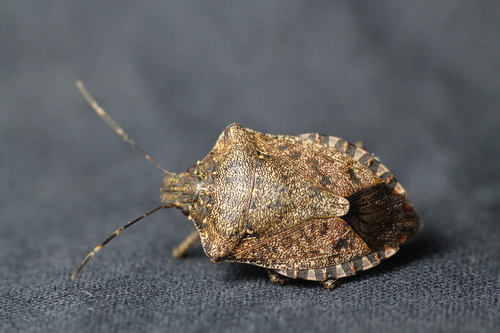
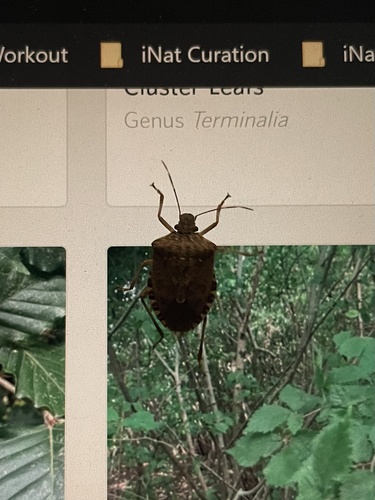
Adult brown marmorated stink bugs are shield-shaped, about 12-17 mm long (some up to 20 mm), and mottled brown with a marbled or 'marmorated' pattern. Key identifying marks are alternating light and dark bands on the outer edges of the abdomen visible from beneath the wings, and conspicuous pale bands on the antennae (usually two pale bands). The pronotum (shoulder area) often has small dark punctures and faint white markings along the margins. Nymphs are wingless for several instars and range from red/orange in early instars to dark mottled in later instars; they lack fully developed wings.
- Shield-shaped body 12-20 mm long with mottled brown 'marmorated' pattern
- Two pale bands on the antennae and alternating light/dark banding along the abdomen edge
- Pronotum with small dark punctures and faint white markings on the lateral margins
- When disturbed adults release a characteristic pungent odor
Lookalikes
Southern green stink bug Nezara viridula
Southern green stink bug is green (not mottled brown) and lacks the distinct pale bands on the antennae seen in Halyomorpha halys.
Brown stink bug Euschistus servus
Euschistus servus is more uniformly brown without the marmorated pattern or the clear alternating pale bands on the antennae; body shape and pronotal markings differ on close inspection.
Other Pentatomidae nymphs Pentatomidae
Nymphs of different stink bug species can look similar; adult antennal banding and abdominal banding are most reliable for Halyomorpha halys identification.
↻Life cycle
Egg
Eggs are laid in clusters (typically 20-30) on the underside of leaves; eggs are barrel-shaped and pale, hatching in about 4-7 days depending on temperature.
Nymph (immature)
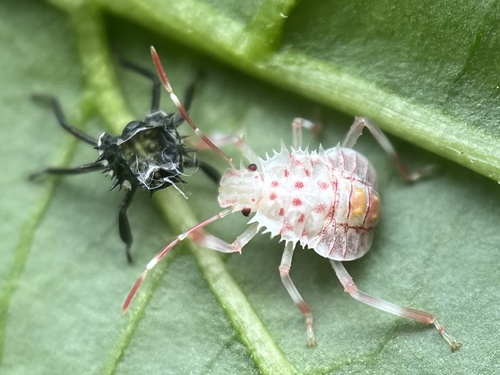
There are five nymphal instars. Early instars are small and often reddish; later instars are larger and mottled brown. Nymphs feed on plant sap and develop over several weeks.
Adult
Adults have fully developed wings and a shield-shaped body. In temperate climates they reproduce in spring-summer; adults disperse in late summer and autumn to find overwintering sites.
🍃Diet and predators
Young eat
Sap from a wide variety of plants: leaves, stems, fruit and seeds of many host species
Adults eat
Polyphagous sap feeder on fruits, seeds, stems and developing plant tissues across many plant families
Predators of the young
Birds, predatory insects (assassin bugs, predatory stink bugs), spiders, and parasitic wasps
Predators of adults
Birds, predatory insects and parasitic wasps; eggs are parasitized by small scelionid wasps (including Trissolcus species)
🌱Effect on plants and gardens
Polyphagous sap feeder; attacks fruit trees (apple, pear, peach), stone fruits, grapes, soybean, corn, vegetables and many ornamentals; feeding causes fruit scarring, catfacing, dimples and reduced marketability.
How to get rid of brown marmorated stink bugs
Seal cracks and openings around windows, doors, eaves and utility lines to keep adults out of buildings. Use screens, door sweeps and weatherstripping. Remove interior bugs with a vacuum (empty bag promptly) rather than crushing. Outdoors in gardens/orchards use integrated pest management: monitoring with pheromone traps, hand-picking, targeted insecticide sprays when economic thresholds are reached, and conservation/introduction of natural enemies (for example Trissolcus parasitoid wasps where appropriate). Sticky traps and light traps can monitor but are not highly effective for control. Always follow label instructions for insecticide use and consider consulting local extension services.
📍Where and when to find it
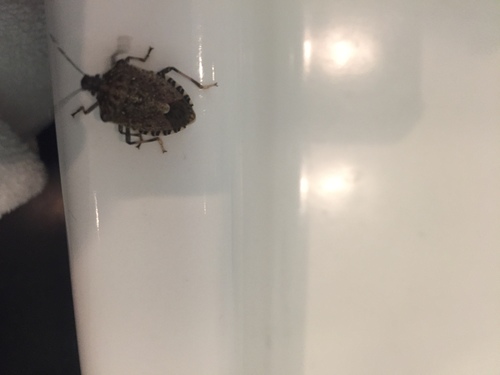
Adults on tree trunks, fruit, leaves and on the exterior of buildings in late summer and autumn; inside houses they gather on windows, walls, attics and eaves. Eggs and nymphs are found on the underside of leaves of host plants.
Best time
Late spring through fall for active feeding; peak nuisance entry late summer to autumn when they seek overwintering sites. Daytime and dusk are best for observing feeding adults.
Observation tips
Look under leaves for egg masses and nymphs. For photographs, approach slowly and use a macro lens; avoid crushing them to prevent odor. For monitoring, use commercially available pheromone traps.
✨Fun facts
- The common name 'marmorated' comes from the marbled or mottled appearance of the bug's back.
- Brown marmorated stink bugs were accidentally introduced outside their native range and became major agricultural pests within decades.
- Researchers are using tiny parasitic wasps (Trissolcus species) as a biological control against Halyomorpha halys in some regions.
?Frequently asked questions
Are brown marmorated stink bugs dangerous?
No — they are not venomous and do not transmit disease. They are a nuisance because they release a strong odor when crushed and can damage crops.
Do brown marmorated stink bugs bite?
Bites on people are very rare. They do not have venomous bites; at most they may probe skin with mouthparts, which can feel like a tiny pinch.
Why is a lot of them in my house in fall?
In autumn adults seek warm, sheltered overwintering sites and often enter houses through cracks, gaps and openings; they can aggregate in walls and attics.
How do I get rid of brown marmorated stink bugs in my home?
Seal entry points, use door sweeps and screens, remove bugs with a vacuum (avoid crushing them) and reduce outdoor lighting at night. Professional exclusion and pest-proofing are effective for large infestations.
How do I control them in orchards and gardens?
Use monitoring (pheromone traps) to detect activity, remove isolated bugs by hand, and apply targeted insecticides only when economic thresholds are reached. Encourage natural enemies and consult local extension recommendations.
Will killing them make my house smell?
Yes — crushing stink bugs releases their defensive odor. Vacuuming or gently capturing them in a container is better to avoid smell.
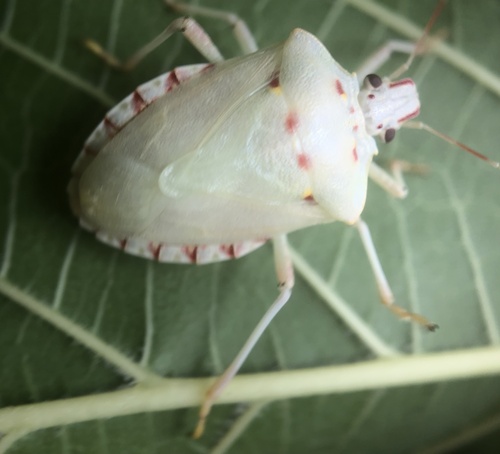
📷Photos of the brown marmorated stink bug
More true bugs
Bites cause itching
Non-toxic
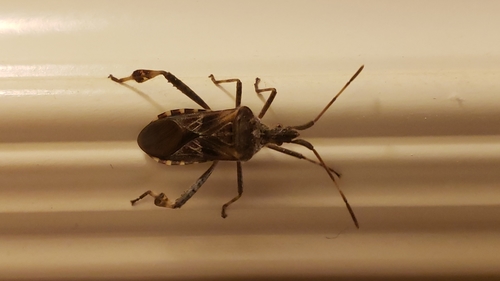
Smelly secretion
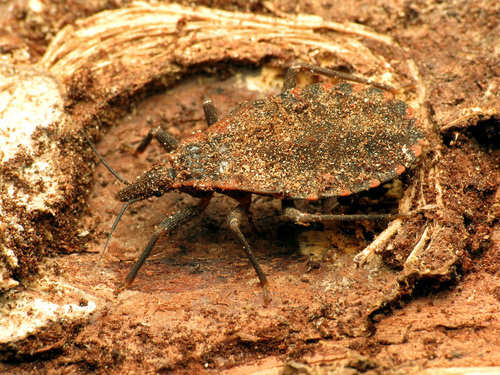
Potential disease vector
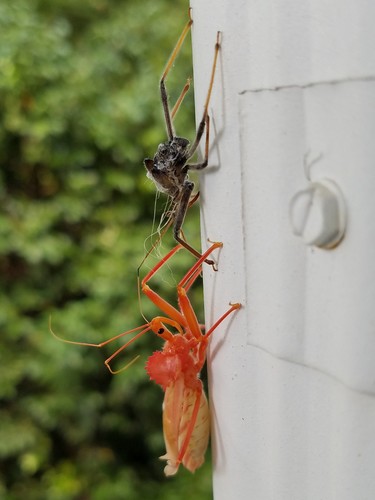
Painful bite
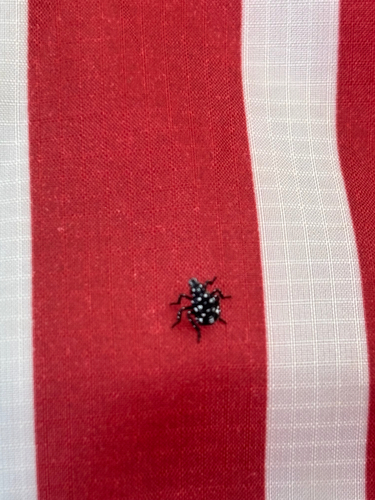
Non-toxic
This guide was written with AI assistance and fact-checked, last updated 2026-10-09. Identification from photos is never certain: don't handle insects you can't identify, and get medical advice for bites, stings or allergic reactions.