
Pharaoh cicada
Magicicada septendecim · Periodical cicadas
A 17-year periodical cicada of eastern North America that emerges in massive, synchronized broods and sings loud daytime choruses.
!Is the pharaoh cicada dangerous?
No. Pharaoh cicadas are not venomous and do not sting. They do not bite people except in rare cases where a cicada is handled roughly; any bite would be superficial. The main nuisance is very loud mating calls that can be stressful or temporarily uncomfortable at close range. If noise is a problem, move indoors or use ear protection.
Pets
Generally harmless to pets. Pets may try to eat cicadas; small numbers are usually not dangerous, but large amounts could cause vomiting or gastrointestinal upset. Supervise pets and discourage consumption of many insects at once.
📖Overview
Magicicada septendecim is one of the classic periodical cicadas of eastern North America, notable for its 17-year life cycle and extremely synchronous emergences in large broods. Nymphs spend the long juvenile phase underground feeding on xylem from tree roots; adults emerge in late spring and early summer, mate, and die within weeks. Males form noisy choruses to attract females; the mass emergence strategy overwhelms predators by sheer numbers.
🔍How to identify a pharaoh cicada
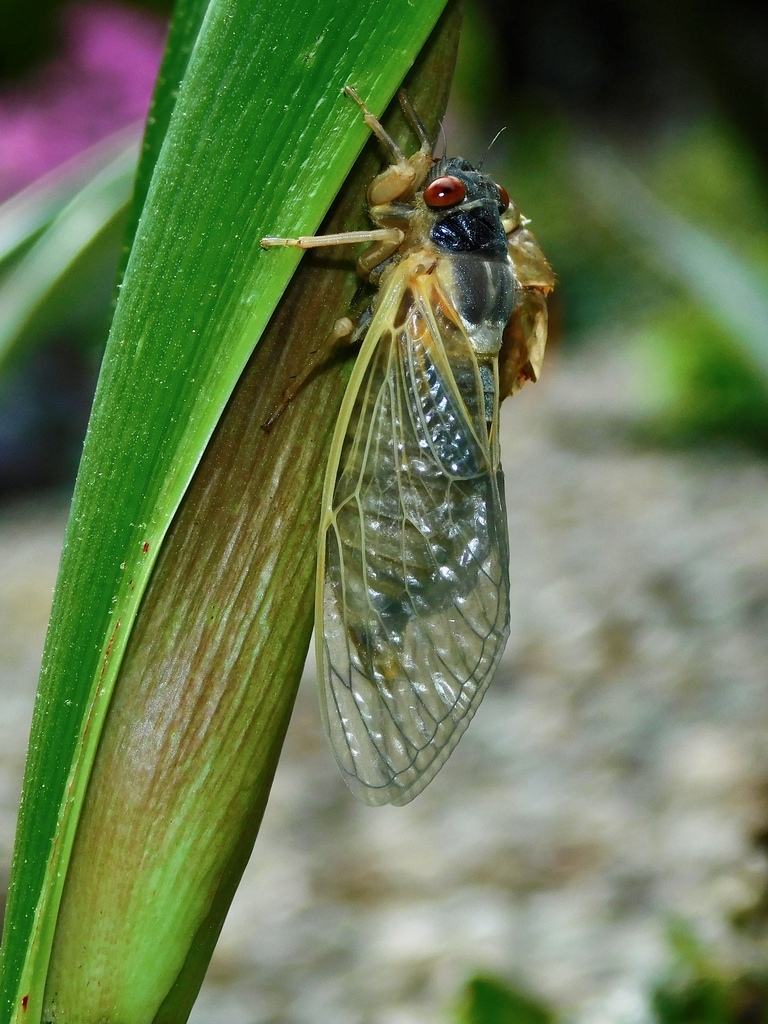
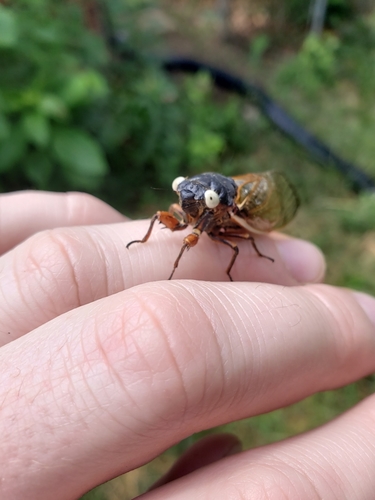
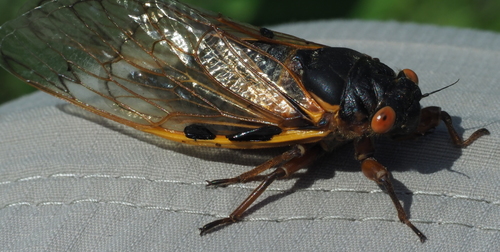
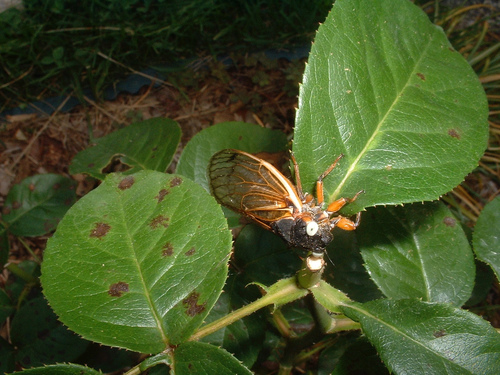
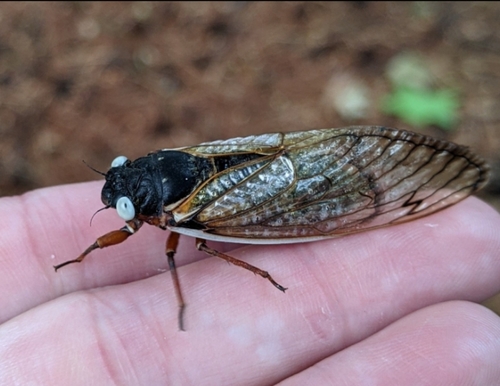
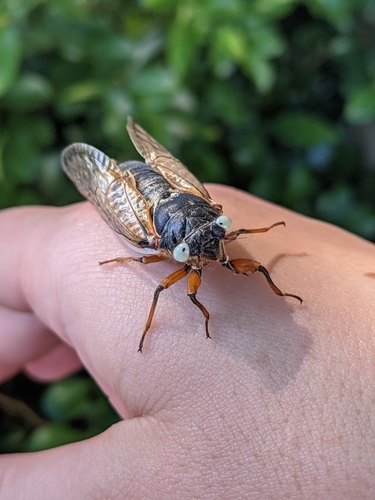
Adults are medium-sized cicadas with a stout black body, prominent red eyes, and translucent wings with orange to brown veins. The dorsal surface is mostly black; the abdomen can show orange or reddish markings in some individuals. Males and females look similar externally, though males have tymbals (sound-producing structures) and a more rounded abdomen while females have an ovipositor for egg-laying.
- Emergence years: appears in large, synchronized broods every 17 years (check local brood maps).
- Red eyes and mostly black body with orange vein-highlighted translucent wings.
- Males produce a distinctive low, buzzy 'phar-aoh' call lasting 1-3 seconds, heard in loud daytime choruses.
- Size about 25-35 mm body length with 60-80 mm wingspan; visible tymbals on males.
Lookalikes
Cassin's 17-year cicada Magicicada cassini
Slightly smaller, with an all-black abdomen underside (M. septendecim has broad orange bands underneath) and a different song: a series of clicks followed by a buzz. Its 13-year counterpart is M. tredecassini.
Little 17-year cicada Magicicada septendecula
Smaller, with narrow orange bands on the abdomen underside and a rhythmic ticking song; song, size and abdominal markings are the most reliable ways to separate it.
↻Life cycle
Egg
Laid in slits cut into small twigs by the female's ovipositor; eggs hatch in 6-10 weeks into tiny nymphs.
Nymph (underground juvenile)
Nymphs drop to the ground, burrow, and feed on root fluids for about 17 years (duration varies for some broods) before emerging synchronously as adults.
Adult (imago)
Adults emerge, climb vegetation, molt to the winged form, mate, and die within a few weeks. Males produce loud songs to attract females.
🍃Diet and predators
Young eat
Xylem fluids from the roots of trees and woody plants
Adults eat
Xylem fluids from twigs and branches; adults feed occasionally but do not cause major tissue loss
Predators of the young
Burrowing mammals and other subterranean predators take some nymphs; fungal pathogens (e.g., Massospora) also affect nymphs and adults.
Predators of adults
Birds, small mammals, reptiles, amphibians, predatory insects and spiders; predator impact is reduced by the cicadas' mass emergence strategy.
🌱Effect on plants and gardens
Nymphs feed on xylem fluids from roots without killing healthy mature trees. Females cut slits in small twigs to lay eggs; heavy egg-laying can cause 'flagging' (dying tips) on young or small branches and can harm saplings and nursery stock.
How to get rid of pharaoh cicadas
Protect young trees and orchard stock with fine netting or hardware cloth around branches during emergence. Delay planting new saplings until after a brood year if possible. Prune and remove dead twig tips after emergence. Chemical controls are generally unnecessary and impractical at landscape scale; consult local extension services for specific recommendations in orchards.
📍Where and when to find it
Look on trunks, branches and leafed vegetation during the day in wooded yards and forests; nymphs are underground and visible only where they emerge and molt on stems or posts.
Best time
Late spring to early summer in scheduled brood years (May-July), usually during warm daytime hours.
Observation tips
Listen first for the male choruses to locate aggregations; approach quietly and photograph adults on tree trunks or leaves. Photograph freshly molted adults on vertical surfaces for clear shots of colors and the molt.
✨Fun facts
- Periodical cicadas like M. septendecim spend most of their lives underground and only appear above ground in massive numbers during emergence years.
- Their synchronized emergences are an evolutionary strategy called 'predator satiation'—predators cannot eat enough cicadas to significantly reduce their numbers.
- Their loud choruses can reach near 100 decibels at close range, produced by specialized structures called tymbals on males.
?Frequently asked questions
Are Pharaoh cicadas dangerous?
No — they are not venomous or aggressive. They do not sting and rarely bite; the main issue is loud noise and potential twig damage to young trees.
Do Pharaoh cicadas bite?
Bites are very rare and incidental. They are not a biting pest for people.
Why are there so many cicadas in my yard?
Magicicada septendecim emerges in huge, synchronous broods every 17 years. If a local brood is scheduled to emerge, thousands can appear at once in suitable habitat.
How do I protect my young trees from cicadas?
Cover small trees and nursery stock with fine netting or hardware cloth (1 cm mesh or finer) before emergence and keep it in place until all adults have died (2-6 weeks). Prune any twig damage after emergence.
Will cicadas harm my garden or fruit trees?
Mature trees usually tolerate cicadas with little lasting harm. Heavy egg-laying can damage small branches or saplings; orchards and nurseries should use protective measures.
📷Photos of the pharaoh cicada
More true bugs
Bites cause itching
Non-venomous nuisance
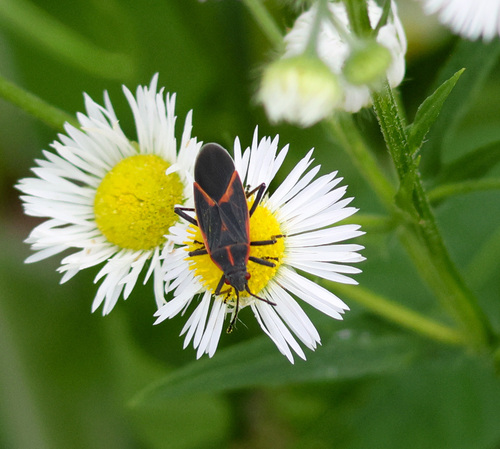
Non-toxic
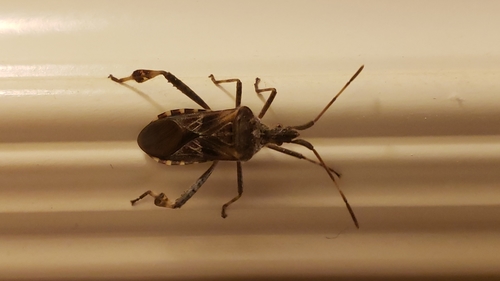
Smelly secretion
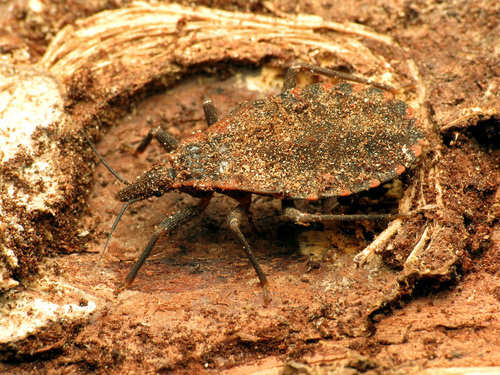
Potential disease vector
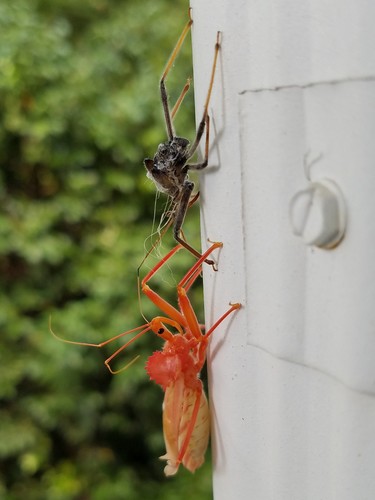
Painful bite
This guide was written with AI assistance and fact-checked, last updated 2026-10-09. Identification from photos is never certain: don't handle insects you can't identify, and get medical advice for bites, stings or allergic reactions.