
Green stink bug
Chinavia hilaris · Shield bugs
A bright green, broad-bodied shield bug common in North America that feeds on many crops and emits a strong odor when disturbed.
!Is the green stink bug dangerous?
Only mildly. Green stink bugs are not venomous and rarely bite people. They can produce a strong, unpleasant odor when handled or crushed; contact with the scent may cause mild skin or eye irritation in sensitive people. If a bite occurs it is usually a minor pinch-like wound; wash the area with soap and water and apply a cold compress if needed.
Pets
Generally not toxic to pets, though the odor may be unpleasant. Pets that mouth or eat many stink bugs may vomit or have transient stomach upset.
📖Overview
Chinavia hilaris is a medium-sized shield bug (stink bug) native to North America. Adults and nymphs use piercing-sucking mouthparts to feed on plant juices from fruits, seeds, pods and stems. When threatened or crushed they release a noticeable odor from scent glands. They are agricultural and garden pests on a wide range of plants but are not dangerous to humans beyond the unpleasant smell and occasional minor bite.
🔍How to identify a green stink bug
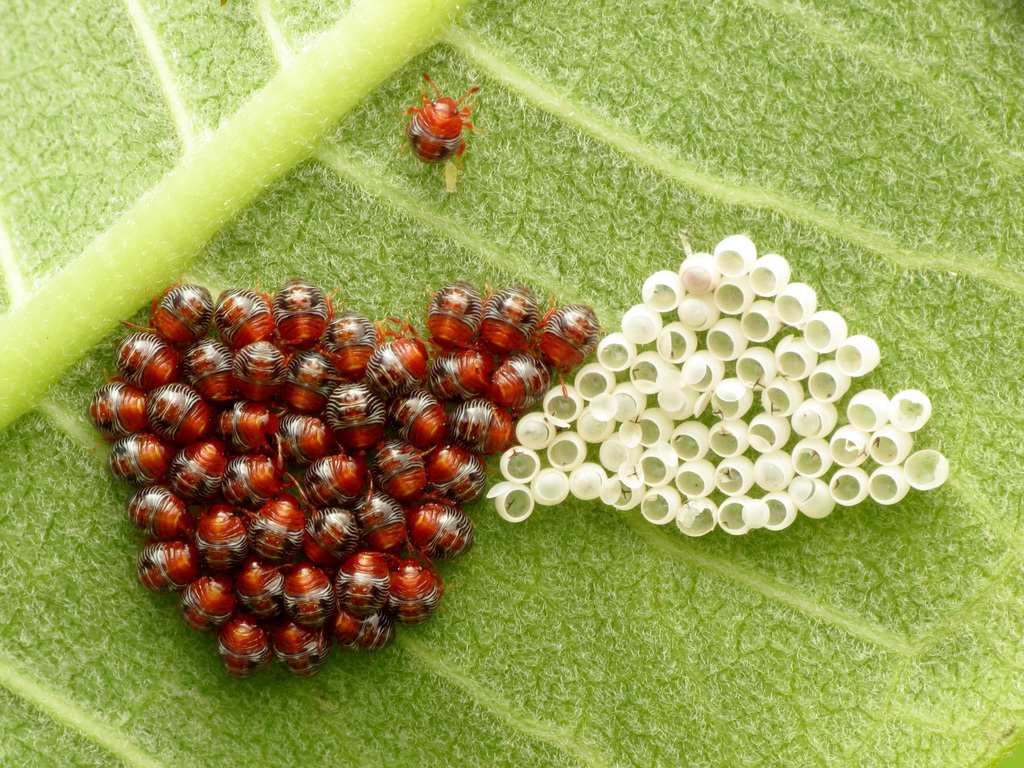
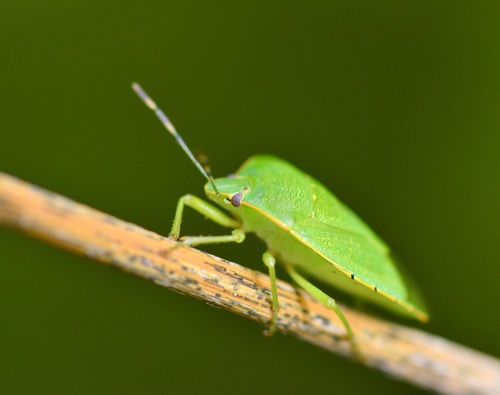
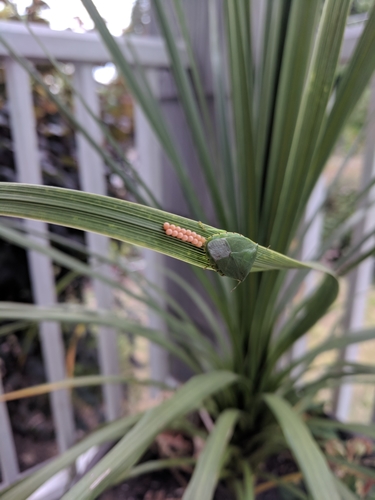
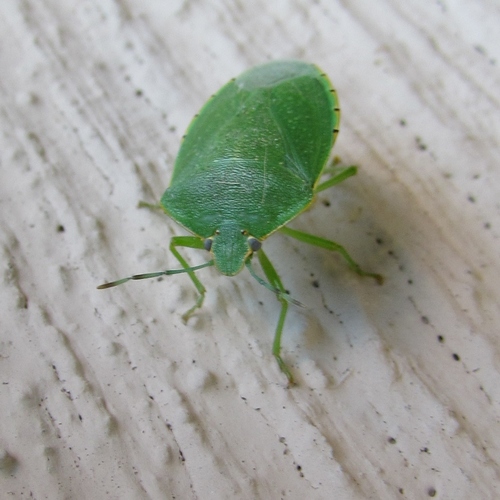
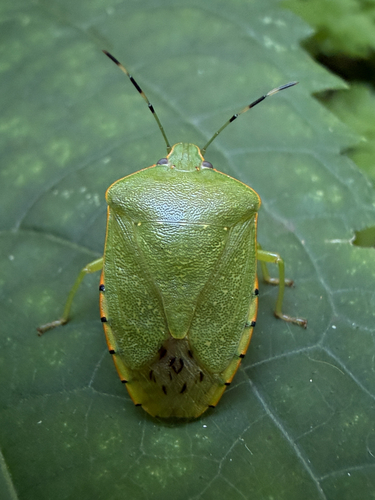
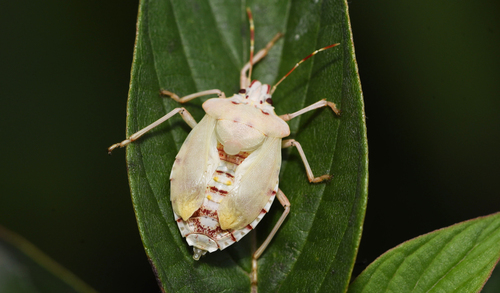
Adults are broadly oval, shield-shaped and uniformly bright green; they have a smooth, slightly convex dorsal surface and long antennae with dark terminal segments. The scutellum (triangular plate on the back) is large and reaches well toward the rear. Nymphs are wingless, later instars are green and resemble adults but paler and with developing wing pads. Eggs are barrel-shaped and laid in tight clusters on the undersides of leaves.
- Uniform bright green, shield-shaped body with a large triangular scutellum reaching toward the rear
- 10-18 mm long adults with long antennae often having darker terminal segments
- Egg clusters on leaf undersides and green nymphs that resemble small wingless adults in later instars
Lookalikes
Southern green stink bug Nezara viridula
Nezara viridula usually shows three to five small pale spots along the front edge of the scutellum and has pale (not black) breathing pores (spiracles) on the underside of the abdomen; it is most common in the southern United States.
Red-shouldered stink bug Thyanta custator
Smaller (about 9-11 mm) and often shows a reddish or pinkish band across the pronotum between the 'shoulders'; Chinavia hilaris is larger and uniformly bright green.
↻Life cycle
Egg
Barrel-shaped eggs laid in clusters on the underside of leaves; eggs hatch in about 4-7 days depending on temperature.
Nymph (five instars)
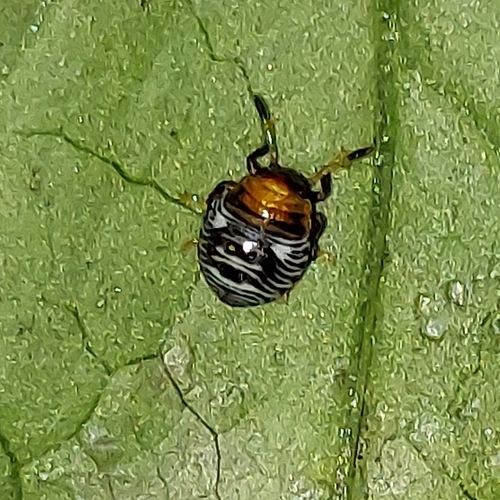
Wingless immature stages that grow through five molts. Early instars are small and somewhat rounded; later instars are green and resemble adults but lack full wings.
Adult (imago)
Winged, reproductively mature shield-shaped insect. Adults mate and females lay egg clusters; adults may overwinter in sheltered sites.
🍃Diet and predators
Young eat
Plant sap from fruits, seeds, stems and developing tissues of host plants
Adults eat
Plant sap from fruits, seeds, stems and developing tissues of host plants
Predators of the young
Parasitic wasps that attack eggs (for example Trissolcus species), predatory bugs, spiders and birds
Predators of adults
Birds, small mammals, predatory insects and spiders; some parasitoids and pathogens can infect adults
🌱Effect on plants and gardens
Feeds on a wide range of crops and garden plants including tomatoes, peppers, soybeans, corn, cotton, fruits (apple, peach, pear), and many ornamentals. Feeding can cause blemishes, deformed fruit, discoloration around feeding sites and reduced yield.
How to get rid of green stink bugs
Use exclusion (fine mesh screens, row covers) to protect high-value plants; hand-pick and drop into soapy water for small infestations. Remove weeds and alternate host plants that support populations. Natural enemies (parasitic wasps, birds) help suppress numbers. For severe outbreaks, targeted insecticides labeled for stink bugs (follow label instructions) may be used; insecticidal soaps and pyrethroid products have variable effectiveness. Avoid broad-spectrum pesticides that harm beneficial insects when possible.
📍Where and when to find it
Look on the leaves, fruit and stems of host plants; egg clusters on undersides of leaves; nymphs on the same plants as adults.
Best time
Spring through early fall; daytime on warm sunny days when adults are active.
Observation tips
Photograph dorsal view for identification, check leaf undersides for egg masses, and avoid handling to prevent release of odor.
✨Fun facts
- Stink bugs get their common name from scent glands that release a foul-smelling chemical when threatened.
- Adults overwinter in sheltered spots such as leaf litter and occasionally wander into buildings in autumn.
- Egg parasitoids such as tiny wasps can dramatically reduce stink bug populations in some years.
?Frequently asked questions
Do green stink bugs bite?
They rarely bite people; bites are uncommon and produce only a minor pinch-like sensation when they do.
Are green stink bugs dangerous to humans?
No, they are not venomous or disease vectors. The main concern is the unpleasant odor they release and potential mild irritation if crushed on skin or near the eyes.
Why is a green stink bug in my house?
Adults sometimes wander indoors in warm weather or in autumn seeking sheltered overwintering sites. They are attracted to light and warm sunny walls.
How do I get rid of green stink bugs in my home?
Try to catch them gently and drop them into soapy water. Seal entry points (around windows, doors and vents) and use screens. Avoid crushing them indoors to prevent odor.
How do I control them in my garden or crops?
Monitor plants for egg masses and nymphs and remove by hand if practical. Encourage natural enemies, remove nearby weed hosts, and use targeted insecticides only when necessary and according to label directions.
📷Photos of the green stink bug
More true bugs, cicadas & aphids
Bites cause itching
Non-venomous nuisance
Non-toxic
Smelly secretion
Potential disease vector
Painful bite
This guide was written with AI assistance and fact-checked, last updated 2026-10-10. Identification from photos is never certain: don't handle insects you can't identify, and get medical advice for bites, stings or allergic reactions. More about the green stink bug: iNaturalist, Wikipedia.