
Leafhopper assassin bug
Zelus renardii · Assassin bugs
A slender predatory true bug that ambushes leafhoppers and other small insects on plants; can deliver a painful bite to people.
!Is the leafhopper assassin bug dangerous?
Only mildly. Zelus renardii is not aggressive toward people but will bite if handled or trapped against skin. Bites are painful, can cause local swelling, redness and itching, and in rare cases a stronger allergic reaction. Clean the area, apply cold compress and topical antiseptic; seek medical advice if swelling or systemic symptoms occur.
Pets
Unlikely to harm pets in normal situations. A bite to small pets or to a sensitive area could be painful; observe the animal for local swelling or distress and consult a veterinarian if concerned.
📖Overview
Zelus renardii is a predatory hemipteran (assassin bug) that hunts on vegetation, especially where leafhoppers and other small, soft-bodied insects are common. Adults and nymphs are active daytime ambush predators that use a sticky secretion from their legs and a piercing-sucking rostrum to subdue prey. Native to western and southwestern North America and Central America, Z. renardii has been introduced to Hawaii, parts of the Mediterranean region and other areas.
These bugs are considered beneficial in gardens and agricultural settings because they eat pest insects, but they will defend themselves if handled and can give a painful bite that may cause localized swelling or an allergic reaction in sensitive people. They are most often found on shrubs, herbaceous plants and crop foliage where leafhoppers and other prey are abundant.
🔍How to identify a leafhopper assassin bug
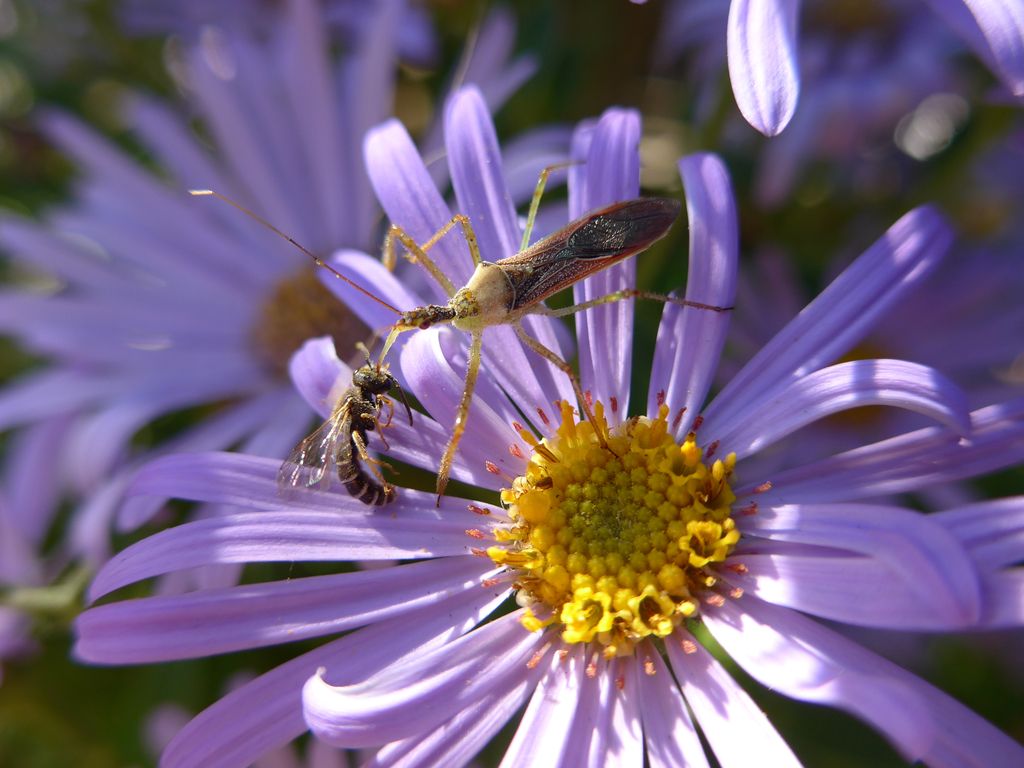
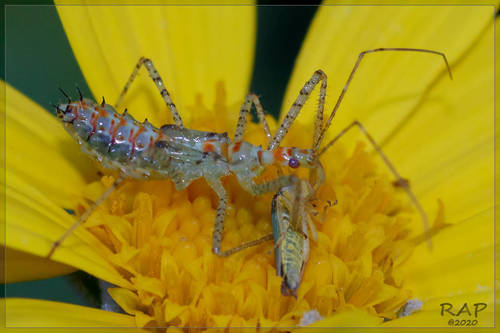
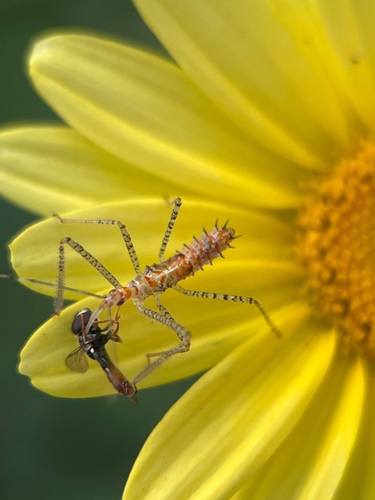
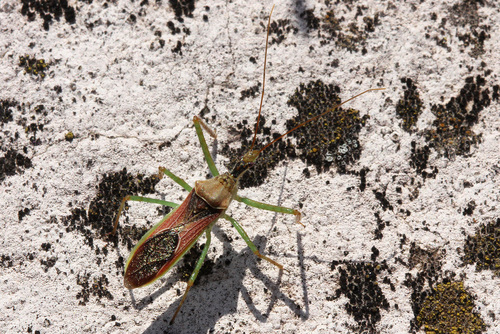
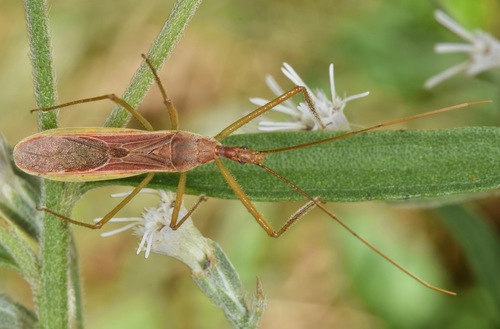
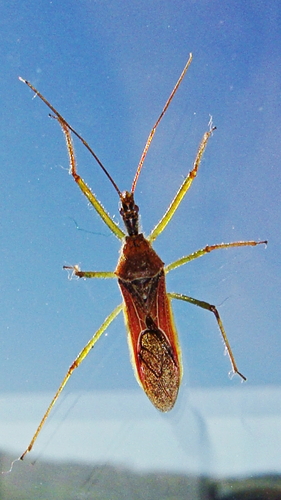
Adults are elongated, somewhat stick-like bugs with a narrow head, a long straight proboscis (rostrum) folded under the body when not feeding, and long legs. They may be green, yellow-green, brown or reddish depending on age and population. Adults are typically about 12-15 mm long. Nymphs are wingless and resemble adults in shape but are smaller and often more brightly colored; they go through several moults before reaching the winged adult stage.
- Slender, elongated body with long legs and a distinct curved rostrum folded under the head
- Adults 12-15 mm long, coloration pale green, brown or reddish depending on specimen and age
- Nymphs are wingless and similar in shape but smaller; often found on the same plants as leafhopper prey
- Behaviour: often sits motionless on foliage waiting to ambush small, quick jumping insects like leafhoppers
Lookalikes
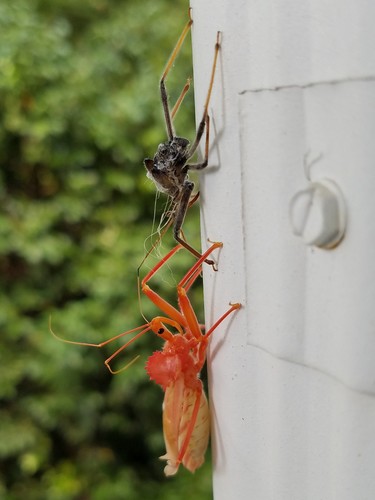
Milkweed assassin bug Zelus longipes
Zelus longipes is usually more boldly marked with red/orange and black, and occurs mainly in the southeastern US; Z. renardii is plainer green to brown and mainly western.
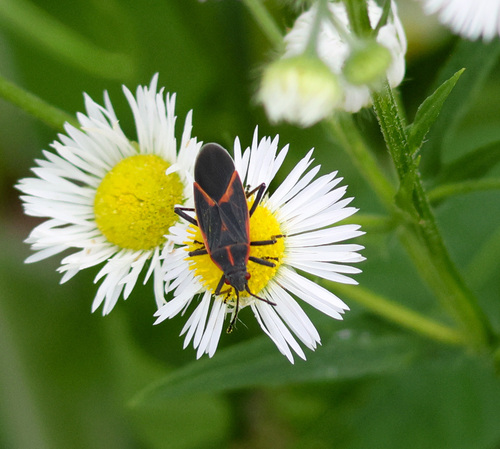
Milkweed bug Oncopeltus spp.
Milkweed bugs (Oncopeltus) are seed-feeding Lygaeidae with broader, less elongated bodies and different mouthpart structure; they do not behave as ambush predators.
↻Life cycle
Eggs
Laid in small clusters on stems or leaves, coated with a sticky, glue-like secretion. Eggs hatch into nymphs after days to weeks depending on temperature.
Nymph (juvenile)
Several wingless instars that look like small adults; actively hunt prey and molt multiple times before becoming adults.
Adult
Winged, sexually mature stage that continues to hunt and reproduce; adults may persist for weeks to months and produce multiple generations in warm climates.
🍃Diet and predators
Young eat
Small arthropods such as leafhoppers, aphids, small caterpillars and other soft-bodied insects
Adults eat
Same as juveniles — a wide range of insect prey; capture method involves piercing and injecting enzymes, then sucking out fluids
Predators of the young
Spiders, predatory wasps, birds and other insectivores
Predators of adults
Birds, larger predatory insects and spiders; parasitic wasps and pathogens can also affect populations
🌱Effect on plants and gardens
Zelus renardii hunts on plant foliage and does not feed on plants; it helps control leafhoppers, aphids, caterpillars and other small arthropod pests.
📍Where and when to find it
Search on leaves and stems of shrubs, ornamentals and crops where leafhoppers and other small insects feed. Eggs are on stems and underside of leaves; nymphs and adults on foliage.
Best time
Spring through autumn in temperate regions; daytime is best for observing active hunting behaviour.
Observation tips
Look for motionless bugs on leaves that spring to capture jumping prey; use a macro lens or get close from the side to capture the elongated profile and rostrum.
✨Fun facts
- Assassin bugs immobilize prey using toxic saliva that liquefies internal tissues for easy feeding.
- Adults and nymphs coat their front legs with a sticky resin-like substance that helps them hold struggling prey.
- Because they eat many crop pests, assassin bugs are considered helpful biological control agents in gardens.
?Frequently asked questions
Do leafhopper assassin bugs bite?
Yes — they can deliver a painful defensive bite if handled or pressed against skin. Avoid handling them with bare hands.
Are leafhopper assassin bugs dangerous to people?
Only mildly. They have no life-threatening venom, but bites are painful and can cause local swelling or allergic reactions in sensitive individuals.
Why is this bug on my houseplants or garden plants?
They hunt where prey is abundant. If you have lots of leafhoppers, aphids or other small insects, Z. renardii will patrol the leaves looking for food.
How can I get rid of leafhopper assassin bugs?
Because they are beneficial predators, control is usually unnecessary. To remove an individual, gently coax it into a jar or use a stick; wear gloves if you must handle. For heavy infestations, insecticidal soaps or targeted insecticides will reduce numbers but also kill beneficials.
Will they harm my pets or children?
They do not seek out people or pets, but if a small child or pet grabs one it may bite. Supervise interactions and teach not to handle insects; seek medical or veterinary advice if a significant reaction occurs.
📷Photos of the leafhopper assassin bug
More true bugs, cicadas & aphids
Bites cause itching
Non-venomous nuisance
Non-toxic
Smelly secretion
Potential disease vector
Painful bite
This guide was written with AI assistance and fact-checked, last updated 2026-10-10. Identification from photos is never certain: don't handle insects you can't identify, and get medical advice for bites, stings or allergic reactions. More about the leafhopper assassin bug: iNaturalist, Wikipedia.