
Milkweed assassin bug
Zelus longipes · Assassin bugs
A long-legged, predatory assassin bug that sits on milkweed and other plants to ambush and capture insect prey using sticky forelegs.
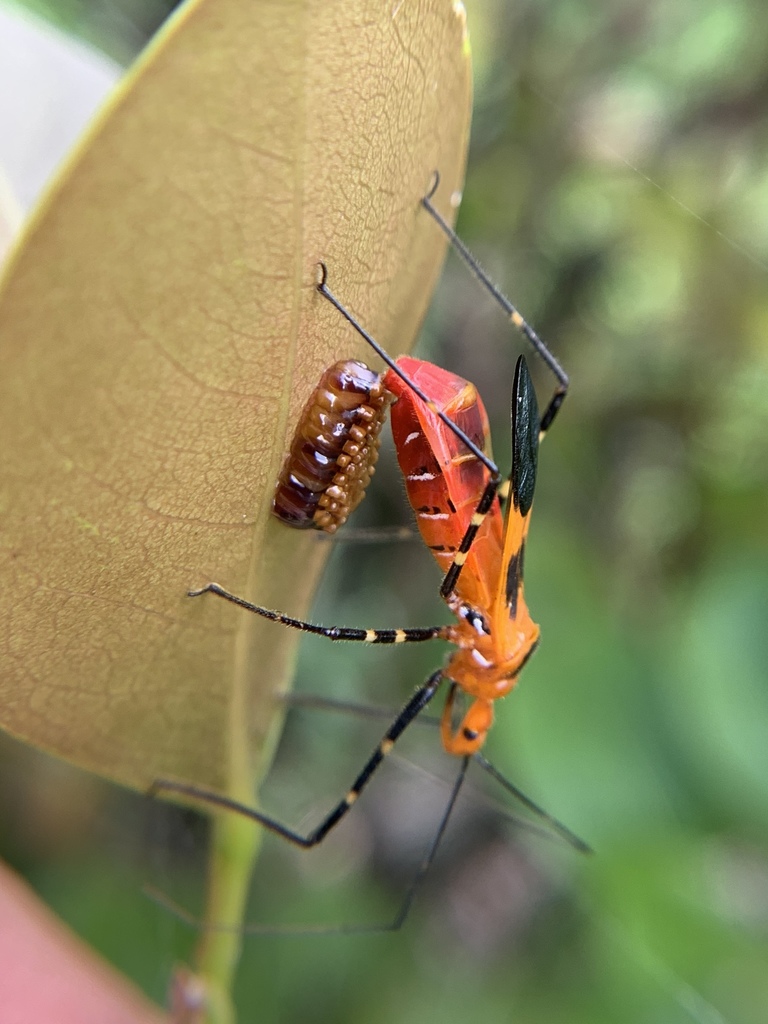
!Is the milkweed assassin bug dangerous?
Only mildly. Will bite if mishandled; bite can be painful and may cause localized swelling, redness and itching. Serious systemic reactions are rare but possible in allergic individuals. First aid: clean the site with soap and water, apply a cold pack for pain and swelling, and seek medical help if severe pain, spreading redness, difficulty breathing or other signs of an allergic reaction occur.
Pets
Not normally dangerous to pets; a bite could be painful if a small pet mouths one. No widespread reports of severe toxicity to dogs or cats.
📖Overview
Zelus longipes is a species of assassin bug (family Reduviidae) that commonly perches on milkweed and assorted herbaceous plants to ambush insects. It is a useful predator in gardens and agricultural settings because it feeds on many pest insects, including caterpillars and beetle larvae. Adults and nymphs are active in warm months and capture prey with forelegs coated in a sticky secretion that helps subdue victims. They can deliver a painful bite if handled, but they are not known to be medically dangerous to humans beyond localized pain and possible swelling or allergic reaction.
🔍How to identify a milkweed assassin bug
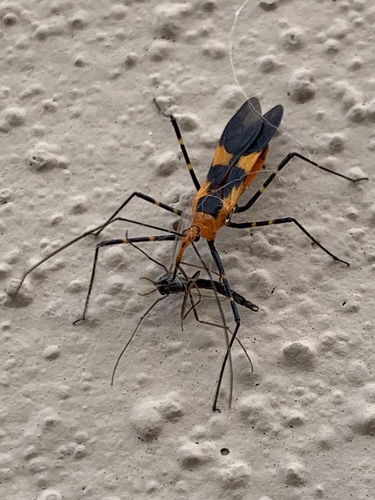
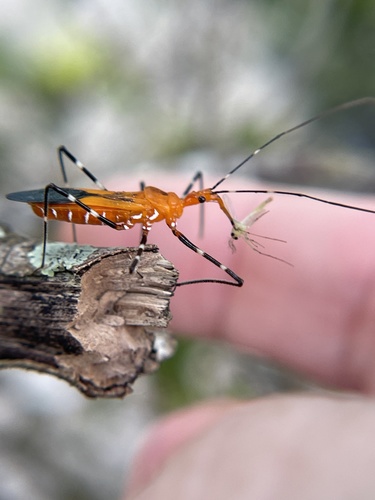
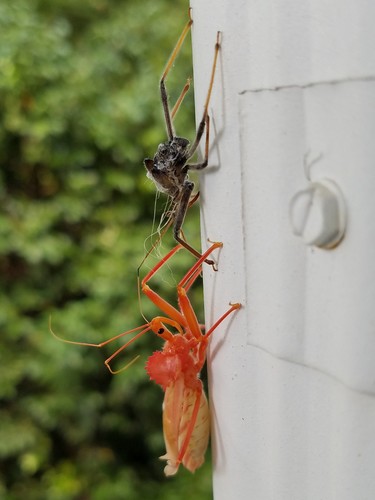
Adults are slender, elongated true bugs with long legs and an elongated head and beak (rostrum). Typical adult body length is around 12-22 mm. Body and legs are often orange to reddish or brownish, sometimes with darker banding on the abdomen or wings depending on age and locality. The forelegs are raptorial and often appear slightly thicker than the other legs; they may carry visible sticky material when hunting. Wings rest folded over the abdomen in adults; nymphs are wingless and more uniformly orange or red.
- Long, slender body 12-22 mm with very long legs, especially the hind legs
- Raptorial forelegs often appear slightly thicker and may show sticky residue used for catching prey
- Orange to reddish-brown coloration with possible darker markings on the abdomen or wings
- Elongated head and a short, three-segmented rostrum (beak) typical of assassin bugs
Lookalikes
Leafhopper assassin bug Zelus renardii
Zelus renardii is similar but tends to have different leg and body coloration and a slightly different geographic range; microscopic and genital characters are used for certain identification.
Orange assassin bug Various Zelus spp.
Several Zelus species are orange/red; confirm by size, patterning and locality—Z. longipes often larger and frequently found on milkweed in its range.
↻Life cycle
Egg
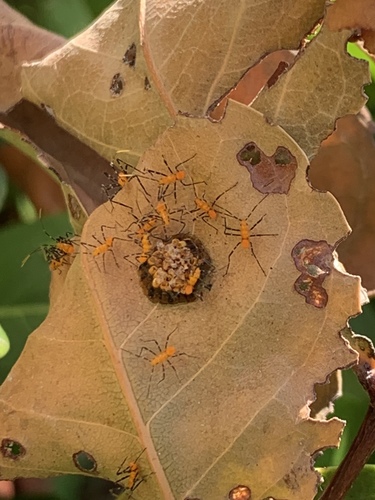
Females lay clusters of eggs on stems or leaves; eggs hatch in warm weather.
Nymph (immature)
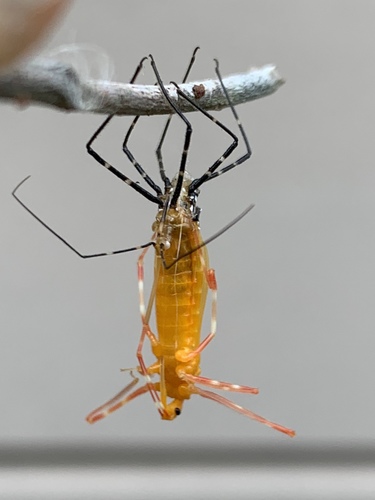
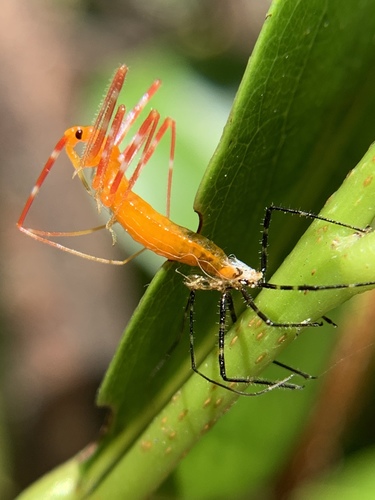
Nymphs resemble small wingless adults, are often orange-red, go through five instars, and are active predators from early instars onward.
Adult
Winged predators capable of flight; adults continue hunting and reproduce. There is no pupal stage because they undergo incomplete metamorphosis.
🍃Diet and predators
Young eat
Small insects and other arthropods captured with raptorial forelegs; includes aphids, small caterpillars, flies and other soft-bodied prey.
Adults eat
Larger arthropods such as caterpillars, beetles, leafhoppers and other true bugs; they pierce prey with their rostrum and inject enzymes to liquefy tissues.
Predators of the young
Spiders, predatory insects, small birds and parasitic wasps
Predators of adults
Birds, larger predatory insects and spiders, and parasitoids
🌱Effect on plants and gardens
Does not feed on plants; preys on insect herbivores including caterpillars, beetles and true bugs, so it is generally beneficial for gardens and some crops.
📍Where and when to find it
Look on milkweed stems and leaves, garden plants, flowers and low shrubs. Nymphs are found on the same plants hunting smaller prey; eggs on stems or underside of leaves.
Best time
Warm months (spring through early autumn in temperate zones), during daylight hours when they hunt actively.
Observation tips
Approach slowly and photograph from a distance; use a macro lens for detail. Wear gloves if you need to handle plants with egg masses or visible bugs.
✨Fun facts
- Milkweed assassin bugs use a sticky secretion on their forelegs to trap struggling prey, a rare hunting method among hemipterans.
- Although commonly seen on milkweed, they do not feed on the plant or the toxic milkweed compounds; they use milkweed simply as a hunting perch.
- Both nymphs and adults are effective predators and can help control pest caterpillars in gardens.
?Frequently asked questions
Do milkweed assassin bugs bite?
Yes. They will bite if handled or provoked. Bites are painful and can cause localized swelling; seek medical care if there are signs of an allergic reaction.
Are milkweed assassin bugs dangerous?
They are not considered medically dangerous to most people. Bites are painful but rarely cause serious systemic problems. Allergic individuals should be cautious.
Why is this bug on my milkweed?
Milkweed provides flowers and foliage that attract many insects. Zelus longipes uses milkweed as a perch to ambush prey such as caterpillars, aphids and flies.
How can I get rid of milkweed assassin bugs?
Best approach is avoidance: do not handle them with bare hands. If control is necessary, remove egg masses by hand with gloves, or use targeted insecticides following label directions. Because they are beneficial predators, consider tolerating them if they are helping control pests.
Will they harm my plants or crops?
No. They prey on plant-feeding insects and are generally beneficial in gardens and crops.
📷Photos of the milkweed assassin bug
More true bugs, cicadas & aphids
Bites cause itching
Non-venomous nuisance
Non-toxic
Smelly secretion
Potential disease vector
Painful bite
This guide was written with AI assistance and fact-checked, last updated 2026-10-10. Identification from photos is never certain: don't handle insects you can't identify, and get medical advice for bites, stings or allergic reactions. More about the milkweed assassin bug: iNaturalist, Wikipedia.