
Wheel bug vs Milkweed assassin bug
These two are easy to mix up. Here's how to tell a wheel bug from a milkweed assassin bug, and whether either one bites or stings.
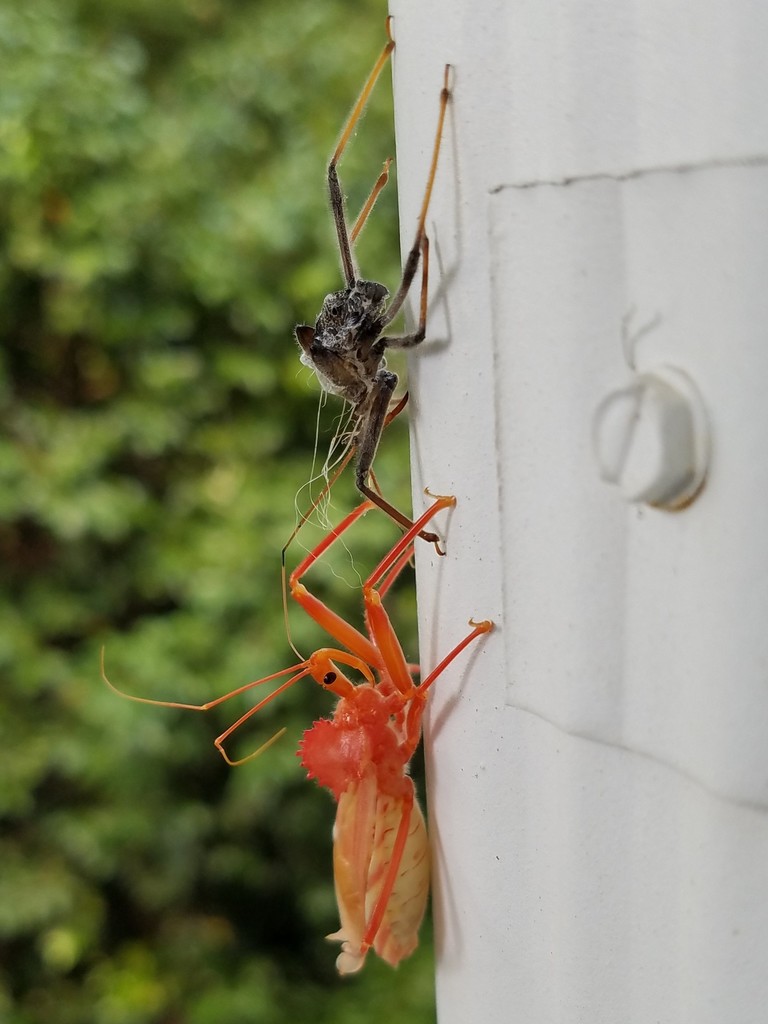
Wheel bug
Arilus cristatus
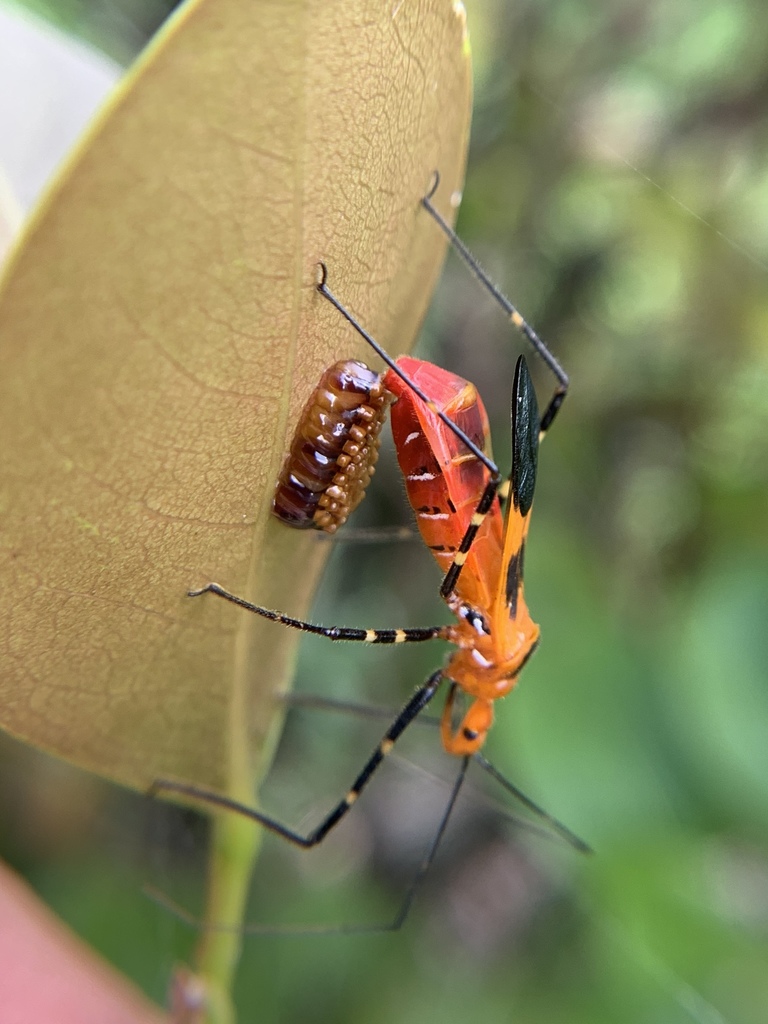
Milkweed assassin bug
Zelus longipes
≠The key differences
Smaller (about 15-19 mm) and slender with very long legs, often reddish-orange with black markings, and lacks the pronotal wheel.
⚖︎Side by side
| Wheel bug | Milkweed assassin bug | |
|---|---|---|
| To humans | Painful bite | Painful bite |
| Size | 25-40 mm body length (about 1-1.6 inches) | 12-22 mm body length |
| Colours | Gray-brown, Reddish-brown, Black | Orange, Reddish-brown, Dark brown, Black |
| Family | Reduviidae | Reduviidae |
| Habitat | Woodland edges, hedgerows, gardens, orchards, and shrubby areas where insects are abundant; often found on tree trunks, plant stems and fences. | Open, sunny places with herbaceous plants and shrubs: milkweed patches, gardens, field margins, roadsides and crop edges |
| Range | Widely distributed across the eastern and central United States, west to Texas, and south through Mexico to Central America. | Native to the Americas: widespread from the southern United States through Central America into South America. Common in southeastern United States and tropical/subtropical regions. |
| Active | Most active in late spring through early fall; diurnal and crepuscular (active by day and at dusk). | Warm months (spring to autumn in temperate zones); diurnal and active during daylight |
| Pest? | No | No |
🔍How to spot a wheel bug
- Look for the semicircular, toothed 'wheel' or crest on the pronotum behind the head — unique in its region.
- Large, elongate body 25-40 mm with rough, mottled gray-brown coloration and folded wings.
- Nymphs are reddish-orange when young and lack the wheel crest (wheel develops only in adults).
- Long, three-segmented proboscis (beak) folded under the head used for piercing prey.
🔍How to spot a milkweed assassin bug
- Long, slender body 12-22 mm with very long legs, especially the hind legs
- Raptorial forelegs often appear slightly thicker and may show sticky residue used for catching prey
- Orange to reddish-brown coloration with possible darker markings on the abdomen or wings
- Elongated head and a short, three-segmented rostrum (beak) typical of assassin bugs
?Frequently asked questions
What is the difference between a wheel bug and a milkweed assassin bug?
Smaller (about 15-19 mm) and slender with very long legs, often reddish-orange with black markings, and lacks the pronotal wheel.
Is a wheel bug or a milkweed assassin bug more dangerous?
Wheel bug: Painful bite. Milkweed assassin bug: Painful bite. Wheel bugs are not aggressive but can deliver a very painful stab-like bite when handled or crushed. Will bite if mishandled; bite can be painful and may cause localized swelling, redness and itching.
Identification from photos is never certain: don't handle insects you can't identify, and get medical advice for bites, stings or allergic reactions.