
Large milkweed bug vs Small milkweed bug
These two are easy to mix up. Here's how to tell a large milkweed bug from a small milkweed bug, and whether either one bites or stings.
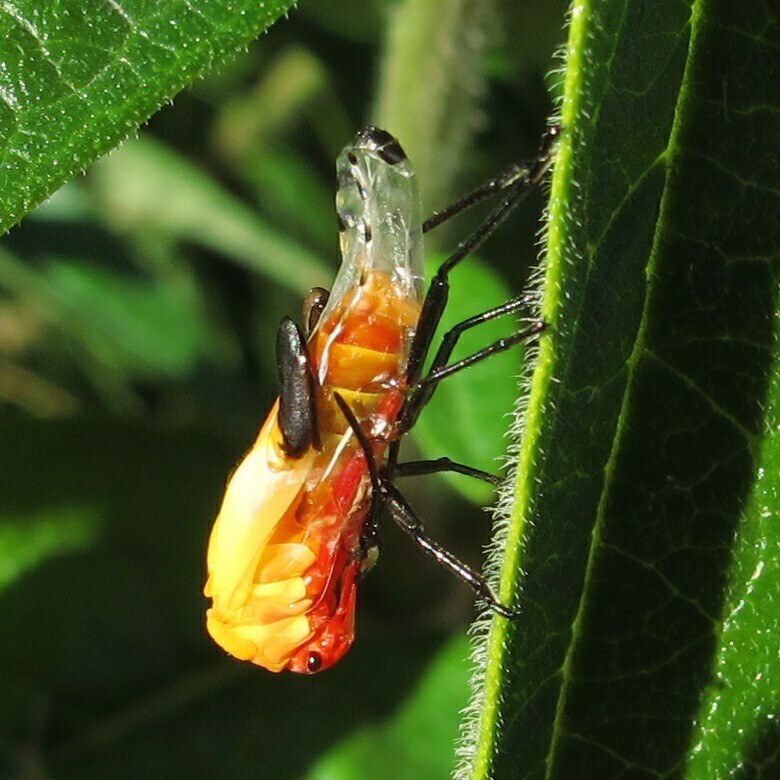
Large milkweed bug
Oncopeltus fasciatus
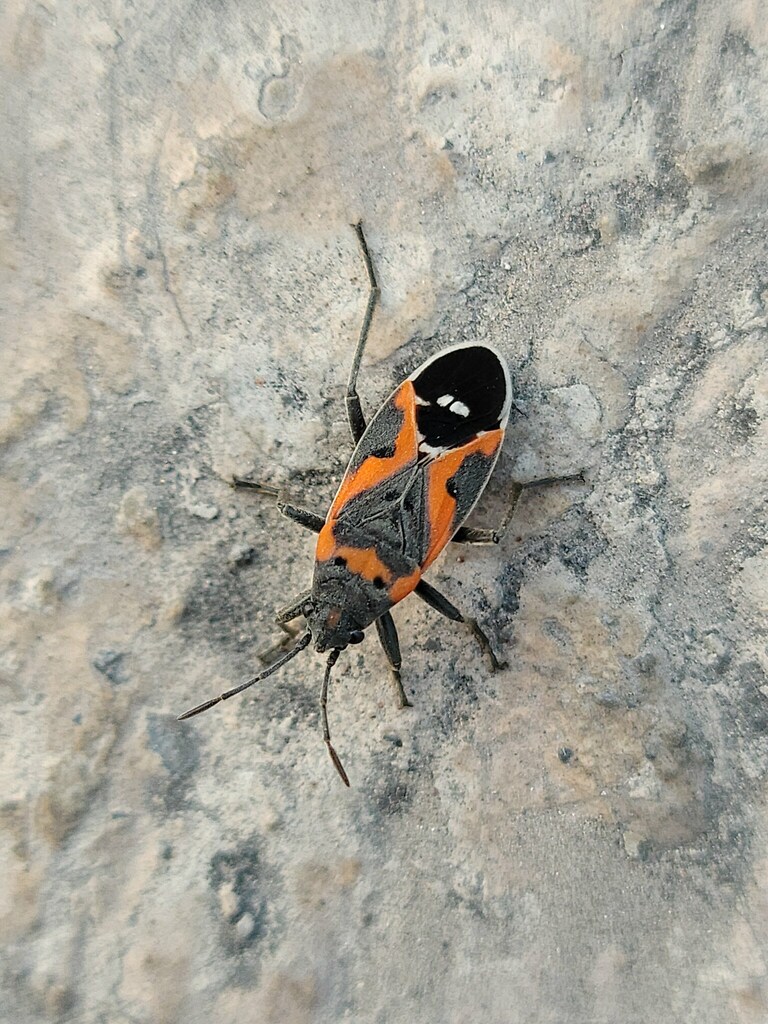
Small milkweed bug
Lygaeus kalmii
≠The key differences
Smaller (about 10-12 mm) with a red-orange X-shaped pattern across a black back and a white-spotted black wing tip, rather than the broad alternating orange and black bands of the large milkweed bug.
Larger (about 10-18 mm) and orange with broad black bands across the back rather than a red X; lacks white spots on the wing membrane.
⚖︎Side by side
| Large milkweed bug | Small milkweed bug | |
|---|---|---|
| To humans | Non-toxic | Non-toxic |
| Size | 12-18 mm body length | 10-12 mm long |
| Colours | Orange-red, Black, White (small markings on legs/edges) | Orange-red, Black, White (small wing spot), Dark brown (legs/antennae) |
| Family | Lygaeidae | Lygaeidae |
| Habitat | Open areas, meadows, roadsides, and gardens where milkweed grows; commonly on the seed pods and blossoms of milkweed plants | Meadows, roadsides, fields and gardens where milkweed (Asclepias) and similar plants grow; sometimes edges of woodlots and disturbed ground. |
| Range | Native to the Americas: widespread in the United States and southern Canada (where adults are summer migrants in the north), through Mexico, Central America and the Caribbean into parts of South America | Widespread across much of North America, from southern Canada through the United States. |
| Active | Active in spring through autumn where milkweed is present; mainly diurnal (active during the day) | Active from late spring through autumn, peak abundance in summer and early fall; diurnal (active by day). |
| Pest? | No | No |
🔍How to spot a large milkweed bug
- Bright orange-red body with bold black banding across wings and black markings on head and pronotum
- Adult length 12-18 mm, elongated oval shape with wings covering the abdomen
- Aggregates on milkweed seed pods and flowers in conspicuous groups
🔍How to spot a small milkweed bug
- Black body with a red-orange X-shaped band across the back and white spots on the black wing membrane.
- Adult length about 10-12 mm; nymphs are wingless and bright orange-red with black markings.
- Found congregating on milkweed seed pods and flowers during summer and fall.
- Smaller and with a white wing-spot compared with the larger Oncopeltus (large milkweed bug).
?Frequently asked questions
What is the difference between a large milkweed bug and a small milkweed bug?
Smaller (about 10-12 mm) with a red-orange X-shaped pattern across a black back and a white-spotted black wing tip, rather than the broad alternating orange and black bands of the large milkweed bug. Larger (about 10-18 mm) and orange with broad black bands across the back rather than a red X; lacks white spots on the wing membrane.
Is a large milkweed bug or a small milkweed bug more dangerous?
Large milkweed bug: Non-toxic. Small milkweed bug: Non-toxic. Large milkweed bugs are not venomous and do not present a medical threat. Small milkweed bugs do not have a medically important bite or sting.
Identification from photos is never certain: don't handle insects you can't identify, and get medical advice for bites, stings or allergic reactions.