
Spotted lanternfly vs Citrus flatid planthopper
These two are easy to mix up. Here's how to tell a spotted lanternfly from a citrus flatid planthopper, and whether either one bites or stings.
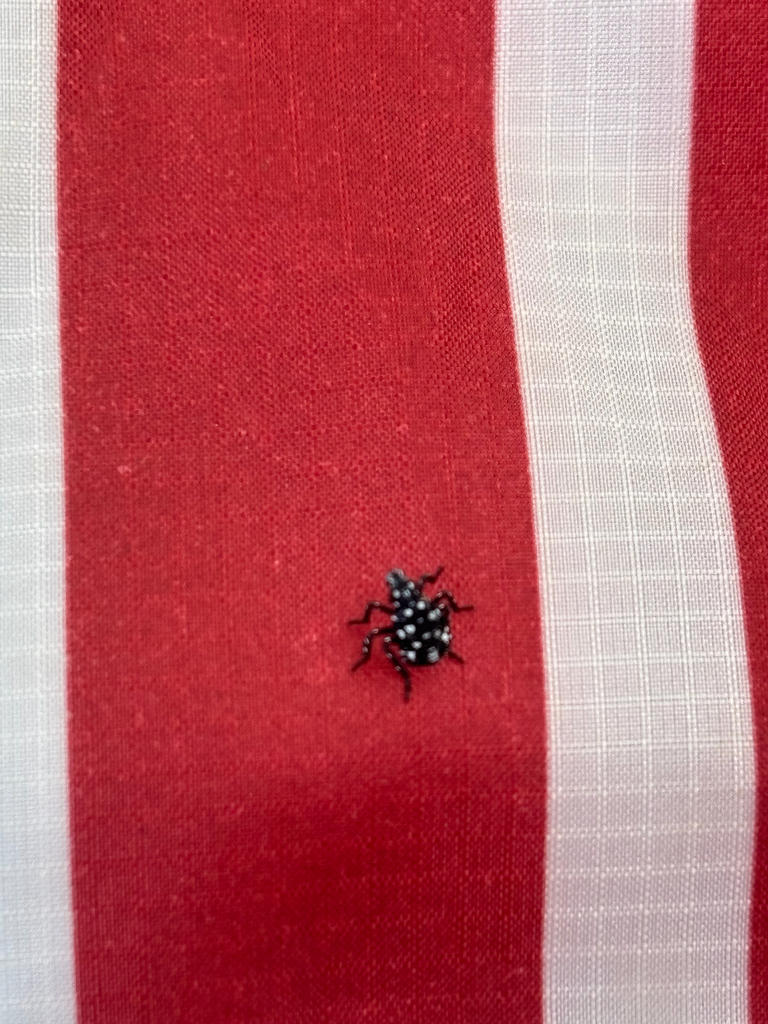
Spotted lanternfly
Lycorma delicatula
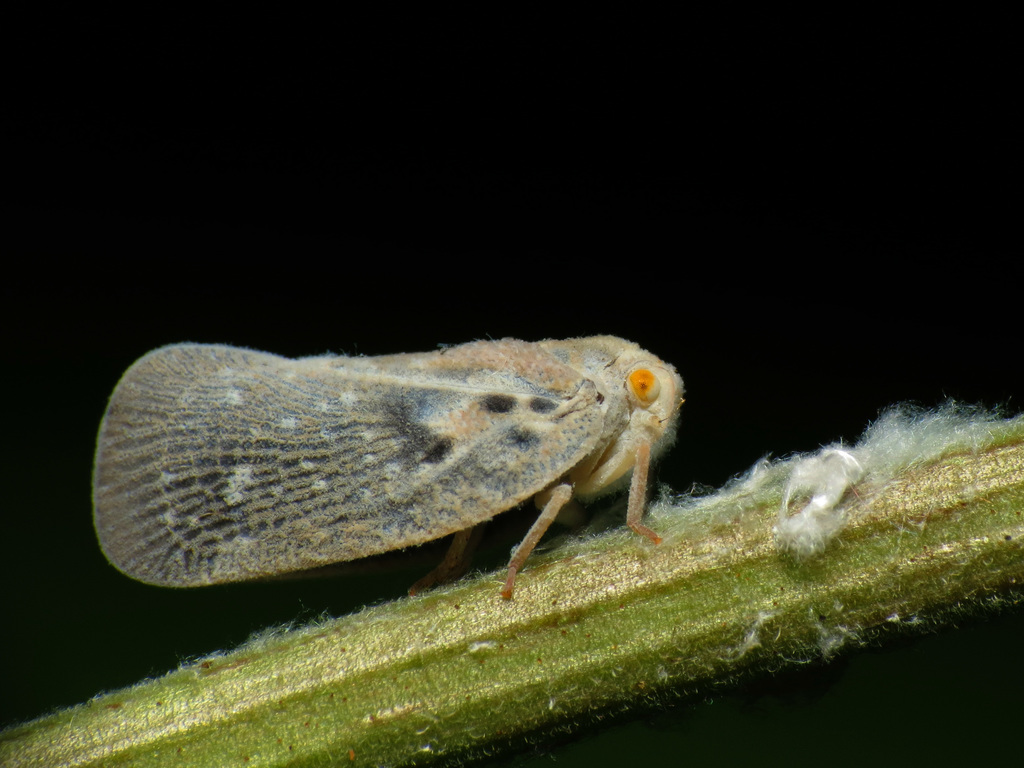
Citrus flatid planthopper
Metcalfa pruinosa
≠The key differences
Smaller, uniformly gray-brown and lacks the bright red and spotted hindwings of spotted lanternfly; wing patterning is less distinct.
⚖︎Side by side
| Spotted lanternfly | Citrus flatid planthopper | |
|---|---|---|
| To humans | Non-toxic | Non-toxic |
| Size | About 20-25 mm body length (wings folded); wingspan about 40-50 mm | 6-9 mm long |
| Colours | Light gray/tan, Black, Bright red, White, Yellow | Pale grey (pruinose), Cream, Brown, Black (markings) |
| Family | Fulgoridae | Flatidae |
| Habitat | Woodlands, orchards, vineyards, urban and suburban areas where host plants occur | Orchards, gardens, hedgerows, urban trees and shrubs; found on trunks, branches and leaves of many plant species. |
| Range | Native to China (also reported from Taiwan and Vietnam). Invasive in South Korea, Japan and the eastern United States, where it has spread from Pennsylvania (first found in 2014) across the Northeast and Mid-Atlantic into the Midwest and Southeast; many states run quarantines. | Native to eastern North America; introduced and now established across much of Europe, parts of Asia (including South Korea) and other regions. |
| Active | Late spring through fall (nymphs in spring-summer, adults from mid-summer into fall); active during daytime | Warm months; adults most visible from late spring through autumn in temperate regions, active during daylight. |
| Pest? | Yes | Yes |
🔍How to spot a spotted lanternfly
- Adult forewings pale gray with distinct round black spots and darker irregular patches near wing tips
- Bright red hindwings with black spots and white band visible when wings are open
- Nymphs: early instars black with white spots; later instars develop red patches before adulthood
- Egg masses are tan, putty-like coverings containing rows of eggs on bark, stones, vehicles or outdoor items
🔍How to spot a citrus flatid planthopper
- Wedge-shaped adult 6-9 mm long with overlapping roof-like wings and a frosted, powdery (pruinose) grey-white coating
- Nymphs wingless and often covered in conspicuous white, waxy filaments
- Feeds in groups on stems or beneath leaves and commonly leaves sticky honeydew and attendant ants
?Frequently asked questions
What is the difference between a spotted lanternfly and a citrus flatid planthopper?
Smaller, uniformly gray-brown and lacks the bright red and spotted hindwings of spotted lanternfly; wing patterning is less distinct.
Is a spotted lanternfly or a citrus flatid planthopper more dangerous?
Spotted lanternfly: Non-toxic. Citrus flatid planthopper: Non-toxic. Spotted lanternflies do not bite or sting people and are not poisonous. Does not bite or sting and is not venomous.
Identification from photos is never certain: don't handle insects you can't identify, and get medical advice for bites, stings or allergic reactions.