
Box bug
Gonocerus acuteangulatus · Squash bugs and relatives
A medium-sized sap-feeding true bug common on shrubs and fruit trees across much of Europe, often found on box (Buxus) and other woody plants.
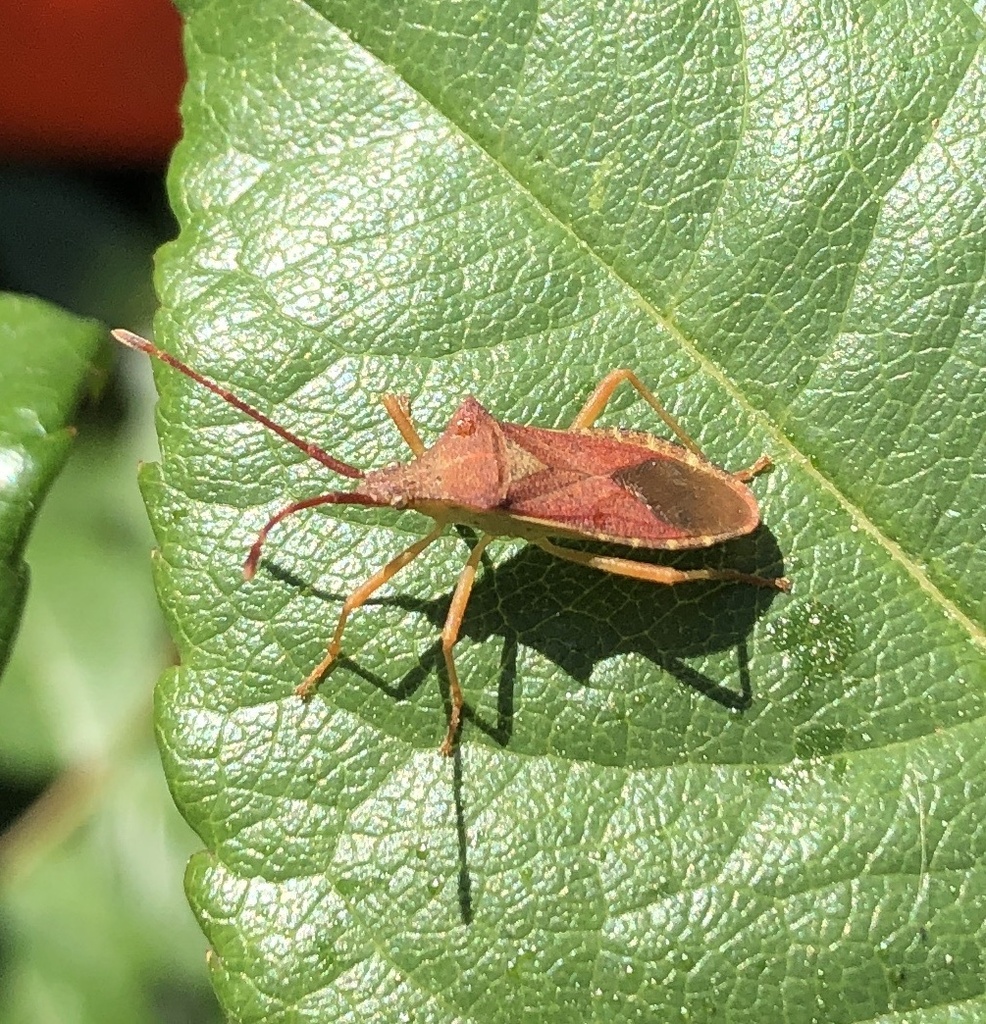
!Is the box bug dangerous?
No. Not venomous. Does not sting. It can emit a strong, unpleasant odor if crushed or handled and may give a mild, rarely painful bite if grabbed, but bites are uncommon and not medically significant. Wash the area and treat symptomatically if bitten.
Pets
Generally harmless to pets. Occasional mouthing by curious pets may produce a foul taste/smell but no toxic effects are known.
📖Overview
Gonocerus acuteangulatus (box bug) is a leaf-footed / coreid true bug found across the western Palearctic. Adults are active in warm months, feed by sucking sap from buds, fruit and shoots, and overwinter as adults. It is primarily a herbivore and is usually a minor pest in gardens and orchards rather than a widespread destructive species. The species has expanded its range northward in recent decades and is now well established in many parts of northern Europe.
🔍How to identify a box bug
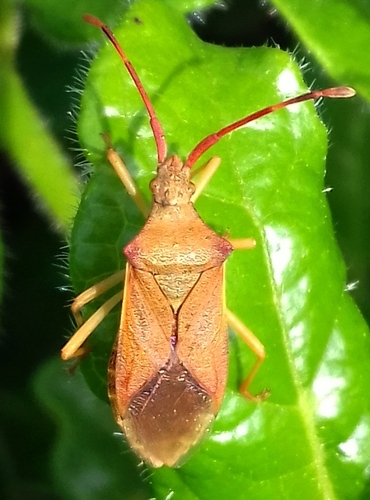
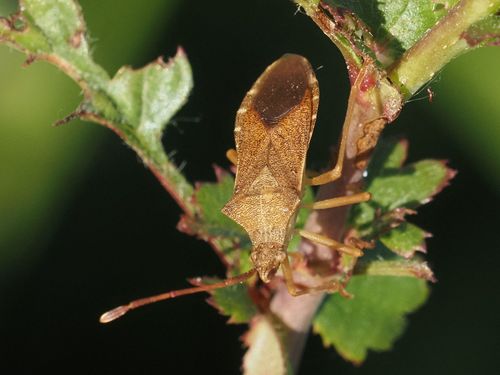
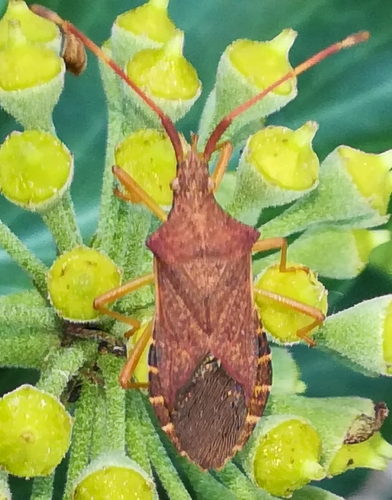
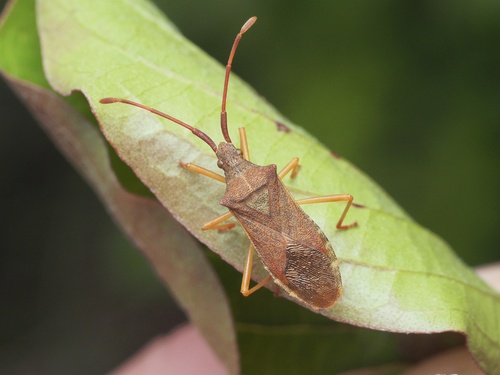
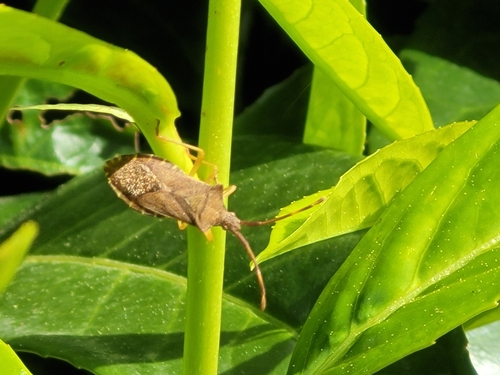
Adults are elongate, somewhat flattened true bugs with a distinctive pronotum that forms acute lateral angles (hence the species name). The body is broadly oval to slightly tapered, with a visible scutellum and typical piercing-sucking mouthparts (a beak). Antennae are 4-segmented and legs fairly long; hind tibiae are not strongly leaf-shaped (unlike some close relatives). Nymphs are wingless and go through several instars before developing wings as adults.
- Length about 11-14 mm with elongate, slightly flattened body and distinct acute lateral angles on the pronotum.
- Overall chestnut to reddish-brown or olive tones with paler margins; triangular scutellum visible behind pronotum.
- Four-segmented antennae and piercing-sucking beak; hind legs not strongly leaf-expanded (unlike some other coreids).
- Found on woody shrubs and fruit trees rather than on herbaceous plants.
Lookalikes
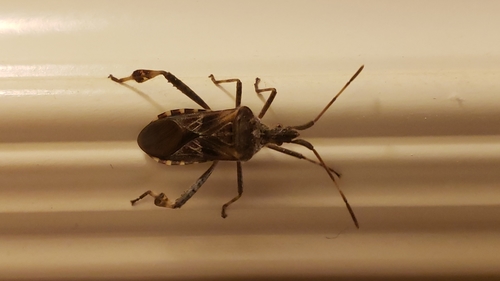
Western conifer seed bug Leptoglossus occidentalis
Larger (about 15-20 mm), has a distinct leaf-like expansion on the hind tibia and banded antennae; typically associated with conifers rather than broadleaf shrubs.
Rhopalus species (Rhopalidae) Rhopalus spp.
Rhopalids are often more slender and lack the pronounced pronotal angles of Gonocerus; they also differ in wing venation and scent gland shape.
Dock bug Coreus marginatus
The dock bug is broader with a flared, wider abdomen, duller brown colour and lacks the sharply pointed pronotal angles; it lives mainly on docks and sorrels rather than woody shrubs.
↻Life cycle
Egg
Females lay small clustered eggs on twigs or leaves in spring-summer; eggs hatch in about 1-3 weeks depending on temperature.
Nymph (juvenile)
Nymphs are wingless, progressively larger through 5 instars, feeding on plant sap and usually found on the same host plants as adults.
Adult
Winged adults appear in mid to late summer, mate, and the adults often overwinter in sheltered sites to repeat the cycle next year.
🍃Diet and predators
Young eat
Sucking sap from buds, stems and developing fruit of woody plants
Adults eat
Sap from buds, shoots, seedpods and fruit of various shrubs and trees (polyphagous)
Predators of the young
Predatory insects (shieldbug predators, assassin bugs), spiders and birds
Predators of adults
Birds, spiders, predatory bugs and parasitic wasps (some natural enemies attack eggs or nymphs)
🌱Effect on plants and gardens
Feeds on sap from buds, young shoots and fruit of shrubs and small trees. Heavy localized feeding can cause blemishes on fruit, wilting of shoots or reduced vigour, but it is not usually a major agricultural pest.
How to get rid of box bugs
For small numbers, remove by hand or knock them into a container of soapy water. Prune and destroy heavily infested shoots. Use sticky barriers or tree bands to reduce climbing onto trunks. For larger infestations in orchards, insecticidal soap or pyrethroid treatments recommended only according to local regulations and integrated pest management guidance. Encourage natural enemies (predatory bugs, birds) and avoid broad-spectrum insecticides that kill beneficials.
📍Where and when to find it
On leaves, buds and fruit of box (Buxus), hazel, elder, plum and other shrubs and small trees; eggs on twigs, nymphs clustered on shoots.
Best time
Late spring through early autumn; daytime when temperatures are warm and bugs are active on foliage.
Observation tips
Look carefully on the undersides of leaves and on new shoots. Photograph from above to show pronotum angles and body colours; avoid crushing them to prevent the defensive smell.
✨Fun facts
- Despite the common name 'box bug', it feeds on many woody plants, not only box (Buxus).
- The species name acuteangulatus refers to the sharp lateral angles on the pronotum.
- It has expanded its range northwards in Europe over recent decades, likely aided by warmer summers.
?Frequently asked questions
Do box bugs bite people?
They are not aggressive but can give a mild bite if handled roughly; bites are uncommon and not dangerous.
Are box bugs poisonous to pets or children?
No, they are not poisonous. The main issue is an unpleasant smell if crushed; no toxic effects are known.
Why are box bugs on my box or shrubs?
They feed on sap from buds, shoots and fruit of woody plants. Shrubs that produce fleshy buds or fruit attract them for feeding and breeding.
How can I get rid of box bugs in my garden?
Hand-pick adults and nymphs into soapy water, prune and destroy infested shoots, use tree bands or sticky barriers, and encourage natural predators. Use insecticidal controls only as a last resort and follow local guidance.
Do box bugs damage fruit trees or crops?
They can cause cosmetic blemishes and localized damage to buds, shoots or fruit but are usually a minor pest rather than a major crop threat.
📷Photos of the box bug
More true bugs, cicadas & aphids
Bites cause itching
Non-venomous nuisance
Non-toxic
Smelly secretion
Potential disease vector
Painful bite
This guide was written with AI assistance and fact-checked, last updated 2026-10-10. Identification from photos is never certain: don't handle insects you can't identify, and get medical advice for bites, stings or allergic reactions. More about the box bug: iNaturalist, Wikipedia.