
Giant water bug
Lethocerus americanus · Giant water bugs
A large aquatic predatory true bug found in North American ponds and slow waters, able to deliver a painful bite but not deadly to humans.
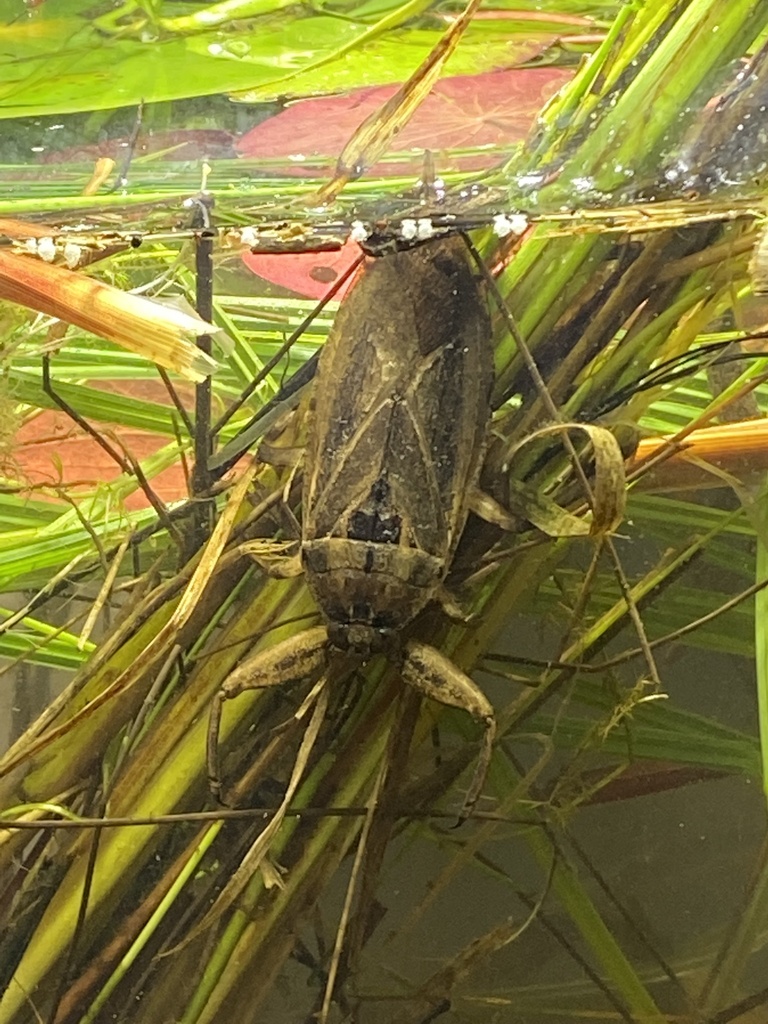
!Is the giant water bug dangerous?
Only mildly. Not venomous in the medically dangerous sense, but the bite is painful because the bug injects digestive enzymes through its rostrum. Bites can cause sharp immediate pain, local swelling and redness. Clean the wound, apply cold compress and seek medical care if pain, swelling or signs of infection are severe. People with severe allergic reactions to insect bites should seek emergency care.
Pets
Can bite small pets if handled or trapped; generally not a common hazard to pets but could cause localized pain or minor injury to small animals.
📖Overview
Lethocerus americanus is a very large predatory water bug in the family Belostomatidae. Adults are common in ponds, marshes and slow-moving streams across much of North America. They are ambush predators that feed on fish, amphibians, large aquatic insects and other invertebrates. They are mostly active at night and are attracted to lights, which is why they are sometimes found near houses.
These bugs use a strong, piercing-sucking rostrum to inject digestive enzymes into prey and then suck out the liquefied tissues. While not aggressive toward people, if handled or trapped against the skin they can give a painful stab-like bite. They are not known to transmit human disease and their bites are painful but rarely medically serious.
🔍How to identify a giant water bug
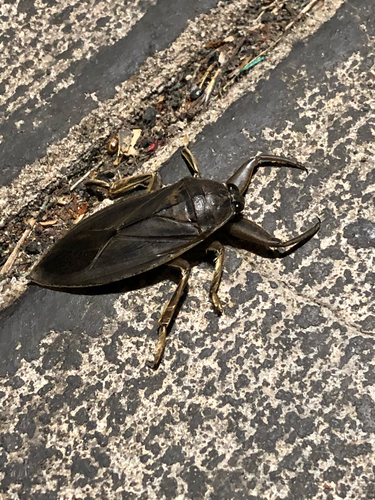
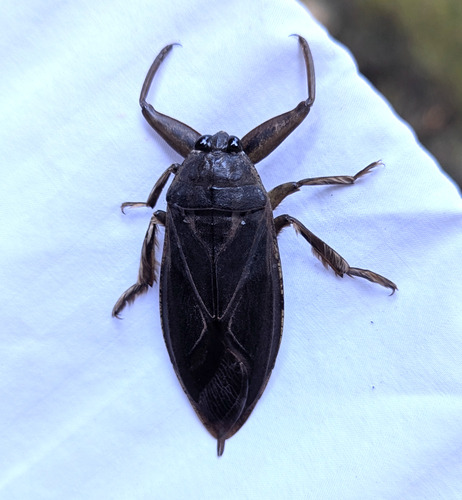
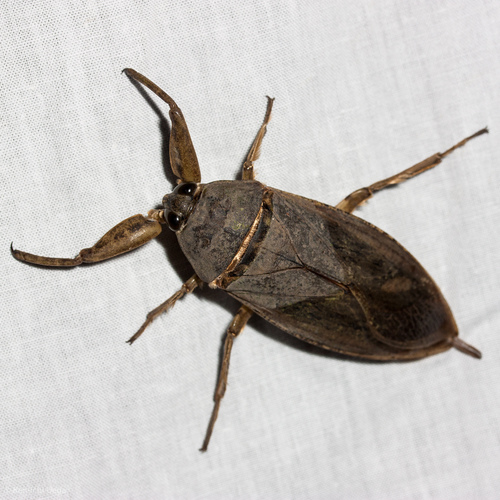
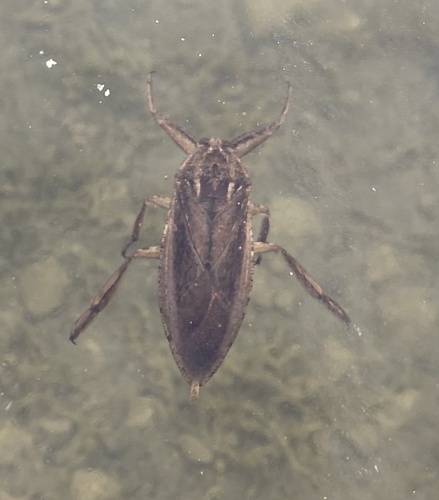
Adults are large, flattened, oval to elongate (somewhat leaf-shaped), with raptorial forelegs for seizing prey and a short, stout, curved beak (rostrum). The dorsal surface is mottled brown to olive, providing camouflage against vegetation. Wings lie flat across the back; the posterior part of the wings and abdomen often show a pattern of darker and lighter patches. Nymphs resemble adults but are wingless and smaller, with proportionally large forelegs.
- Very large, flattened aquatic bug about 45-65 mm long with a broad, leaf-like shape
- Raptorial forelegs (like small mantis arms) used to grasp prey
- Mottled brown-olive dorsal coloration providing camouflage among vegetation
- Short, stout piercing beak folded under the head when not in use
Lookalikes
Southeastern giant water bug Lethocerus griseus
Very similar in size and shape; occurs mainly in the eastern and southern United States. Separation from L. americanus relies on details of the legs and underside, so location helps but specialist keys may be needed.
Ferocious water bug Belostoma flumineum
Much smaller (about 20-25 mm) and more oval; males carry the eggs glued to their backs, whereas Lethocerus lays eggs on emergent plants.
↻Life cycle
Egg
Eggs are laid in a cluster on emergent vegetation or other objects above the water surface; the male guards the eggs and keeps them moist until they hatch.
Nymph
Nymphs resemble small wingless adults and are aquatic; they pass through several molts while hunting small aquatic prey.
Adult
Winged, sexually mature insects that hunt larger prey, disperse by flying (often at night), and reproduce; adults overwinter in some areas as water temperatures cool.
🍃Diet and predators
Young eat
Small aquatic invertebrates, tadpoles and very small fish
Adults eat
Fish, amphibians, large aquatic insects and other invertebrates; ambush predator using piercing-sucking rostrum
Predators of the young
Fish, larger aquatic insects, water birds
Predators of adults
Fish, wading birds, larger aquatic predators and some mammals; adults' size and camouflage reduce predation risk
🌱Effect on plants and gardens
Does not feed on plants; it is a predator of aquatic animals and does not damage vegetation.
📍Where and when to find it
Look along edges of ponds, marshy margins and slow streams, on emergent vegetation, floating debris and under submerged logs. Nymphs are found in the water; adults may sit motionless at the surface or rest among plants.
Best time
Spring to autumn; best observed at night or at dusk when they are active and sometimes flying to lights.
Observation tips
Use a flashlight at pond edges at night to spot reflective eyes and the outline; photograph from a distance and avoid handling. To photograph well, wait until they are on emergent vegetation where the profile is clear.
✨Fun facts
- Called 'toe-biter' because people sometimes feel a painful bite when wading or handling them, though they do not seek out humans.
- They can fly and are often attracted to lights, which is why you may find them near houses at night.
- They inject digestive enzymes into prey, then suck out the liquefied tissues.
?Frequently asked questions
Do giant water bugs bite people?
Yes. They are capable of delivering a painful bite if handled or trapped against skin, but bites are not usually medically serious.
Are giant water bugs poisonous or dangerous?
Only mildly. They do not carry life-threatening venom, but the bite is very painful and can cause local swelling; seek medical help for severe pain, an allergic reaction or signs of infection.
Why is a giant water bug in my house?
Adults fly at night and are attracted to lights. If your house is near ponds, marshes or slow water, a bug may be drawn to outdoor or indoor lights and accidentally enter.
How can I get rid of giant water bugs around my home?
Turn off unnecessary outdoor lights at night, use screened windows and doors, and seal gaps. If found indoors, capture (with a jar and card) and release outdoors away from people rather than handling it.
Where do giant water bugs live and when can I see them?
They live in ponds, marshes and slow streams with vegetation. They are most active from spring through autumn and are primarily nocturnal.
📷Photos of the giant water bug
More true bugs, cicadas & aphids
Bites cause itching
Non-venomous nuisance
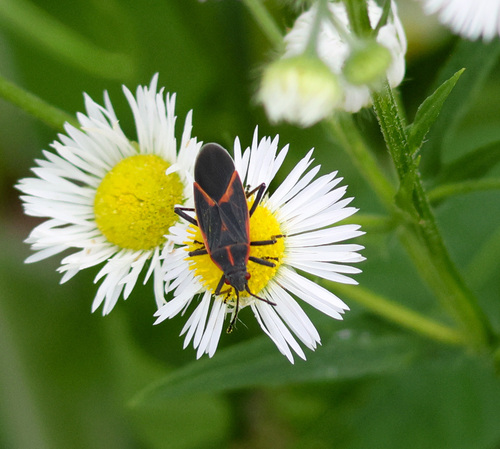
Non-toxic
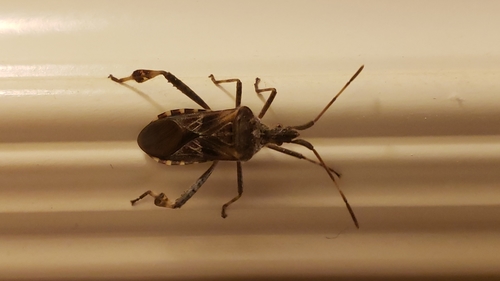
Smelly secretion
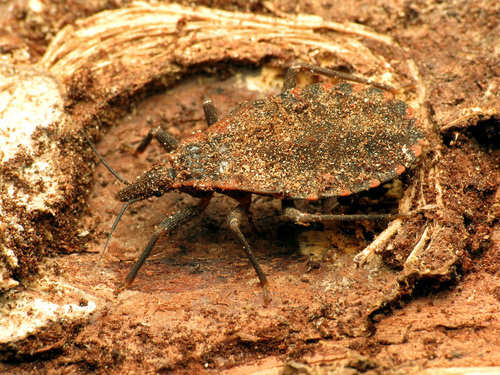
Potential disease vector
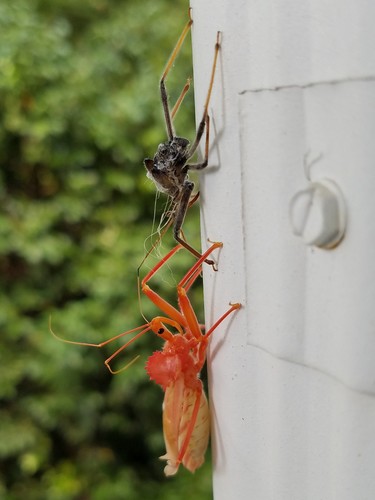
Painful bite
This guide was written with AI assistance and fact-checked, last updated 2026-10-10. Identification from photos is never certain: don't handle insects you can't identify, and get medical advice for bites, stings or allergic reactions. More about the giant water bug: iNaturalist, Wikipedia.