
Buffalo treehopper
Stictocephala bisonia · Treehoppers
A small, humpbacked sap-feeding insect often found on trees and shrubs; can damage fruit plants but is harmless to people.
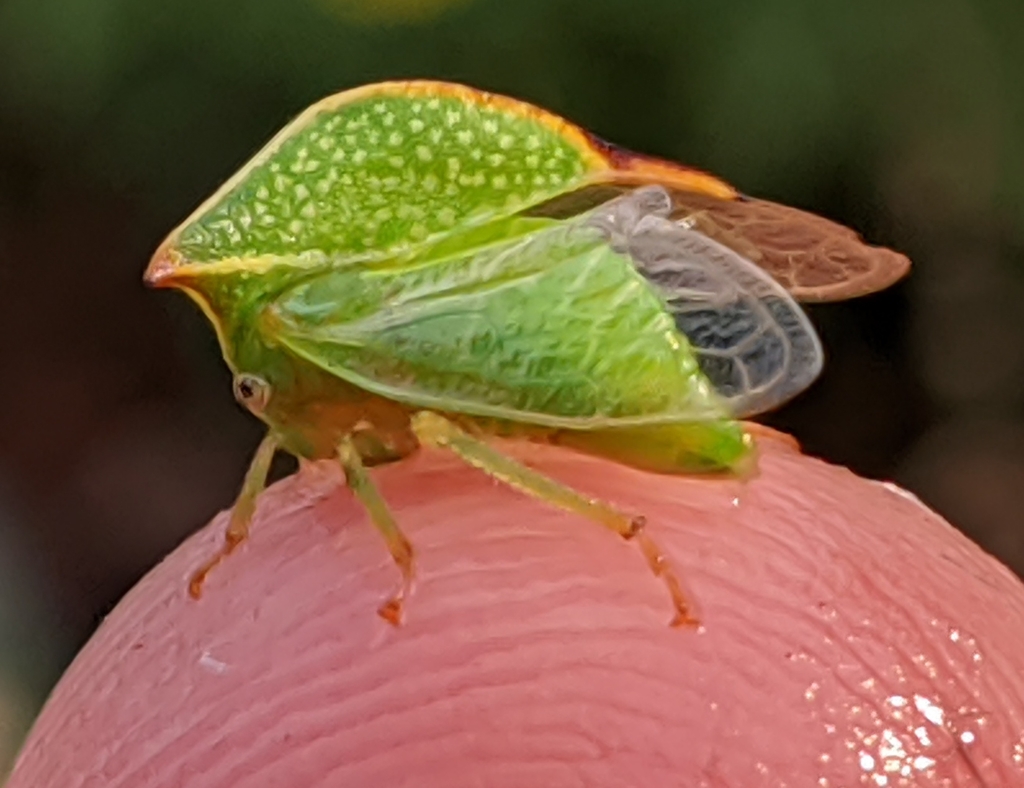
!Is the buffalo treehopper dangerous?
No. Buffalo treehoppers do not bite or sting people and are not venomous. They may land on people but pose no direct health risk. Handle gently if needed; crushing can leave small stains from hemolymph.
Pets
Not toxic to pets. Large numbers feeding on houseplants might stress the plant but effects on pets are indirect and minimal.
📖Overview
Stictocephala bisonia, the buffalo treehopper, is a small membracid treehopper with an enlarged, helmet-like pronotum that gives it a bison-like profile. Adults and nymphs feed on plant sap using piercing-sucking mouthparts. They occur on a wide variety of deciduous trees, shrubs and herbaceous plants and may reach pest levels in orchards, vineyards and nurseries where egg-laying scars in twigs can weaken young trees. Native to North America, S. bisonia has also become established in parts of Europe. They are not dangerous to humans.
🔍How to identify a buffalo treehopper
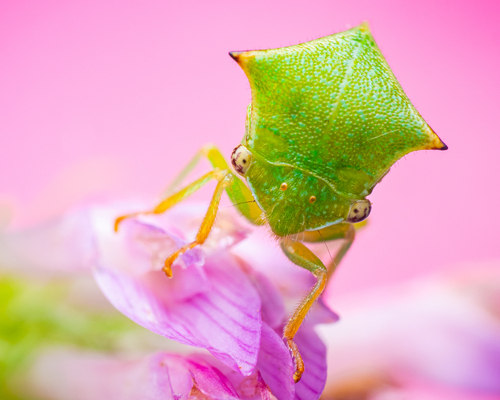
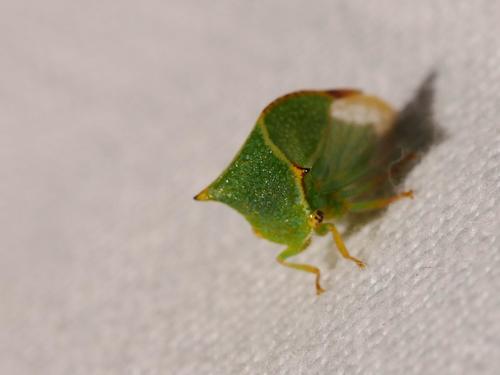
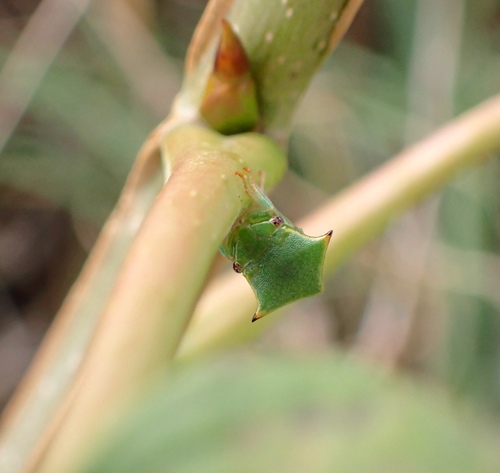
Adults are wedge-shaped with a large pronotum that extends backwards over the body and has two short, pointed horns at the front corners, giving a bison-like profile. They are roughly 6-9 mm long. Colouring is typically bright green to yellow-green, often with fine pale speckling. Wings are held roof-like over the body. Nymphs are wingless, spiny and often more uniformly green or yellow, becoming darker as they mature.
- Pronotum shaped into a humped 'helmet' extending over the body, with two short horns at the front corners, giving a bison-like silhouette
- Small, 6-9 mm length and bright green to yellow-green colour, often with fine pale speckling
- Wings held roof-like over the back; when disturbed they jump quickly but do not bite
- Nymphs wingless and flattened, found clustered on new growth
Lookalikes
Ceresa treehoppers Ceresa spp.
Ceresa species often have longer, more pointed pronotum and different markings; examine pronotum shape and regional species guides to separate them.
Two-marked treehopper Enchenopa binotata complex
Enchenopa has a long, forward-pointing horn on the pronotum and is usually brownish with pale spots, rather than green with two short side horns.
↻Life cycle
Egg
Eggs are laid in slits in stems or twigs by females in late summer; eggs overwinter in plant tissue.
Nymph (immature)
Nymphs hatch in spring and go through several instars while feeding mostly on herbaceous plants such as weeds, grasses and legumes; they are wingless and often gregarious when young.
Adult
Adults develop in late spring to early summer, mate and lay eggs; there is usually one generation per year in cooler areas, sometimes more in warmer regions.
🍃Diet and predators
Young eat
Sap from herbaceous plants such as weeds, grasses, clover and other legumes
Adults eat
Sap from herbaceous plants as well as deciduous trees and shrubs, where females also lay eggs
Predators of the young
Birds, predatory insects (assassin bugs, predatory bugs, lacewing larvae), spiders and parasitic wasps
Predators of adults
Birds, spiders and predatory insects; some parasitoids attack eggs or nymphs
🌱Effect on plants and gardens
Nymphs feed mainly on sap of herbaceous plants such as weeds, grasses and legumes, while adults also feed on trees and shrubs. Feeding causes little harm; the main damage comes from females cutting egg-laying slits in the bark of young twigs, which can scar bark, cause twig dieback and weaken young orchard trees and nursery stock.
How to get rid of buffalo treehoppers
Inspect twigs of young trees for the curved double rows of egg-laying scars, and prune out heavily scarred twigs in winter. Control weeds and legumes in and around young orchards, since nymphs develop on these plants. Encourage natural enemies (birds, predatory insects and parasitic wasps). Dormant oil applied in late winter can reduce overwintering eggs in twigs. For commercial orchards, follow local extension guidance on targeted insecticides; avoid broad-spectrum insecticides that harm beneficials unless necessary.
📍Where and when to find it
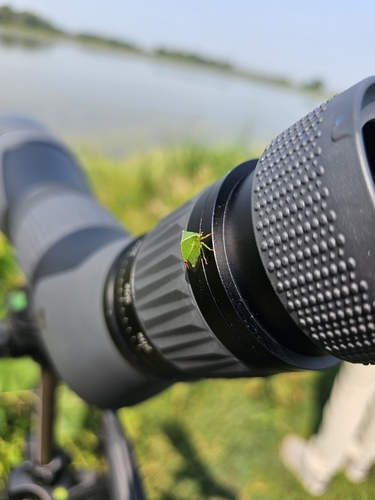
Look on leaves, stems and new shoots of deciduous trees, shrubs, grapevines and garden plants. Nymphs are often on underside of leaves and on tender growth; eggs are in slits in woody stems.
Best time
Late spring through summer during daytime when adults are most active; inspect new growth in the morning or afternoon.
Observation tips
Use a hand lens to see pronotum shape and small markings. Gently shake branches over a sheet to collect specimens for observation. Photograph from the side to show the distinctive hump.
✨Fun facts
- The 'bison' or 'buffalo' name refers to the humped pronotum with two short horns, which resembles a bison's head and shoulders.
- Treehoppers can produce substrate-borne vibrations to communicate with mates and relatives.
- Although they look odd and sometimes numerous, each adult is only a few millimetres long.
?Frequently asked questions
Do buffalo treehoppers bite?
No. They feed on plant sap and do not bite or sting people.
Are buffalo treehoppers harmful to fruit trees?
They can be. The main problem is egg-laying: females cut slits in young twigs, which can scar bark, cause twig dieback and weaken young trees and nursery stock, especially apple trees. Sap feeding itself causes little damage.
Why are buffalo treehoppers on my houseplants or trees?
Adults and nymphs seek new growth and tender shoots to feed on; nearby weeds, hedgerows or host trees often support populations that move onto cultivated plants.
How do I get rid of buffalo treehoppers?
For small infestations, prune out twigs heavily scarred by egg-laying and remove weeds and legumes near young trees, where nymphs develop. For larger or commercial problems, follow integrated pest management: monitor, encourage natural enemies, use dormant oil against overwintering eggs, and apply approved insecticides only if needed.
Will they come into my house?
They are primarily outdoor insects. Adults may be attracted to lights and occasionally enter homes, but they do not establish indoors.
📷Photos of the buffalo treehopper
More true bugs, cicadas & aphids
Bites cause itching
Non-venomous nuisance
Non-toxic
Smelly secretion
Potential disease vector
Painful bite
This guide was written with AI assistance and fact-checked, last updated 2026-10-10. Identification from photos is never certain: don't handle insects you can't identify, and get medical advice for bites, stings or allergic reactions. More about the buffalo treehopper: iNaturalist, Wikipedia.