
Rose aphid
Macrosiphum rosae · Aphids
A small, sap-sucking aphid that commonly infests roses, green or pink in colour, forming clusters on new shoots and buds.
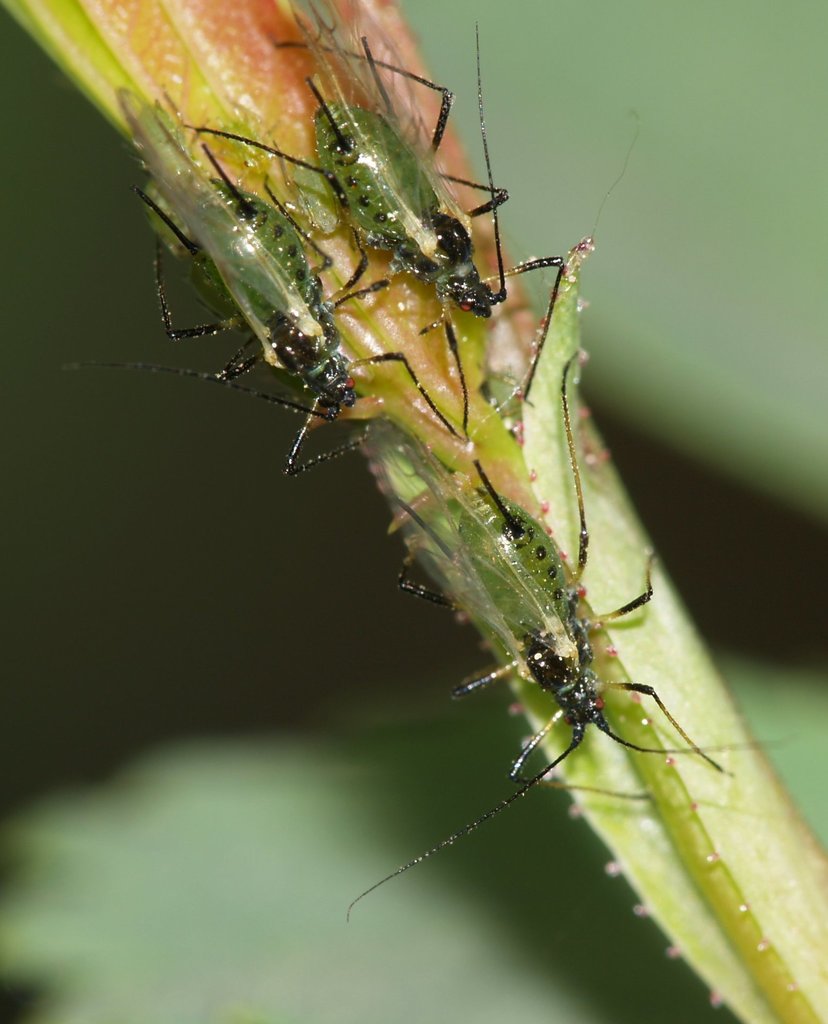
!Is the rose aphid dangerous?
No. Rose aphids do not bite or sting people and are not venomous. They can produce sticky honeydew that soils clothing and surfaces. Wash hands if you handle heavily infested plant material to remove honeydew.
Pets
Not toxic to pets, but heavy infestations can make plants unpalatable. Honeydew can attract ants which may bother pets; avoid letting pets eat heavily infested plant parts.
📖Overview
Macrosiphum rosae is a widespread aphid species that feeds primarily on roses and other members of the rose family. It reproduces rapidly in spring and summer, often forming dense colonies on new growth, leaf undersides, flower buds and young stems. Colonies cause distorted growth, sticky honeydew and sooty mould, and heavy infestations can reduce vigor and flower quality. Natural enemies (ladybirds, lacewings, hoverfly larvae, parasitic wasps) often reduce populations, and outbreaks are usually most obvious in warm, sheltered garden sites.
🔍How to identify a rose aphid
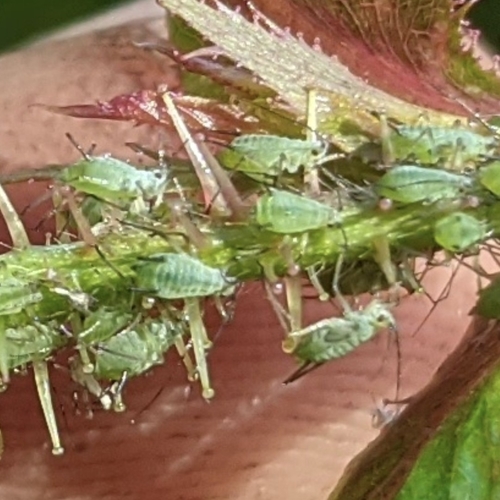
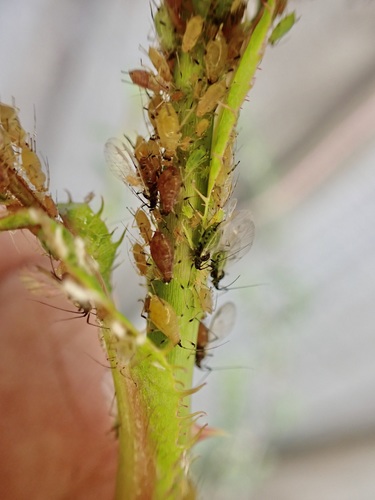
Adults are soft-bodied, pear-shaped aphids. Two colour forms occur: green to yellow-green, and pink to reddish-brown, often mixed in the same colony. They have long, slender legs and antennae, darker leg joints and antennae, and a pair of long, black tubular structures (cornicles or siphunculi) projecting from the rear of the abdomen. Winged adults appear when colonies become crowded and have a darker head and thorax.
- Clusters of small (2-4 mm) green or pinkish pear-shaped insects on new rose shoots, buds and underside of leaves
- Sticky, shiny honeydew and often black sooty mould on and under infested parts
- Long antennae and two long, black cornicles (tubes) projecting from the rear of the abdomen
- Winged forms are darker and longer; look for both wingless clustered individuals and occasional winged migrants
Lookalikes
Green peach aphid Myzus persicae
Often more uniformly green to pale yellow with shorter cornicles; found on many crops beyond roses and commonly shows different resistance patterns to insecticides.
Black bean aphid Aphis fabae
Usually darker (black or dark brown) or two-coloured and more common on legumes; rose aphid is green or pink with long black cornicles and is concentrated on roses.
↻Life cycle
Egg
In colder regions, sexual females and males are produced in autumn and females lay overwintering eggs on woody parts of the host (rose canes).
Nymph (instars)
Eggs hatch in spring into nymphs that resemble small adults and molt several times while feeding on young shoots and leaves.
Adult
During the growing season most adults are female and reproduce asexually (viviparous parthenogenesis), producing live nymphs. Winged adults develop when colonies overcrowd or quality of the host declines, facilitating dispersal.
🍃Diet and predators
Young eat
Plant sap from rose shoots, buds and leaves
Adults eat
Plant sap; both nymphs and adults feed by inserting needle-like mouthparts into phloem
Predators of the young
Ladybird larvae and adults, lacewing larvae, hoverfly larvae, predatory bugs
Predators of adults
Same predators as juveniles; also parasitic wasps lay eggs in aphids producing mummified aphids
🌱Effect on plants and gardens
Feeds on plant sap, especially roses and other Rosaceae. Feeding causes curled or distorted leaves, stunted shoots, reduced flowering and sticky honeydew that leads to sooty mould. Typically a cosmetic and growth issue in gardens; severe infestations can weaken plants over time.
How to get rid of rose aphids
Encourage natural predators (ladybirds, lacewings, hoverfly larvae, parasitic wasps). For small infestations, knock aphids off with a strong jet of water or prune out affected shoots. Use insecticidal soap or horticultural oil sprays to smother aphids, applied to cover colonies thoroughly and repeated every 7-10 days if needed. Chemical insecticides are rarely necessary on ornamentals and can harm beneficial insects; use targeted products and follow label instructions. Control ants that tend aphids to improve biological control.
📍Where and when to find it
Look on new shoots, leaf undersides, flower buds and the tips of rose canes. In autumn, eggs may be on woody parts of plants.
Best time
Spring and early summer during warm, calm weather; daytime observation is usually fine but check throughout the growing season for outbreaks.
Observation tips
Inspect new growth and buds regularly. Photograph clustered colonies for documentation; use a close macro setting and steady hand or tripod. Shake or tap branches over white paper to see dispersed aphids.
✨Fun facts
- Rose aphids give off sticky honeydew that feeds sooty mould and attracts ants; ants may protect aphids from predators in exchange for honeydew.
- Many rose varieties tolerate low to moderate aphid feeding; extremely high numbers are needed to kill established plants.
- Aphids can reproduce without mating throughout the summer, producing live young very rapidly when conditions are favorable.
?Frequently asked questions
Are rose aphids dangerous to people?
No. Rose aphids do not bite or sting and are not venomous; their primary harm is to plants and from sticky honeydew.
Do rose aphids bite or sting?
No, they feed on plant sap and do not bite or sting humans.
Why are aphids on my roses?
Aphids are attracted to the nutritious, tender new growth and flower buds of roses, especially in warm sheltered sites where natural enemies are limited.
How do I get rid of rose aphids?
For light infestations, spray or knock them off with water, prune out affected tips, or introduce/encourage predators. For heavier infestations use insecticidal soap or horticultural oil, applied thoroughly and repeated as needed; avoid broad-spectrum insecticides that kill beneficial insects.
Will ants on my roses mean aphids?
Often yes. Ants farm aphids for their honeydew and will tend aphid colonies; controlling ants can help predators reduce aphid numbers.
📷Photos of the rose aphid
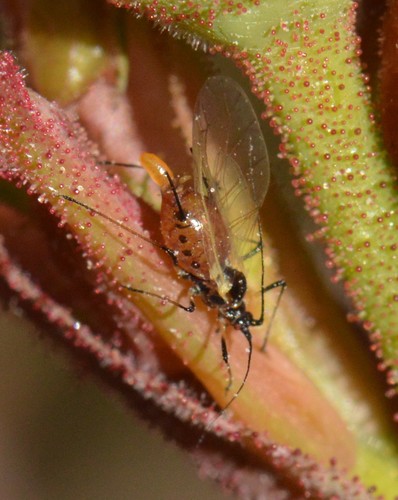
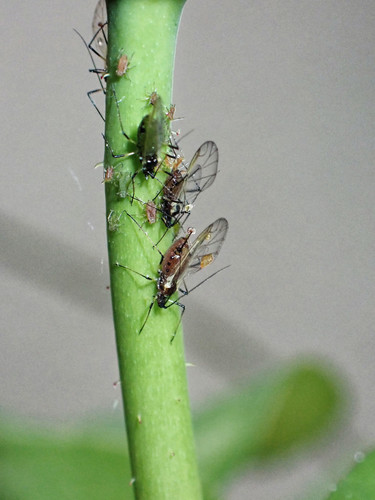
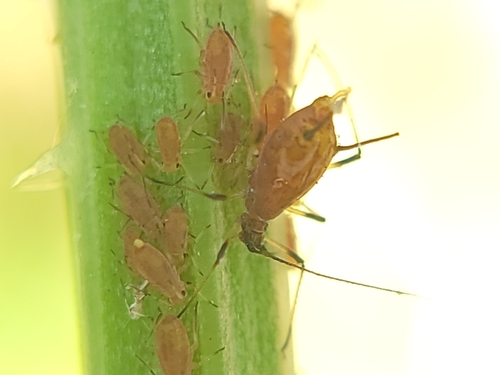
More true bugs, cicadas & aphids
Bites cause itching
Non-venomous nuisance
Non-toxic
Smelly secretion
Potential disease vector
Painful bite
This guide was written with AI assistance and fact-checked, last updated 2026-10-10. Identification from photos is never certain: don't handle insects you can't identify, and get medical advice for bites, stings or allergic reactions. More about the rose aphid: iNaturalist, Wikipedia.