
Rose aphid vs Black bean aphid
These two are easy to mix up. Here's how to tell a rose aphid from a black bean aphid, and whether either one bites or stings.
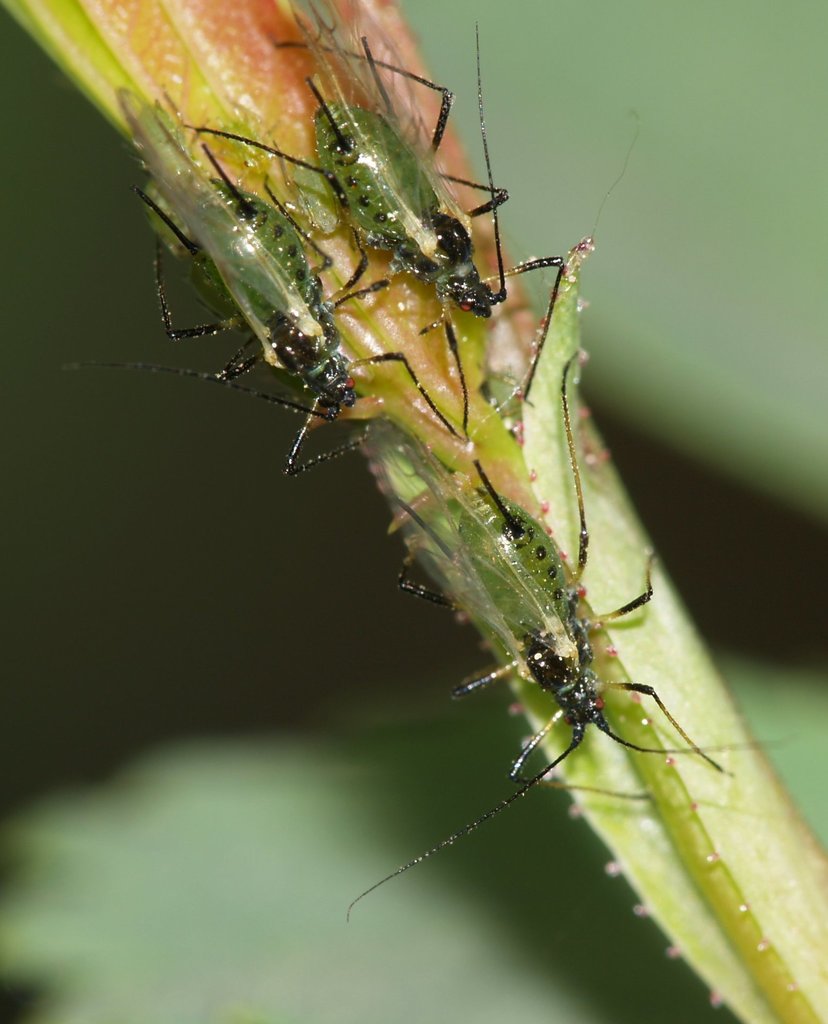
Rose aphid
Macrosiphum rosae
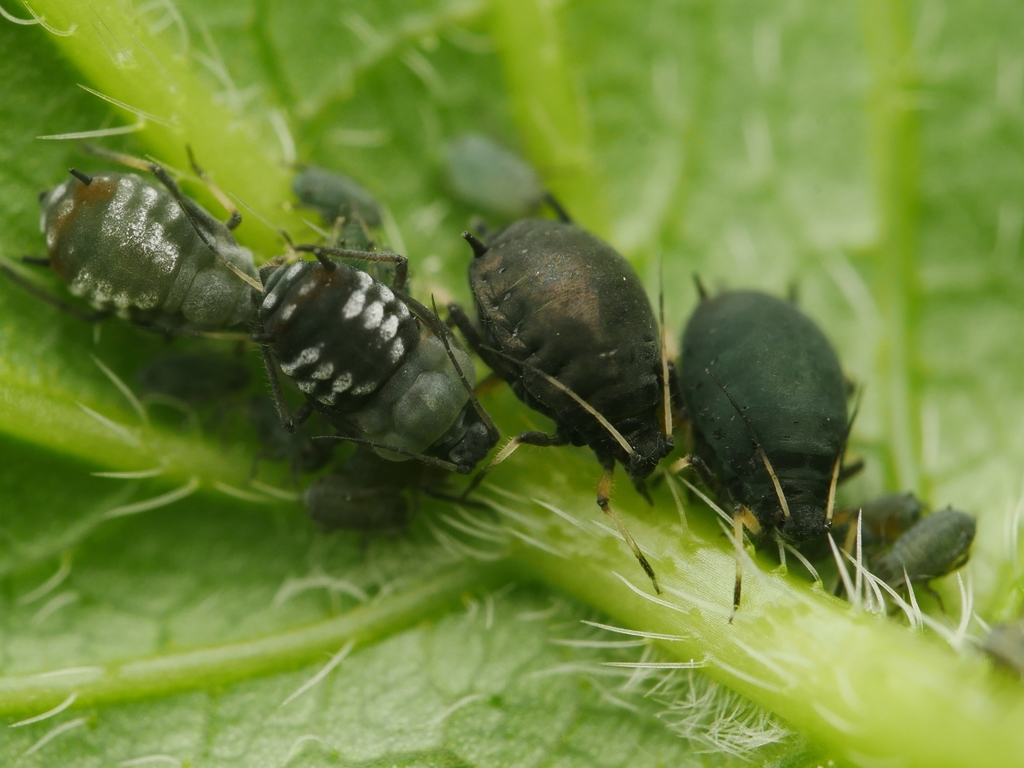
Black bean aphid
Aphis fabae
≠The key differences
Usually darker (black or dark brown) or two-coloured and more common on legumes; rose aphid is green or pink with long black cornicles and is concentrated on roses.
⚖︎Side by side
| Rose aphid | Black bean aphid | |
|---|---|---|
| To humans | Non-toxic | Non-toxic |
| Size | 2-4 mm body length | 1.5-3 mm body length |
| Colours | Pale green, Yellow-green, Pinkish (sometimes), Black (cornicles/legs tips) | Black, Dark brown, Dark green (occasionally) |
| Family | Aphididae | Aphididae |
| Habitat | Gardens, parks and hedgerows where roses and related plants are grown; sheltered parts of plants such as bud clusters, new shoots and underside of leaves | Gardens, agricultural fields, hedgerows and on many cultivated and wild host plants |
| Range | Widespread in temperate regions worldwide where roses are cultivated; native to Eurasia and introduced elsewhere | Widespread across temperate regions worldwide; common in Europe, Asia, North America and elsewhere |
| Active | Mainly spring through autumn in temperate regions; active during daylight and warmer nights when feeding and reproducing | Spring to autumn in temperate regions; multiple generations per year, active by day |
| Pest? | Yes | Yes |
🔍How to spot a rose aphid
- Clusters of small (2-4 mm) green or pinkish pear-shaped insects on new rose shoots, buds and underside of leaves
- Sticky, shiny honeydew and often black sooty mould on and under infested parts
- Long antennae and two long, black cornicles (tubes) projecting from the rear of the abdomen
- Winged forms are darker and longer; look for both wingless clustered individuals and occasional winged migrants
🔍How to spot a black bean aphid
- Clusters of small (1.5-3 mm), shiny black or very dark brown pear-shaped aphids on stems, leaf veins and new shoots
- Short cornicles (tailpipes) visible on the back end of the abdomen when viewed closely
- Dense colonies often produce sticky honeydew and may be attended by ants
- Winged adults have a dark body with transparent wings and appear when colonies become crowded or deteriorating
?Frequently asked questions
What is the difference between a rose aphid and a black bean aphid?
Usually darker (black or dark brown) or two-coloured and more common on legumes; rose aphid is green or pink with long black cornicles and is concentrated on roses.
Is a rose aphid or a black bean aphid more dangerous?
Rose aphid: Non-toxic. Black bean aphid: Non-toxic. Rose aphids do not bite or sting people and are not venomous. Does not bite or sting people.
Identification from photos is never certain: don't handle insects you can't identify, and get medical advice for bites, stings or allergic reactions.