
Brown marmorated stink bug vs Brown stink bug
These two are easy to mix up. Here's how to tell a brown marmorated stink bug from a brown stink bug, and whether either one bites or stings.
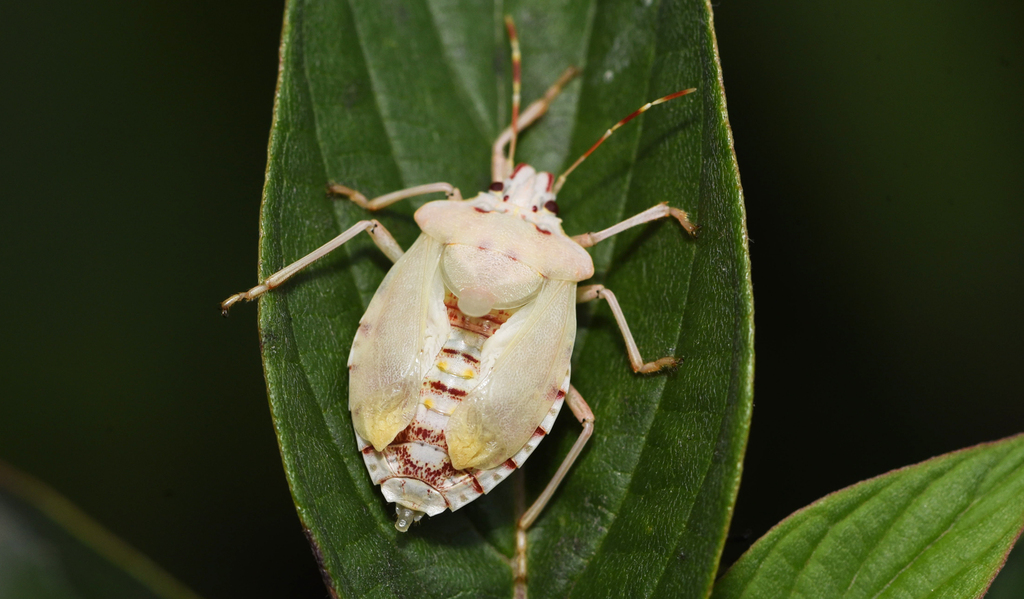
Brown marmorated stink bug
Halyomorpha halys
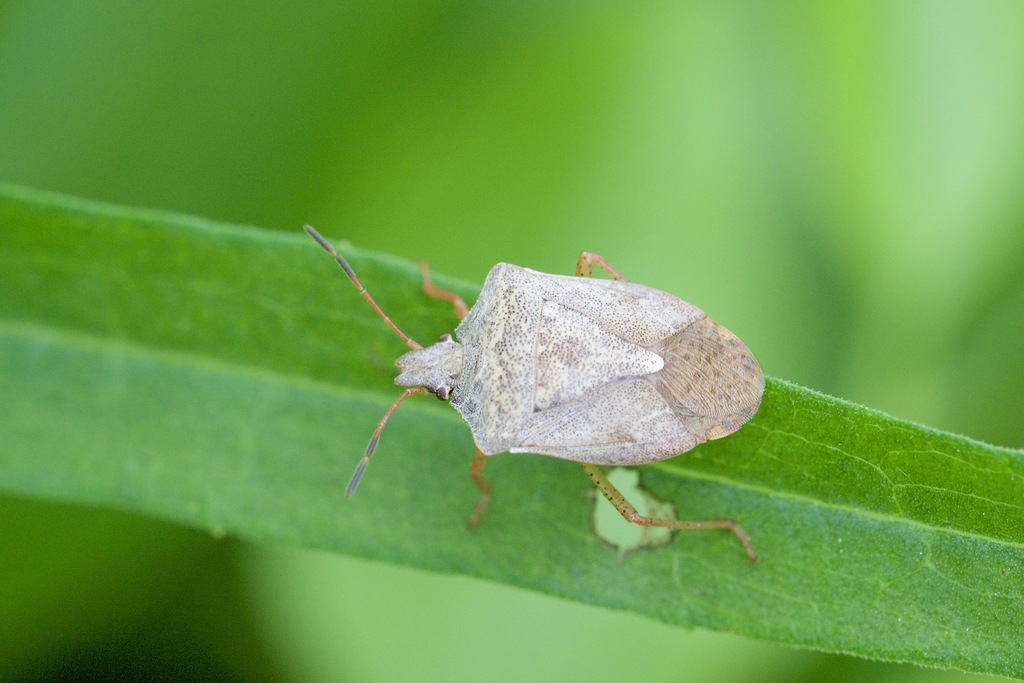
Brown stink bug
Euschistus servus
≠The key differences
Euschistus servus is more uniformly brown without the marmorated pattern or the clear alternating pale bands on the antennae; body shape and pronotal markings differ on close inspection.
H. halys typically has conspicuous light and dark banding on the antennae and alternating light-dark bands along the edge of the abdomen; Euschistus servus lacks these clear antenna bands and is generally more uniformly brown.
⚖︎Side by side
| Brown marmorated stink bug | Brown stink bug | |
|---|---|---|
| To humans | Non-venomous nuisance | Non-toxic |
| Size | 12-20 mm long | 11-15 mm long |
| Colours | Mottled brown, Dark brown, Pale band (antennae), Creamy white (ventral banding) | Brown, Reddish-brown, Yellowish-beige (underside) |
| Family | Pentatomidae | Pentatomidae |
| Habitat | Woodlands, orchards, agricultural fields, gardens, and human structures used as overwintering sites | Fields, orchards, gardens, hedgerows; in autumn also buildings and agricultural structures for overwintering |
| Range | Native to China, Japan, Korea and Taiwan; invasive and established in North America, much of Europe, parts of South America and other regions | Widespread across eastern and central North America; reaches parts of the southern United States, Mexico and into Central America |
| Active | Active spring through autumn; adults disperse and aggregate in late summer and autumn to overwinter; mostly active in daytime and at dusk | Warm months (spring to fall); most active during day and early evening; overwinters as adult |
| Pest? | Yes | Yes |
🔍How to spot a brown marmorated stink bug
- Shield-shaped body 12-20 mm long with mottled brown 'marmorated' pattern
- Two pale bands on the antennae and alternating light/dark banding along the abdomen edge
- Pronotum with small dark punctures and faint white markings on the lateral margins
- When disturbed adults release a characteristic pungent odor
🔍How to spot a brown stink bug
- Shield-shaped body typical of stink bugs, 11-15 mm long with a broad rounded abdomen.
- Uniform medium to dark brown overall colour without the distinct white antenna banding of brown marmorated stink bug.
- Large triangular scutellum on the back that does not cover the entire abdomen.
- When handled or crushed emits a strong, pungent odor.
?Frequently asked questions
What is the difference between a brown marmorated stink bug and a brown stink bug?
Euschistus servus is more uniformly brown without the marmorated pattern or the clear alternating pale bands on the antennae; body shape and pronotal markings differ on close inspection. H. halys typically has conspicuous light and dark banding on the antennae and alternating light-dark bands along the edge of the abdomen; Euschistus servus lacks these clear antenna bands and is generally more uniformly brown.
Is a brown marmorated stink bug or a brown stink bug more dangerous?
Brown marmorated stink bug: Non-venomous nuisance. Brown stink bug: Non-toxic. Halyomorpha halys is not venomous and does not spread human disease. Brown stink bugs are not venomous and do not pose a medical threat.
Identification from photos is never certain: don't handle insects you can't identify, and get medical advice for bites, stings or allergic reactions.