
Black bean aphid
Aphis fabae · Aphids
A small, often black sap-sucking aphid that forms dense colonies on many garden and crop plants and transmits plant viruses.
!Is the black bean aphid dangerous?
No. Does not bite or sting people. May be a minor nuisance if crushed (sticky honeydew). Main concern is indirect: transmission of plant viruses. Wash hands after handling plants with heavy infestations if you have allergies to plant residues.
Pets
Not harmful to pets. Honeydew can make foliage sticky but does not pose a toxic risk to cats or dogs.
📖Overview
The black bean aphid is a common sap-feeding insect that attacks a wide range of cultivated and wild plants. Colonies of wingless females and nymphs build up on stems, leaf veins and new shoots, producing honeydew that can lead to sooty mould. The species has both winged and wingless forms and can reproduce rapidly by parthenogenesis during the growing season.
Aphis fabae is an agricultural pest on legumes such as broad beans, but also affects crops including sugar beet, potato, and many ornamentals. It is an important vector of several plant viruses. Populations decline in late summer or fall as winged forms disperse, and in colder regions the species overwinters as eggs on woody primary host plants such as spindle (Euonymus) and viburnum or persists on secondary hosts in mild climates.
🔍How to identify a black bean aphid
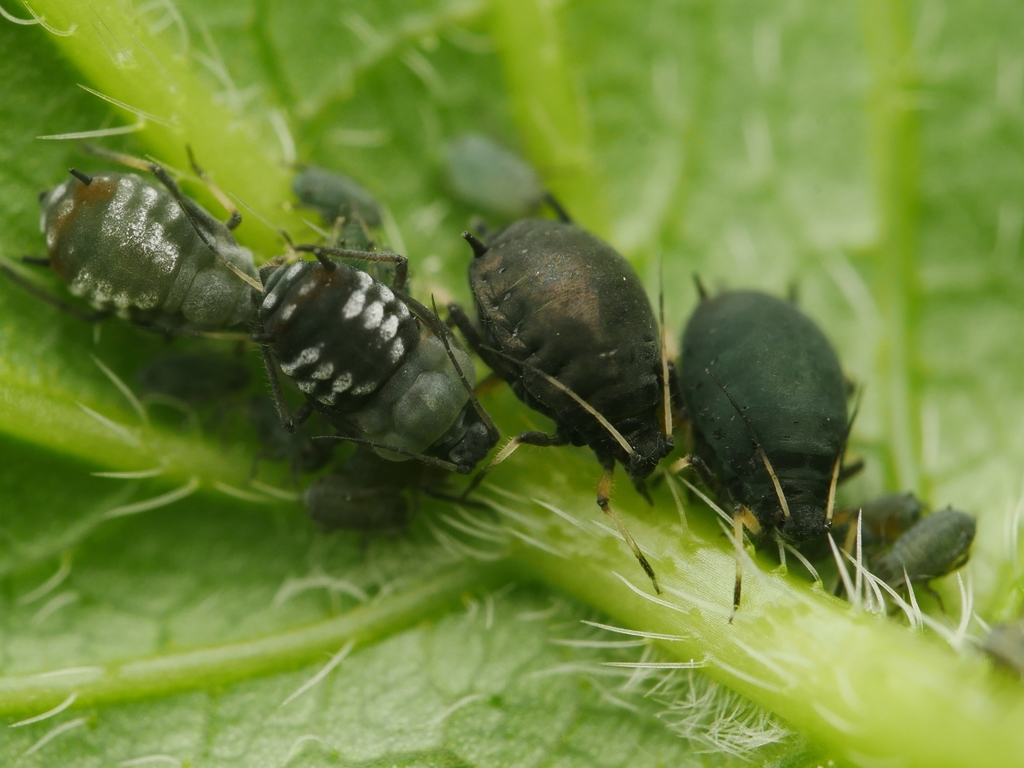
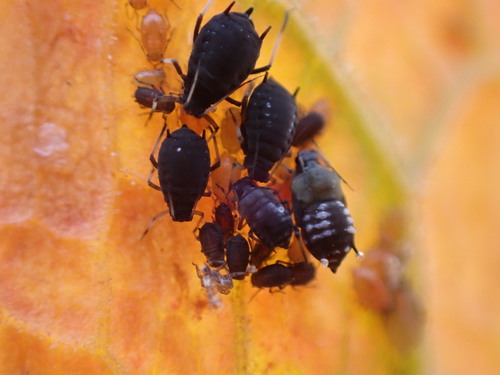
Adults are small (about 1.5-3 mm long) and typically shiny black to dark brown, often with short cornicles (tailpipes) visible on the abdomen. Wingless females are plump and pear-shaped; winged adults are slender with a dark body and transparent wings, used for dispersal. Some seasonal or host-related morphs can be dark green or brown rather than pure black. Nymphs resemble small wingless adults and are usually clustered with adults in colonies.
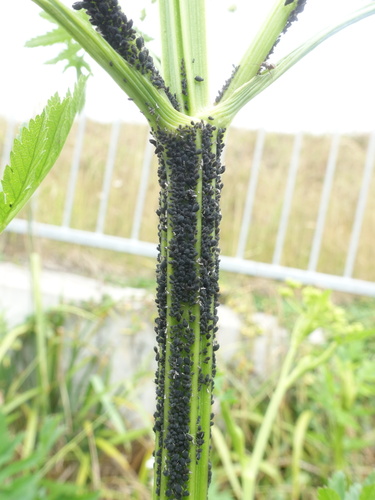
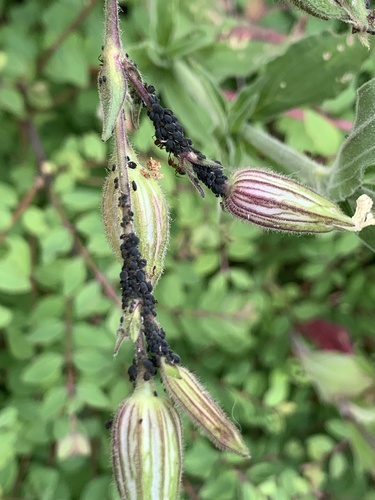
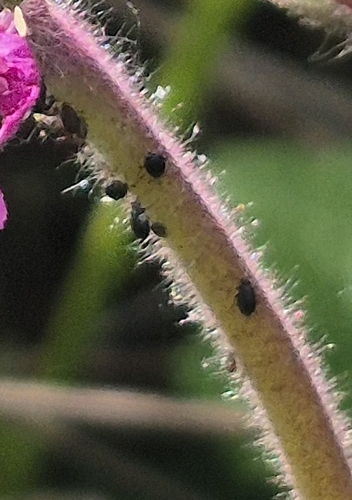
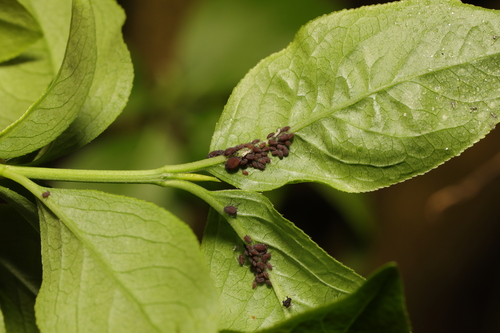
- Clusters of small (1.5-3 mm), shiny black or very dark brown pear-shaped aphids on stems, leaf veins and new shoots
- Short cornicles (tailpipes) visible on the back end of the abdomen when viewed closely
- Dense colonies often produce sticky honeydew and may be attended by ants
- Winged adults have a dark body with transparent wings and appear when colonies become crowded or deteriorating
Lookalikes
Green peach aphid Myzus persicae
Usually pale green, yellowish or pinkish; Aphis fabae is typically black or dark brown and often forms denser colonies on beans and legumes.
Pea aphid Acyrthosiphon pisum
Pea aphid is generally larger and often pink, green or yellow; its body shape and colour differ from the usually black Aphis fabae.
↻Life cycle
Egg
In some regions Aphis fabae overwinters as eggs on primary hosts; eggs hatch in spring. In milder climates the species may persist year-round without an egg stage.
Nymph
Nymphs resemble small adults and pass through several molts before maturing; they feed on sap and remain in colonies.
Adult
Adults can be wingless or winged. During the growing season many generations are produced by parthenogenesis (live birth of females). Winged adults disperse to new plants when colonies crowd or quality declines.
🍃Diet and predators
Young eat
Plant phloem sap from leaves, stems and buds
Adults eat
Plant phloem sap; produce honeydew (sugary excretion) which can attract ants
Predators of the young
Ladybird larvae and adults, lacewing larvae, syrphid fly larvae, parasitoid wasps
Predators of adults
Same predators as juveniles; also some predatory bugs and small birds
🌱Effect on plants and gardens
Feeds by sucking phloem sap from many hosts. Causes distortion of leaves and shoots, stunting and reduced yield. Produces honeydew that encourages sooty mould and can transmit viruses between plants.
How to get rid of black bean aphids
Cultural: remove heavily infested shoots, avoid excess nitrogen fertilizer which promotes aphid growth, encourage air flow. Biological: conserve or introduce natural enemies such as ladybirds, lacewings, hoverflies and parasitic wasps. Physical: use strong water sprays to dislodge colonies, sticky barriers on stems, and reflective mulches. Chemical: insecticidal soaps and horticultural oils can be effective on contact; use systemic or chemical insecticides only when economically necessary and follow label directions. Rotate methods to reduce resistance. For virus management, control early-season aphid numbers and remove virus-infected plants.
📍Where and when to find it
Look on the underside of leaves, along stems, leaf veins and on young shoots of beans, peas, sugar beet, potato, and many ornamentals; nymphs and adults occur together in dense colonies.
Best time
Spring through summer and into autumn when plants are actively growing; daylight hours are fine for observation.
Observation tips
Inspect new growth and the undersides of leaves. Use a hand lens to see cornicles and small body size. Look for sticky honeydew or sooty mould and attendant ants as signs of aphid presence.
✨Fun facts
- Black bean aphids can reproduce without mating during much of the year; females give birth to live female nymphs in rapid succession.
- Their sugary honeydew attracts ants, which may 'farm' and protect aphids from predators in exchange for the food.
- Winged forms are produced in response to crowding or poor plant quality and allow rapid spread between plants.
?Frequently asked questions
Do black bean aphids bite or sting humans?
No. They feed on plant sap and do not bite or sting people.
Are black bean aphids dangerous to my garden?
They can be a serious pest: heavy infestations weaken plants, cause distortion, reduce yields and spread plant viruses.
Why are black bean aphids on my houseplants or vegetables?
They are attracted to tender new growth and plants with high nitrogen; infestations often start from winged migrants or nearby infected plants.
How can I get rid of black bean aphids?
Start with a strong jet of water to remove colonies, prune out heavily infested parts, encourage predators (ladybirds, lacewings), and use insecticidal soap or horticultural oil for heavy infestations. Use chemical insecticides only as a last resort.
Can ants make aphid problems worse?
Yes. Ants harvest aphid honeydew and often protect aphids from predators, allowing colonies to grow larger.
📷Photos of the black bean aphid
More true bugs, cicadas & aphids
Bites cause itching
Non-venomous nuisance
Non-toxic
Smelly secretion
Potential disease vector
Painful bite
This guide was written with AI assistance and fact-checked, last updated 2026-10-10. Identification from photos is never certain: don't handle insects you can't identify, and get medical advice for bites, stings or allergic reactions. More about the black bean aphid: iNaturalist, Wikipedia.