
Rice stink bug
Oebalus pugnax · Stink bugs
A brown, shield-shaped stink bug that feeds on developing grains of rice and other grasses and is a common agricultural pest in the Americas.
!Is the rice stink bug dangerous?
No. Rice stink bugs are not dangerous to people. They do not have venom. They can emit a strong, unpleasant odor and may bite if handled roughly; such bites are rare and cause only minor, localized pain or irritation. If the odor contacts skin or eyes, rinse with water. For allergic reactions, seek medical advice.
Pets
Generally harmless to pets. The odor can be unpleasant if a pet disturbs or ingests a bug. If a pet shows signs of vomiting, drooling or persistent discomfort after eating insects, contact a veterinarian.
📖Overview
Oebalus pugnax is a species of stink bug in the family Pentatomidae that specializes on grasses, especially cultivated rice. Adults are mobile, overwinter in vegetation or field margins, and become abundant in rice fields during heading when they feed on developing grain. They cause direct damage to grain leading to yield loss and reduced milling quality. They are widespread in the eastern and southern United States and occur south into Mexico and the Caribbean.
Rice stink bugs do not have a venomous bite or sting but release a strong, unpleasant odor when disturbed. Management in crops relies on monitoring, cultural controls and, when necessary, targeted insecticide use timed to crop stages when the bugs cause economic damage. Their biology is fairly typical for pentatomids: eggs are laid in clusters, nymphs go through five instars, and adults persist through the growing season and into autumn.
🔍How to identify a rice stink bug
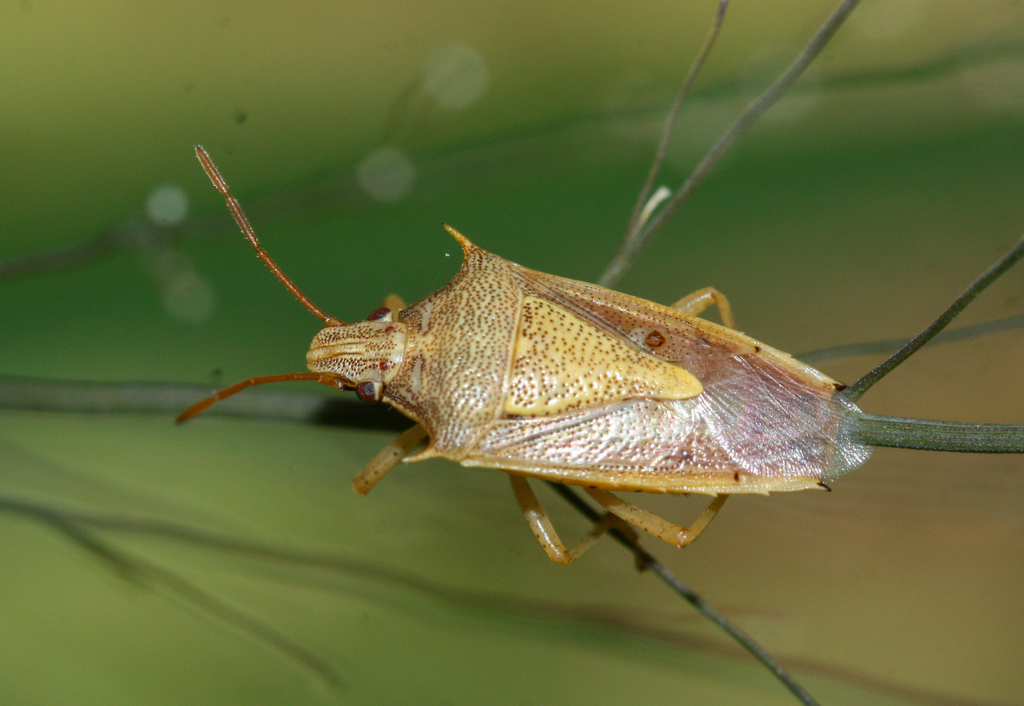
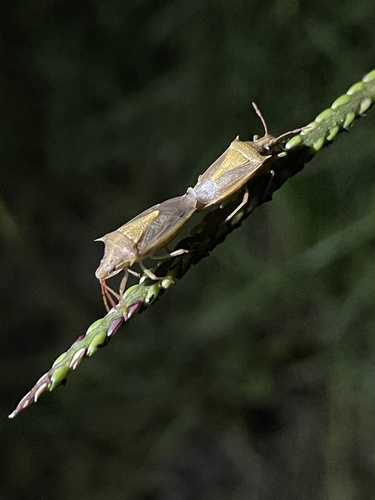
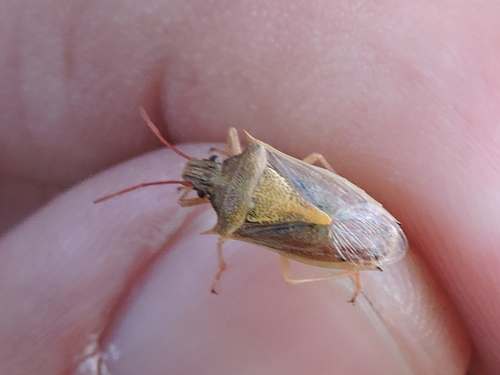
Adult rice stink bugs are shield-shaped, about 9-13 mm long, and straw-coloured to golden-brown, with a sharp, forward-pointing spine at each front corner (shoulder) of the pronotum. The body is somewhat elongated compared with some broader pentatomids, with a distinct scutellum (shield) and well-developed scent glands. Forewings have a leathery basal region and a membranous tip; veins and sutures often show darker lines. Nymphs are wingless for early instars and become more elongate and darker with each molt before developing wings in late instars.
- Shield-shaped, elongated pentatomid 9-13 mm long, straw-coloured to golden-brown, with pointed shoulder spines on the pronotum.
- Distinct scutellum (triangular shield) extending partway across the back; forewing veins often show darker lines.
- Found on rice panicles or grassy seedheads during heading and grain fill.
- Releases a characteristic foul odor when handled or crushed.
Lookalikes
Brown marmorated stink bug Halyomorpha halys
H. halys is broader and more rounded, has alternating light and dark bands on the antennae and the edges of the abdomen are banded — Oebalus pugnax lacks those prominent antennal bands and is more uniformly mottled brown.
Southern green stink bug Nezara viridula
N. viridula is typically bright green as an adult (sometimes brownish) and has a distinctly different overall color and pattern compared with the brown Oebalus pugnax.
Other Oebalus species Oebalus spp.
Close relatives in the same genus are similar in shape but differ in subtle coloration and genitalia; species-level ID often requires expert examination.
↻Life cycle
Egg
Females lay clusters of barrel-shaped eggs on grass stems or leaves. Eggs hatch in about 4-7 days depending on temperature.
Nymph (immature)
Nymphs pass through five instars, progressively larger and darker, lacking full wings until the last instar. Nymphal development takes a few weeks depending on temperature and food.
Adult
Winged adults feed on developing grain, disperse between fields and overwinter in vegetation or field margins to start new generations.
🍃Diet and predators
Young eat
Sap from developing grass and cereal seeds, especially rice panicles and other grasses.
Adults eat
Same as juveniles: primarily developing grains of rice and other grasses; will also feed on leaves and stems when needed.
Predators of the young
Egg parasitoids (tiny wasps), spiders, predatory bugs and beetles that consume eggs and nymphs.
Predators of adults
Birds, larger predatory insects, spiders and some mammals; parasitoids and pathogens can reduce populations.
🌱Effect on plants and gardens
Feeds by sucking juices from developing rice kernels and other grass seeds (sorghum, barley, wild grasses). Feeding punctures cause 'pecky rice' or shrunken, discolored grains and lowered milling quality and yields.
How to get rid of rice stink bugs
Monitor fields with sweep nets or beat cloths, especially during heading and grain fill. Use economic thresholds developed for rice in your region to decide on treatment. Cultural controls: manage weedy grasses and volunteer cereals near fields and maintain field sanitation to reduce refuges. Biological control: natural enemies (egg parasitoids, predators) can reduce populations but are rarely sufficient alone. Chemical control: selective insecticides timed to the most vulnerable crop stage can be effective — follow local extension guidance and rotate modes of action to reduce resistance.
📍Where and when to find it
Look on rice panicles and other grass seedheads during heading and grain fill; eggs on grass stems and leaves; nymphs on lower panicles and in canopy.
Best time
Best observed in summer during rice heading and grain fill; daytime when plants are not stressed by heat, though they may be more visible in early morning or late afternoon.
Observation tips
Use a sweep net to sample fields; inspect panicles by gently shaking into a beat cloth. Photograph dorsal view for identification and note the host plant (rice or grass).
✨Fun facts
- Rice stink bugs are named for their habit of feeding on rice and the unpleasant odor they release when disturbed.
- Feeding damage reduces not only grain weight: punctured kernels become discolored "pecky rice" that breaks more easily during milling, lowering its value.
- They are part of the same family as the familiar 'stink bugs' you might find on house windows in autumn seeking overwintering shelter.
?Frequently asked questions
Do rice stink bugs bite people?
They rarely bite and have no venom. A defensive nip can cause minor, brief pain or irritation but is uncommon.
Are rice stink bugs harmful to crops?
Yes — they are important pests of rice and other cereals; feeding on developing grain reduces yield and quality.
Why are rice stink bugs in my house?
Adults may move out of fields into vegetation or buildings at the end of the season to find shelter. They do not infest homes indoors but may enter in search of overwintering sites.
How do I get rid of rice stink bugs in my field?
Use regular monitoring (sweep nets) and apply management when local economic thresholds are exceeded. Combine cultural practices (remove nearby grassy refuges), encourage natural enemies, and follow extension recommendations for insecticide selection and timing.
Can I kill them with household sprays?
Crushing or using general household sprays will kill individual bugs but is not practical for field control. For small numbers around homes, vacuuming or removing by hand (wear gloves) is effective; avoid crushing near fabrics due to odor.
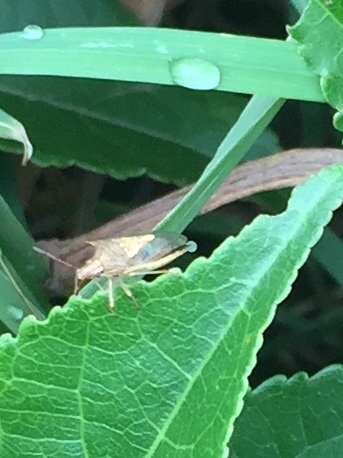
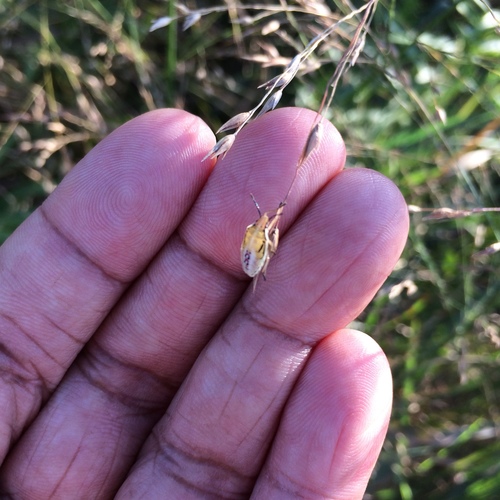
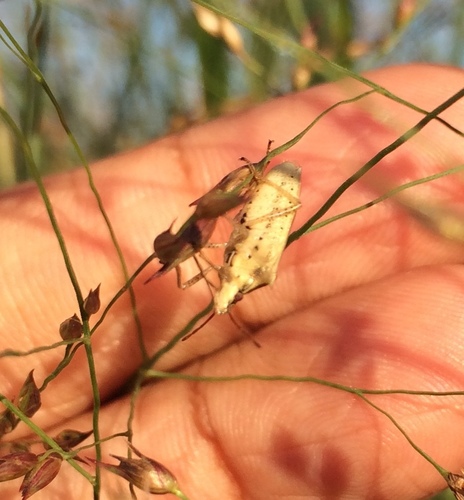
📷Photos of the rice stink bug
More true bugs, cicadas & aphids
Bites cause itching
Non-venomous nuisance
Non-toxic
Smelly secretion
Potential disease vector
Painful bite
This guide was written with AI assistance and fact-checked, last updated 2026-10-10. Identification from photos is never certain: don't handle insects you can't identify, and get medical advice for bites, stings or allergic reactions. More about the rice stink bug: iNaturalist, Wikipedia.