
What kind of cockroach is this? How to identify the 7 common species
Finding a cockroach is unpleasant, but which cockroach it is matters a lot. One species almost always means a breeding infestation in your kitchen. Others mostly live outdoors or in drains and only wander in now and then.
The quickest clues are size, colour and the markings on the shield behind the head (the pronotum). Here are the seven roaches people find most often, how to recognise each one, and what to do next.
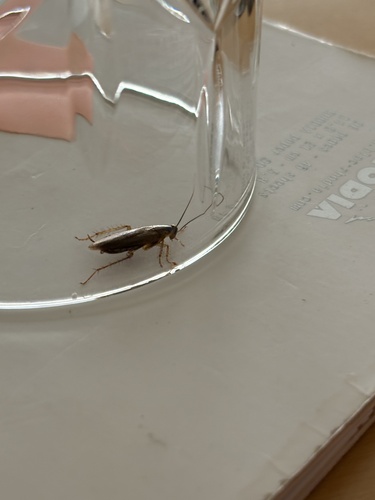
Small, light brown, with two dark stripes: German cockroach
The German cockroach is the small one, about 12-16 mm (half an inch) long, light tan to brown, with two dark parallel stripes on the shield behind the head. It has wings but rarely flies.
This is the roach that lives and breeds indoors, in kitchens and bathrooms, behind fridges, dishwashers and cabinets, close to warmth, food and water. The female carries her egg case until the eggs are about to hatch, and the numbers grow very fast. If you see small light brown roaches in the kitchen, especially in daytime or several sizes at once, assume there's an infestation.
German cockroaches don't bite or sting, but they contaminate food and their droppings and shed skins can trigger allergies and asthma. Gel baits placed in cracks near where you see them work far better than sprays. For a heavy infestation, call a pest control professional.
Big and reddish-brown: American, Australian and smoky brown cockroaches
These three are the large roaches, about 25-50 mm (1-2 inches) long, often called palmetto bugs or waterbugs. They usually live outdoors, in sewers, drains, basements and mulch, and come inside through drains, gaps and doors, especially in warm, humid weather. All three can fly, usually in short glides when it's warm.
The American cockroach is the biggest, reddish-brown, with a pale yellowish band around the edge of the shield behind the head.
The Australian cockroach looks very similar but is a little smaller, and it has a clear pale yellow streak along the front edge of each wing, near the shoulders. That streak is the easiest way to tell it from an American cockroach.
The smoky brown cockroach is a uniform dark mahogany brown with no pale markings at all. It is a strong flier and is often attracted to porch lights.
One big roach indoors usually isn't an infestation. Seal gaps under doors and around pipes, keep drain covers in place, fix leaks and move mulch away from the walls.
Dark and shiny, in drains and basements: Oriental and Turkestan cockroaches
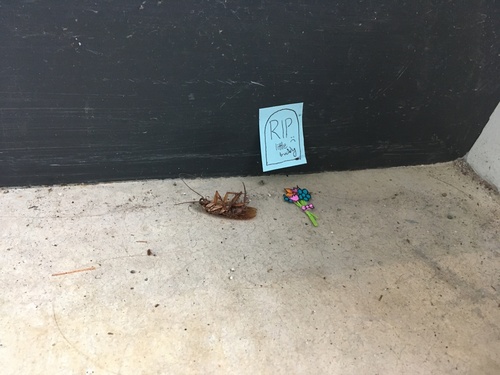
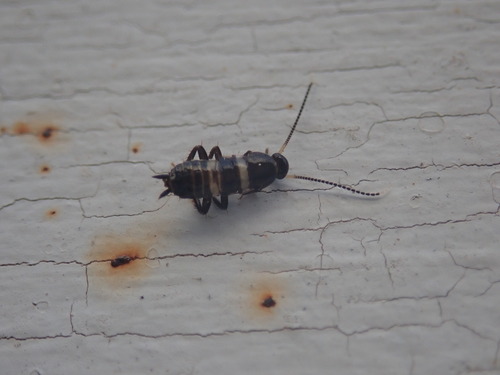
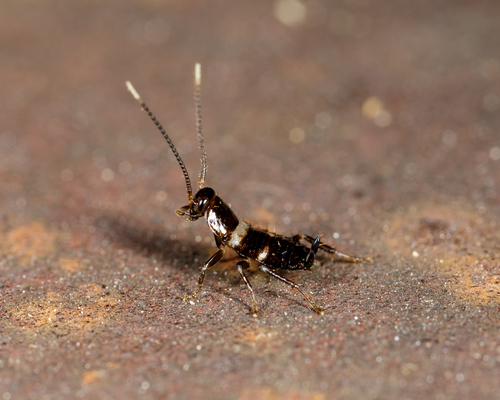
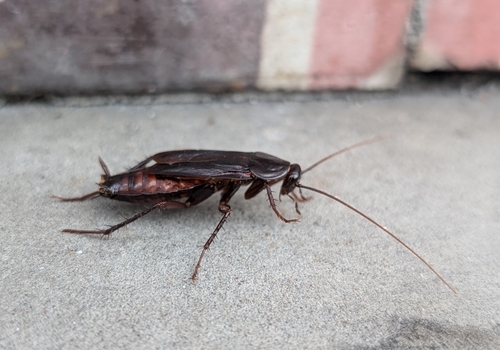
The Oriental cockroach is dark brown to almost black and glossy, about 18-32 mm long. Females have only tiny wing stubs and males have short wings; neither flies. It likes cool, damp places such as basements, crawl spaces, floor drains and sewers, moves slowly and doesn't climb smooth walls well, so you usually find it at ground level.
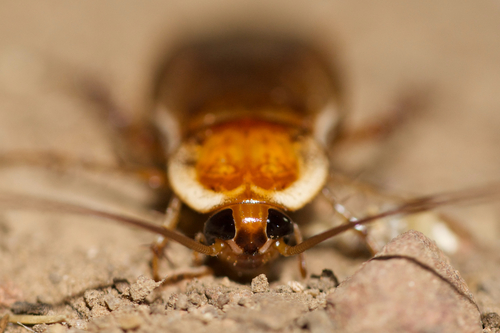
The Turkestan cockroach is a similar size and lives outdoors in water meter boxes, cracks in concrete and leaf litter, mainly in the dry southwest of the US. The sexes look very different: males are slender and tan with cream-edged wings, while females are dark with short wings and cream stripes at the edges.
Reducing moisture is the key with both: fix leaks, use a dehumidifier in the basement, keep drains covered and seal gaps at ground level.
Shiny and dark, in potted plants: Surinam cockroach
If you find shiny dark brown roaches in the soil of potted plants or in a greenhouse, it's probably the Surinam cockroach. It burrows in potting mix, mulch and compost and feeds mainly on decaying plant material. Almost all of them are female and reproduce without males, so one infested plant can start a new colony.
They arrive on plants and nursery stock. Check new plants before bringing them inside, and repot or remove badly infested ones.
Not a cockroach? Common lookalikes
Two bugs are regularly mistaken for cockroaches.
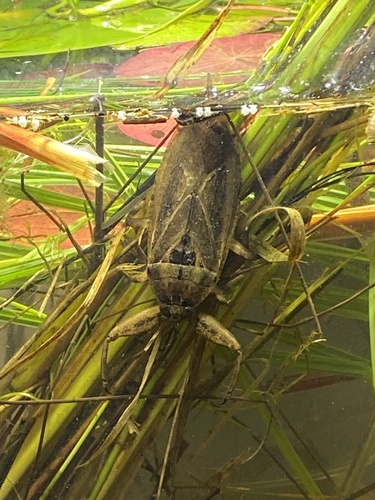
Giant water bugs are large, flat, brown bugs with strong grasping front legs and a short, pointed beak. They live in ponds but fly to lights at night. Unlike roaches, they can give a very painful bite, so don't pick them up.
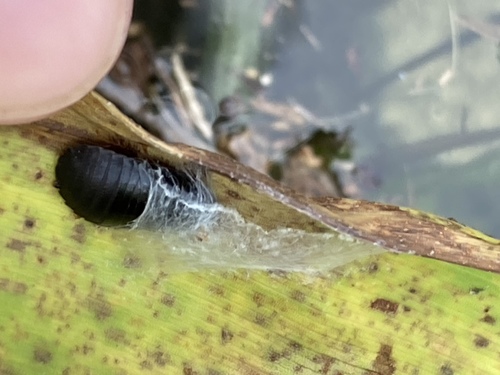
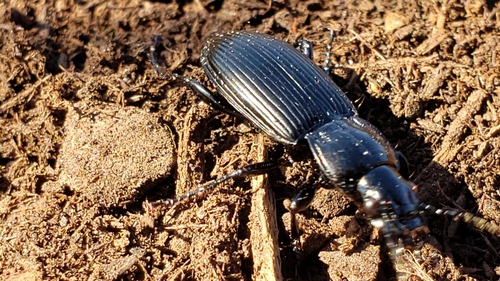
Ground beetles are shiny and black and run fast, but they have hard wing covers that meet in a straight line down the back and shorter antennae. A cockroach has a soft, flat body, long thread-like antennae as long as its body, and its head is tucked under the shield, so you barely see it from above. Ground beetles that wander in are harmless and don't breed indoors.
If you're still not sure, take a clear photo from above and compare it with the photos on this page, or identify it from the photo.
?Frequently asked questions
How can I tell what kind of cockroach I have?
Look at the size, colour and the shield behind the head. Small and light brown with two dark stripes is a German cockroach. Large and reddish-brown with a pale band around the shield is an American cockroach; add yellow streaks on the wing edges and it's an Australian cockroach. Large and evenly dark brown is a smoky brown cockroach, and glossy black with short wings is an Oriental cockroach.
Does one cockroach mean an infestation?
It depends on the species. A single large American, smoky brown or Oriental cockroach has often wandered in from outside or a drain. Small light brown German cockroaches in the kitchen almost always mean they're breeding indoors, especially if you see them in daytime or see different sizes.
Are cockroaches dangerous?
Cockroaches don't sting and very rarely bite people. The risk is that they contaminate food and surfaces with bacteria, and their droppings and shed skins can trigger allergies and asthma, particularly in children.
What is the difference between a palmetto bug and a cockroach?
"Palmetto bug" is a common name, mostly in the southeastern US, for large outdoor cockroaches, usually the American or smoky brown cockroach. They're the same insects, just a different name.
Written by the Insect Scanner team, last updated 2026-10-25. Identification from photos is never certain: don't handle insects you can't identify, and get medical advice for bites, stings or allergic reactions.