
German cockroach
Blattella germanica · Cockroaches
A small, light-brown, highly successful household cockroach that thrives in kitchens and bathrooms and is a common indoor pest worldwide.
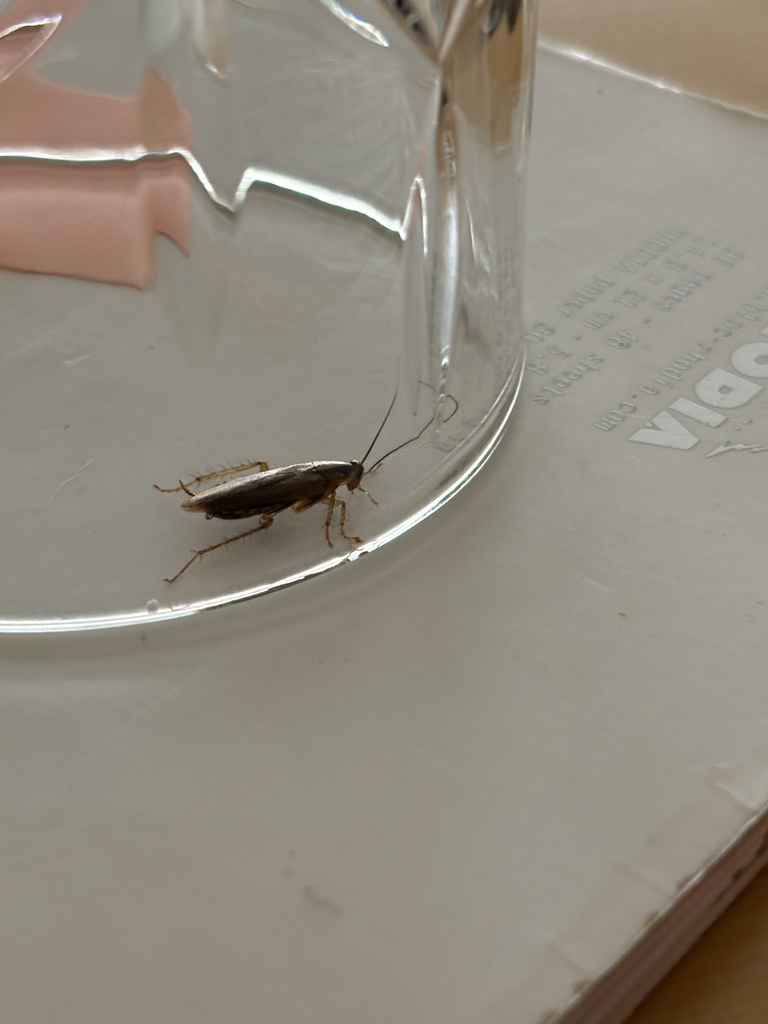
!Is the german cockroach dangerous?
Yes, it can be. German cockroaches do not bite or sting and are not venomous, but they contaminate food and surfaces with bacteria and allergens from droppings and shed skins. Exposure can worsen asthma and cause allergic reactions in sensitive people. Clean contaminated food, wash surfaces with disinfectant, and seek medical advice if you have severe allergic symptoms.
Pets
Cockroaches are not toxic to pets, but pets that eat roaches can ingest bacteria or pesticide residues. Keep pets away from areas treated with insecticide and consult a veterinarian if a pet shows illness after eating insects.
📖Overview
The German cockroach is a small, secretive roach species that lives almost exclusively in human buildings. It is an omnivorous scavenger that prefers warm, humid places near food and water. Because it reproduces rapidly and tolerates close association with people, it is one of the most common and medically important household pests globally.
Adults are nocturnal and avoid light, hiding in cracks, behind appliances, inside cabinets and plumbing voids during the day. German cockroaches are not venomous and do not transmit diseases like mosquitoes do, but they contaminate food and utensils, can carry bacteria, and produce shed skins and droppings that trigger allergies and asthma in sensitive people.
🔍How to identify a german cockroach
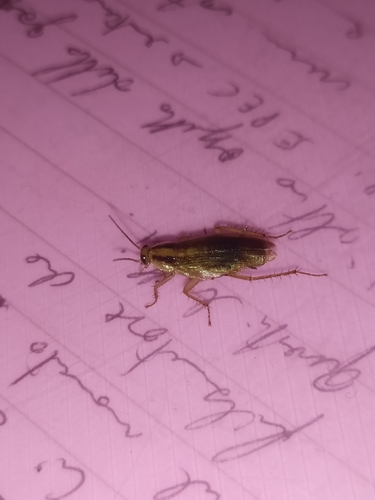
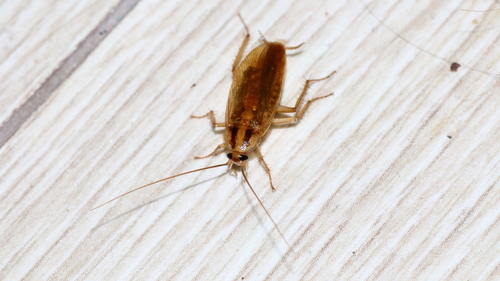
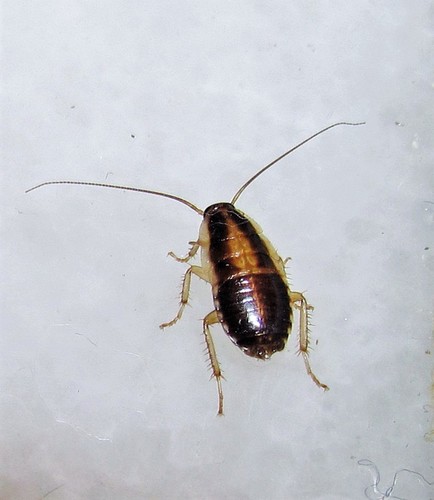
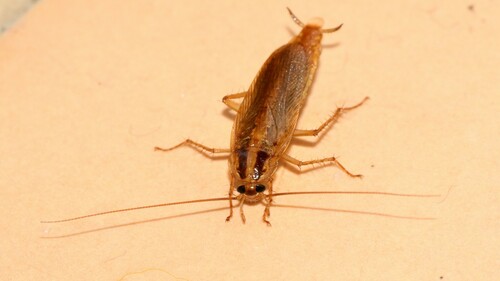
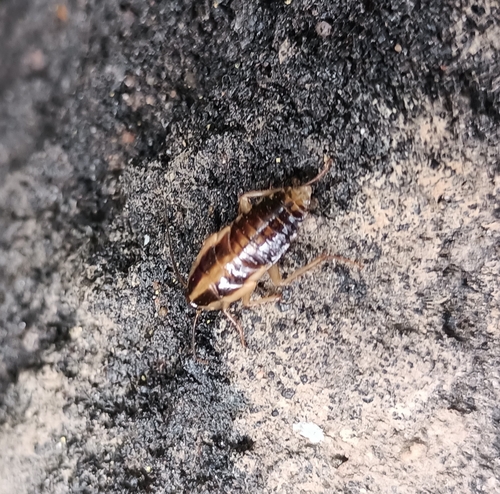
Adults are small (about 12-16 mm long), broadly oval and flattened. Colour is light tan to medium brown with two darker longitudinal stripes on the pronotum (the plate behind the head). Wings are present in both sexes but are weakly developed for flight; males are slightly smaller and more slender than females. Nymphs are wingless, darker when newly hatched, and become more uniformly brown with each molt.
- Small size (12-16 mm) and light brown colour with two dark parallel stripes on the pronotum
- Nocturnal behaviour; typically seen running, not flying, and hiding in cracks and behind appliances
- Both sexes have wings but poor flight; males are slightly more slender
- Nymphs are wingless and darker when newly hatched, becoming browner with molts
Lookalikes
Brown-banded cockroach Supella longipalpa
Smaller and marked with light bands across the wings and abdomen; prefers drier locations higher on walls and ceilings.
Oriental cockroach Blatta orientalis
Much darker (near black), larger and slower-moving; prefers cooler, damp locations like basements.
↻Life cycle
Egg (ootheca)
Females produce an egg capsule (ootheca) containing about 30-40 eggs. The female typically carries the ootheca until just before the eggs hatch.
Nymph (immature)
Nymphs hatch from the ootheca and go through multiple molts (instars), gradually resembling adults but without fully developed wings.
Adult
After the final molt, adults have wings and can reproduce. Development from egg to adult takes several weeks to a few months depending on temperature and food availability.
🍃Diet and predators
Young eat
Greasy food residues, starches, sugars, paper, glue, organic debris and other household scraps
Adults eat
Omnivorous scavengers: food scraps, crumbs, grease, decaying matter, pet food, and non-food items like book bindings and soap when other food is scarce
Predators of the young
Spiders, ants, centipedes, parasitoid wasps, predatory roaches
Predators of adults
Spiders, centipedes, ants, amphibians in some settings, and predatory insects
🌱Effect on plants and gardens
German cockroaches are scavengers and do not feed on living garden plants; they do not benefit or significantly harm outdoor plants.
How to get rid of german cockroachs
Remove food, water and clutter: store food sealed, clean grease and crumbs, fix leaks and take out trash nightly. Seal cracks around plumbing and cabinets. Use cockroach bait gels and bait stations as the main treatment, with sticky traps to monitor; avoid spraying repellent insecticides over baits and avoid foggers, which scatter roaches and rarely solve infestations. For large or recurring infestations, hire a licensed pest control professional.
📍Where and when to find it
Look at night in kitchens and bathrooms: behind stoves, refrigerators, under sinks, inside cabinets, in wall and floor voids, around plumbing and warm appliances; find egg cases tucked into tight cracks.
Best time
Any month indoors; best to observe at night with a flashlight when they are active.
Observation tips
Use sticky traps to confirm presence and hotspots; inspect behind and under appliances and inside dark, narrow crevices. Wear gloves when handling contaminated items.
✨Fun facts
- Females often carry the egg case (ootheca) until just before the eggs hatch, which helps protect developing young.
- German cockroaches breed very quickly and many populations have developed resistance to common insecticides, which makes control challenging.
- They are almost entirely human-associated and are rarely found outdoors in cold climates.
?Frequently asked questions
Do German cockroaches bite?
They rarely bite people; biting is uncommon. The main health concern is contamination of food and triggering of allergies and asthma.
Are German cockroaches dangerous?
Not directly venomous, but they spread bacteria and allergens that can contaminate food and worsen asthma. Heavy infestations are a health concern.
Why do I have German cockroaches in my house?
They are attracted by food, water and shelter. Kitchens, bathrooms, leaks, clutter and accessible food waste make buildings attractive to them.
How do I get rid of German cockroaches?
Use an integrated approach: eliminate food and water sources, seal cracks and hiding places, clean crumbs and grease, use bait gels and bait stations, place sticky traps for monitoring, and consider professional pest control for large or resistant infestations.
Can German cockroaches fly?
Adults have wings but are poor flyers; they mostly run. Males may glide short distances but sustained flight is rare.
📷Photos of the german cockroach
More cockroaches & termites
This guide was written with AI assistance and fact-checked, last updated 2026-10-09. Identification from photos is never certain: don't handle insects you can't identify, and get medical advice for bites, stings or allergic reactions.