
Eastern subterranean termite
Reticulitermes flavipes · Subterranean termites
A widespread North American subterranean termite species that feeds on wood and causes structural damage; colonies can become very large.
!Is the eastern subterranean termite dangerous?
No. Termites are not venomous and do not transmit diseases to people. They do not usually bite humans; bites or pinches from soldiers are rare and cause only minor irritation. The main hazard is structural damage to buildings which can be costly and, if severe, create safety risks. If you suspect an infestation, avoid moving infested timbers and contact a licensed pest control professional for inspection and treatment.
Pets
Termites are not toxic to pets and are rarely eaten; the main risk for pets is ingestion of treated wood or bait stations—keep pets away from bait stations and treated areas and follow label instructions or vet advice if ingestion is suspected.
📖Overview
Reticulitermes flavipes is a common subterranean termite found across much of eastern and central North America. Colonies live in the soil and build mud tubes to reach wood above ground; they feed on cellulose in dead wood, building timbers, paper and similar materials. Colonies include workers, soldiers and reproductives (alates and a queen/king) and can persist for many years, sometimes reaching hundreds of thousands to millions of individuals.
This species is an important decomposer in forest ecosystems but is also one of the major structural pests of houses and wooden structures in its range. Swarming flights of winged reproductives occur seasonally (often spring) and are a common way homeowners first notice an infestation. Control usually requires professional pest management because colonies are hidden in soil and wood and are difficult to eliminate with simple DIY measures alone.
🔍How to identify a eastern subterranean termite
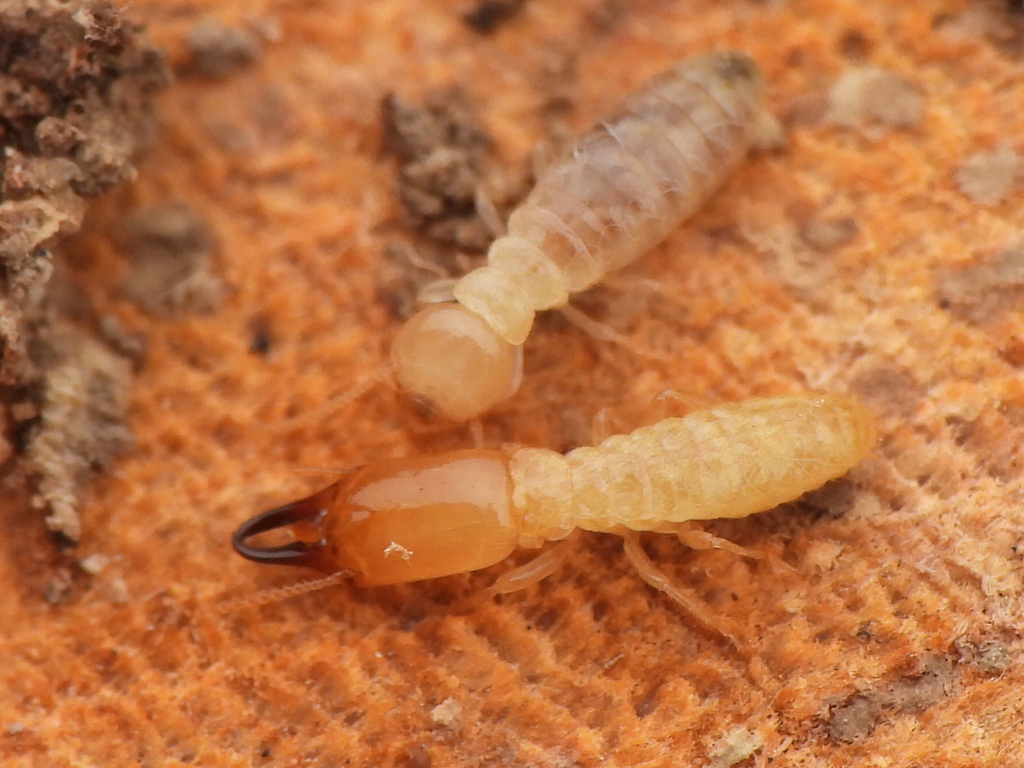
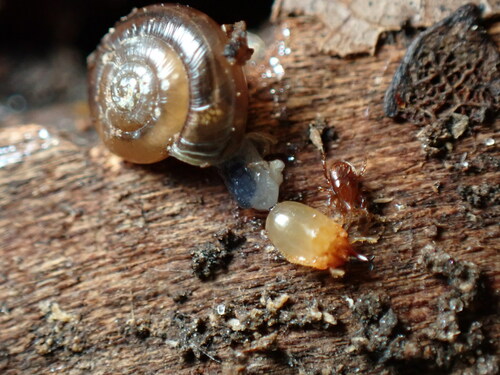
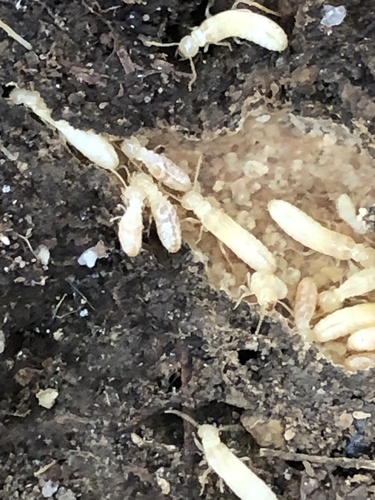
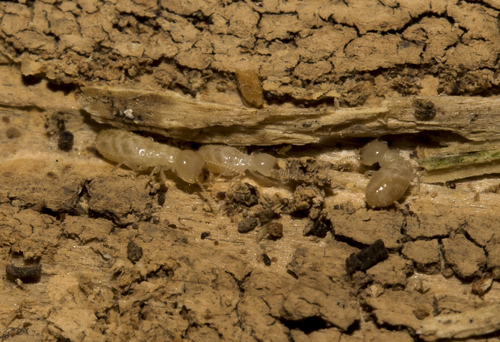
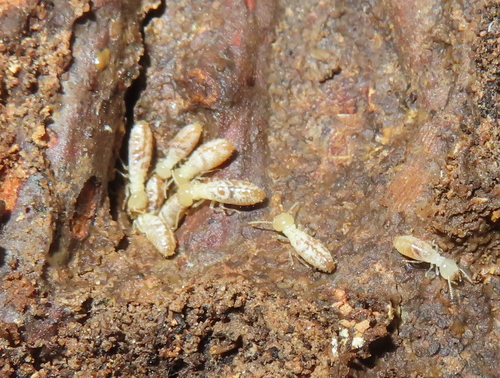
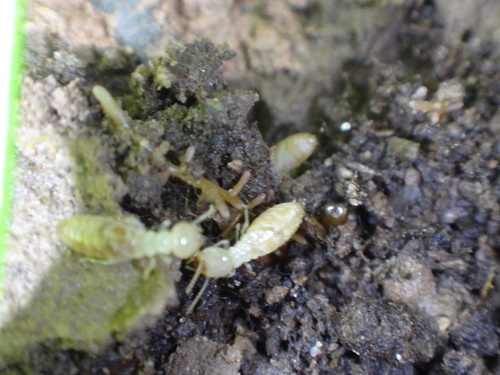
Workers are creamy-white to pale beige and soft-bodied, typically about 3-5 mm long. Soldiers have an elongated, rectangular, yellowish-brown head with long dark mandibles for defense; soldier body length is about 4-6 mm. Reproductive alates (swarmers) are dark brown to black, with two pairs of equal-length, translucent to smoky wings that extend well past the abdomen; alates are about 8-10 mm long including the wings. Termites are soft-bodied, have straight antennae with many bead-like segments, and lack the constricted 'waist' seen in ants.
- Look for mud tubes (dirt-smeared tunnels) on foundation walls, piers, beams or exterior surfaces – a key sign of subterranean termite activity.
- Workers are soft, cream-colored, and lack the narrow 'wasp waist' of ants; antennae are bead-like (moniliform) and straight.
- Winged alates have two pairs of equal-length wings with visible veins; shed wings (discarded near windows or light sources) are a common sign after swarms.
- Damaged wood sounds hollow when tapped and may have a thin veneer of surface intact; galleries inside follow the grain and are lined with soil-like material.
Lookalikes
Western subterranean termite Reticulitermes hesperus
Geographic separation (western vs eastern North America); morphological differences are subtle and often require expert or genetic identification.
Virginia subterranean termite Reticulitermes virginicus
Occurs in overlapping areas with R. flavipes; distinguishing requires specialist examination of soldier head shape and gut morphology or DNA.
Formosan subterranean termite Coptotermes formosanus
Formosan termite is typically larger, more aggressive and forms supercolonies; soldiers and alates are bulkier and control approaches may differ.
↻Life cycle
Egg
Laid by the queen in protected galleries; tiny, white oval eggs that cluster in nursery areas.
Nymph (immature)
Hatch into nymphs that molt into workers, soldiers or reproductives depending on colony needs; nymphs are whitish and soft-bodied.
Adult (worker, soldier, reproductive)
Colony members: sterile workers (forage and feed colony), soldiers (defend) and reproductives. Winged alates leave the colony during swarms to mate and start new colonies; a royal pair founds a colony and begins laying eggs.
🍃Diet and predators
Young eat
Young nymphs are fed by workers on digested cellulose and gut symbionts passed via trophallaxis.
Adults eat
Workers consume cellulose from dead wood, structural timber, paper, cardboard and other cellulose materials. They rely on gut protozoa and bacteria to digest cellulose.
Predators of the young
Ants, predatory beetles, spiders, centipedes, some birds and small mammals.
Predators of adults
Ants (major predators of colonies), some birds, small mammals and parasitoids; alates are preyed on during swarms by many aerial predators.
🌱Effect on plants and gardens
Feeds on dead wood, structural lumber, paper and other cellulose materials. In forests and natural settings they help decompose dead wood; in human structures they damage timber and built wooden elements.
How to get rid of eastern subterranean termites
Inspection by a licensed pest-control professional is recommended. Common methods: baiting systems that transfer slow-acting toxicants through foraging pathways, liquid soil treatments to create chemical barriers, localized removal and replacement of heavily infested wood, and reducing moisture and wood-soil contact around structures. Do not attempt to treat large or concealed colonies with only surface sprays; professionals use tools and diagnostics to locate colony centers.
📍Where and when to find it
Look for mud tubes on foundations, inside wall cavities, under floorboards, in damp crawlspaces, around tree stumps and fallen logs. Winged alates are seen near lights during swarms; discarded wings often collect on windowsills or floors.
Best time
Best months: spring (regional variation). Swarms usually happen during the day, often in the morning or around midday after rain; workers may be seen when infested wood is exposed.
Observation tips
Photograph mud tubes, damaged wood (cross-section), and any alates or shed wings. Do not break apart structural wood extensively yourself; document and contact a professional for inspection to avoid inadvertently spreading the colony.
✨Fun facts
- A single R. flavipes colony can forage over a large area, with workers travelling tens of metres through underground tunnels.
- Termites rely on gut protozoa and bacteria to digest cellulose; without these symbionts they cannot process wood.
- Swarmers (winged reproductives) often gather around lights and windows—finding discarded wings indoors is a common first sign of infestation.
- Workers maintain soil moisture in galleries and build mud tubes to protect themselves from desiccation and predators while foraging above ground.
?Frequently asked questions
Are eastern subterranean termites dangerous to people?
They are not venomous and rarely bite people; the danger is to wooden structures—untreated infestations can cause serious and costly damage.
Do eastern subterranean termites bite?
Soldier termites can nip but bites are uncommon and cause only minor irritation; they do not inject venom.
Why do I have termites in my house?
Termites are attracted to wood in contact with moist soil, high humidity, leaking plumbing, or decaying wood near foundations—these conditions allow colonies to forage into structures.
How do I get rid of an eastern subterranean termite infestation?
Contact a licensed pest control professional. Effective options include baiting systems that eliminate the colony, liquid soil barrier treatments, and removing moisture and wood-to-soil contact. DIY surface sprays rarely eliminate hidden colonies.
When do eastern subterranean termites swarm?
Regional spring months are most common for swarms, often on warm, humid days or after rain; timing varies with latitude and local conditions.
Can I prevent termites around my home?
Reduce wood-soil contact, fix leaks, maintain dry crawlspaces, store firewood away from the house, ventilate basements/crawlspaces, and have regular professional inspections.
📷Photos of the eastern subterranean termite
More cockroaches & termites
This guide was written with AI assistance and fact-checked, last updated 2026-10-09. Identification from photos is never certain: don't handle insects you can't identify, and get medical advice for bites, stings or allergic reactions.