
Spined soldier bug
Podisus maculiventris · Predatory stink bugs
A beneficial predatory stink bug that eats caterpillars and other soft-bodied pests in gardens and crops.
!Is the spined soldier bug dangerous?
Only mildly. Not poisonous. Adults can release a distinctive odor (defensive scent) if crushed. They do not sting, but can give a defensive bite with their beak that may cause a brief, sharp pain and local irritation; reactions are typically minor. Clean any bite with soap and water and treat symptoms (cold compress, topical antiseptic) if needed. Seek medical advice for severe allergic reactions.
Pets
Generally harmless to pets. A bite to small pets is unlikely but could cause minor local irritation. Avoid feeding insects to pets due to potential choking or mild gastrointestinal upset.
📖Overview
Podisus maculiventris, the spined soldier bug, is a predatory shield-shaped insect in the stink bug family that helps control many caterpillars and beetle larvae. Adults and nymphs use piercing-sucking mouthparts to subdue prey and are commonly found on crops, gardens and wild vegetation. They overwinter as adults and have multiple generations per year in warm areas. They are considered beneficial to farmers and gardeners because they reduce populations of pest insects.
🔍How to identify a spined soldier bug
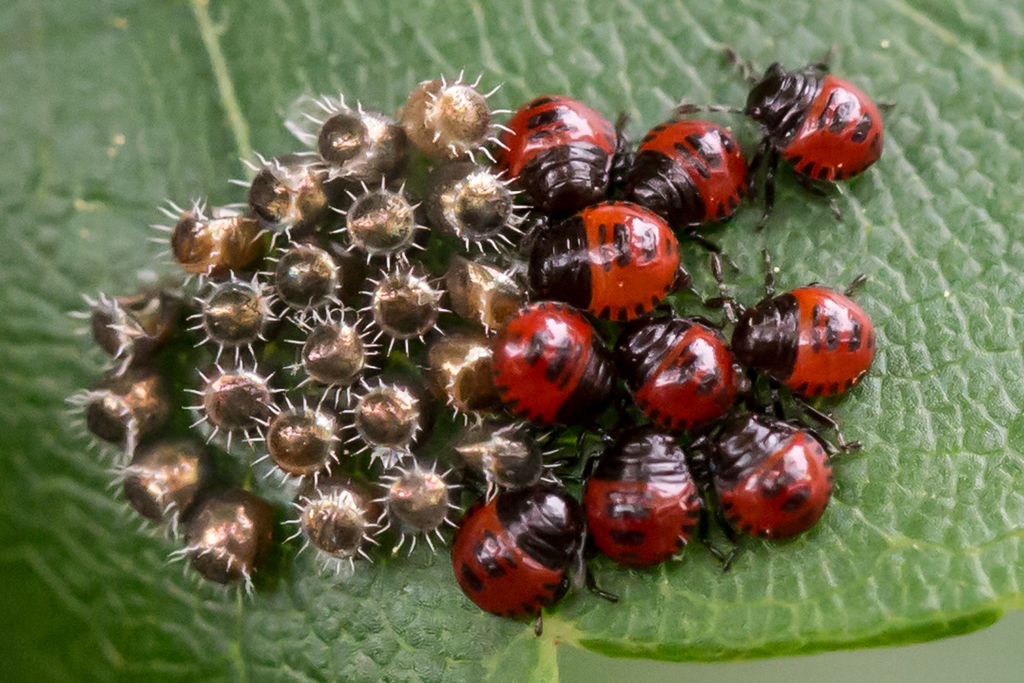
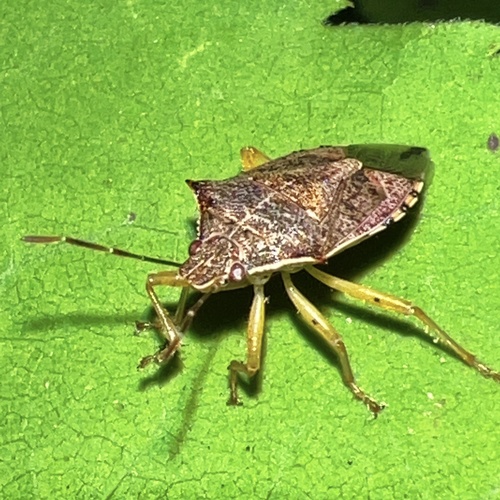
Adults are typical pentatomid (shield-shaped) bugs about 8.5-13 mm long with a pointed 'spine' or sharp projection on each side of the pronotum (hence the common name). Ground coloration is pale tan to light brown, densely marked with dark punctures, and there is usually a dark spot or streak near the tip of each wing membrane. Nymphs are wingless for several instars and are often brightly colored with red or orange markings on younger stages. Eggs are barrel-shaped, dark bronze to grey with a fringe of spines around the top, and laid in clusters on leaves or stems.
- Shield-shaped body 8.5-13 mm long with a distinct sharp projection or 'spine' at each side of the pronotum.
- Pale tan to light brown, densely dotted with dark punctures; often a dark spot near the tip of each wing membrane.
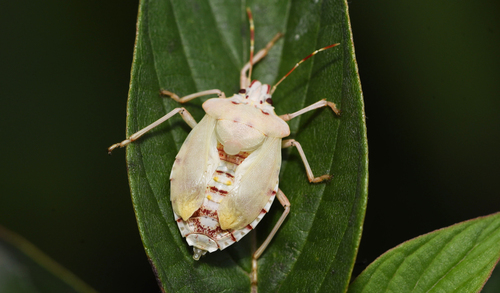
- Nymphs lack wings and are often orange-red in early instars; active hunters on leaves and stems.
- Eggs are barrel-shaped and laid in tight clusters on the underside of leaves.
Lookalikes
Brown marmorated stink bug Halyomorpha halys
H. halys is typically broader and more rounded, lacks the pronounced pronotal spines of Podisus maculiventris, and has white banding on the antennae; H. halys is mainly a plant feeder and a nuisance pest.
Other Podisus species Podisus spp.
Close relatives share a predatory habit; species-level ID requires examination of size, markings, and sometimes genitalia; P. maculiventris often distinguished by its specific pronotal spines and coloration pattern.
↻Life cycle
Egg
Barrel-shaped eggs laid in clusters on leaves or stems; dark bronze to grey with a fringe of short spines around the top.
Nymph (immature)
Several wingless instars; early instars are often orange-red and active predators; wings develop in later instars.
Adult
Winged, shield-shaped adult with a pronotal spine; adults mate and females lay eggs; adults may overwinter.
🍃Diet and predators
Young eat
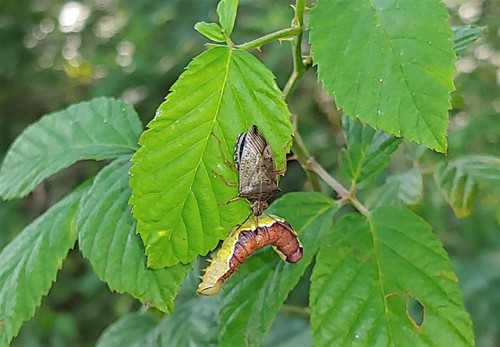
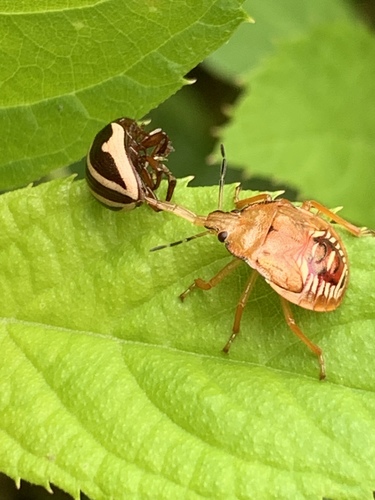
Small caterpillars, beetle larvae, sawfly larvae and other soft-bodied arthropods
Adults eat
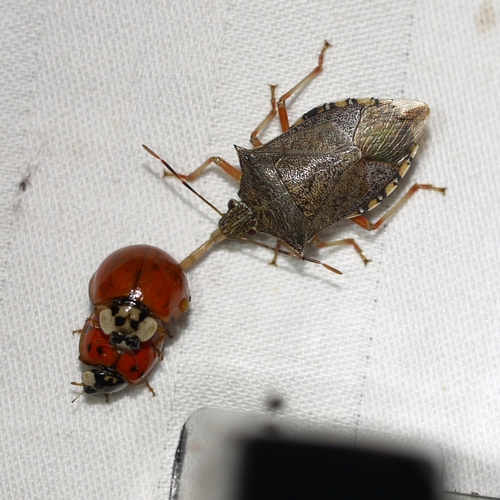
Larger caterpillars, beetle larvae, and other insect prey; will also feed opportunistically on nectar or honeydew when prey is scarce
Predators of the young
Spiders, predatory insects (assassin bugs, lacewing larvae), parasitoid wasps
Predators of adults
Birds, spiders, larger predatory insects, and parasitic flies or wasps
🌱Effect on plants and gardens
Does not feed on plant tissue as a primary food source; instead reduces populations of herbivorous insect pests (caterpillars, beetle larvae, sawfly larvae). Occasionally pierces fruit or tender plant tissue but this is not a major impact.
📍Where and when to find it
Search on foliage, crop plants and shrubs where caterpillars and other prey feed; look for egg clusters on the undersides of leaves and active nymphs on stems.
Best time
Spring through autumn during daylight hours; nymphs are most active when hunting in warm weather.
Observation tips
Look carefully on the undersides of leaves and near feeding damage caused by caterpillars. Photograph both dorsal and side views to show the pronotal spines for identification.
✨Fun facts
- The species name maculiventris is Latin for 'spotted belly'.
- Both nymphs and adults are active hunters and can significantly reduce populations of caterpillars that damage crops.
- They can be reared and released by biological-control programs to manage pest outbreaks in vegetables and ornamentals.
?Frequently asked questions
Do spined soldier bugs bite people?
They do not sting, but can give a defensive bite with their piercing mouthparts that may cause brief, sharp pain and minor irritation; reactions are usually mild.
Are spined soldier bugs harmful to my garden plants?
No — they are predators of pest insects and are generally beneficial. They are not considered garden pests.
Why is this bug in my house?
Adults may wander indoors seeking shelter, especially in autumn while looking for overwintering sites. They do not breed indoors.
How can I get rid of spined soldier bugs?
Because they are beneficial, avoid killing them in gardens. To remove individuals from the home, gently sweep or capture them in a jar and release outdoors. Seal cracks and use screens to prevent entry.
Where does the spined soldier bug live?
In fields, gardens, orchards and meadows across much of North America; they live on plants where prey insects are found and overwinter as adults in leaf litter or sheltered places.
📷Photos of the spined soldier bug
More true bugs, cicadas & aphids
Bites cause itching
Non-venomous nuisance
Non-toxic
Smelly secretion
Potential disease vector
Painful bite
This guide was written with AI assistance and fact-checked, last updated 2026-10-10. Identification from photos is never certain: don't handle insects you can't identify, and get medical advice for bites, stings or allergic reactions. More about the spined soldier bug: iNaturalist, Wikipedia.