
Stink bugs in the house: how to identify them, do they bite, and how to keep them out
Every autumn, shield-shaped brown bugs gather on sunny walls and turn up on curtains, lampshades and windows. In most of the US, and more and more in Europe, they're brown marmorated stink bugs looking for somewhere to spend the winter. They're a nuisance, not a danger: they don't bite people, don't breed indoors and don't damage the house.
A few other bugs move in at the same time, and one lookalike outdoors can give a painful bite. Here's how to tell them apart.
Brown marmorated stink bug: the one in your house
The brown marmorated stink bug is about 1.5 cm long, shield-shaped and mottled grey-brown. Two features give it away: pale bands on the antennae, and alternating light and dark bands along the edge of the abdomen, which sticks out beyond the wings. The 'shoulders' are smooth and rounded, not pointed.
It comes from East Asia, was first found in Pennsylvania in the late 1990s and has spread to most US states, Canada and much of Europe. In autumn, adults gather on warm, sunny walls and squeeze in through gaps around windows, doors, siding and vents to overwinter in walls and attics. On warm winter days they wake up and wander into rooms, often flying clumsily towards lights.
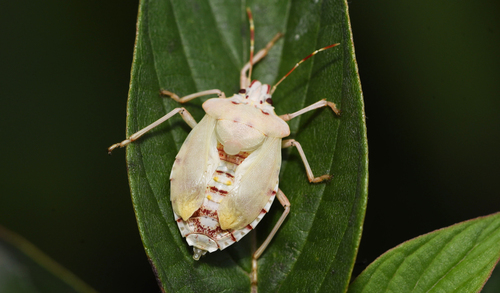
Do stink bugs bite? Are they poisonous?
Stink bugs have a beak for sucking plant sap, not for biting people, and they almost never try. They aren't venomous and don't carry diseases.
The smell is their defence: when crushed or disturbed they release a strong odour, often compared to coriander. It's unpleasant but harmless, though the liquid can irritate skin and stain fabrics, so wash your hands after touching one.
Stink bugs aren't poisonous to cats and dogs. A pet that eats one may drool or vomit because of the taste, and eating a lot of them can upset the stomach. Call your vet if a pet keeps vomiting or seems unwell.
Other stink bugs: brown, green and spiny
The brown stink bug is a native North American species that looks similar but has plain antennae without pale bands, and a paler, yellowish underside. It lives mainly on crops and garden plants and comes indoors less often.
Green stink bugs are bright green and shield-shaped. In Europe, the green shield bug turns bronze-brown in autumn before it hibernates, which leads to a lot of confusion with brown stink bugs.
The spined soldier bug is a useful one to recognise: it's brownish with sharp, pointed spines on its shoulders. It's a predator that eats caterpillars and beetle larvae, so leave it alone in the garden.
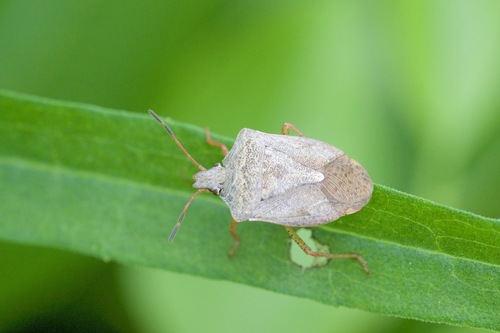
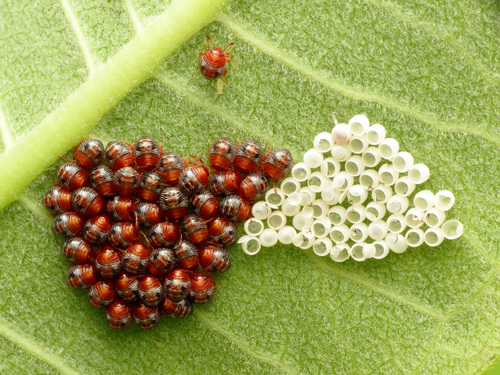

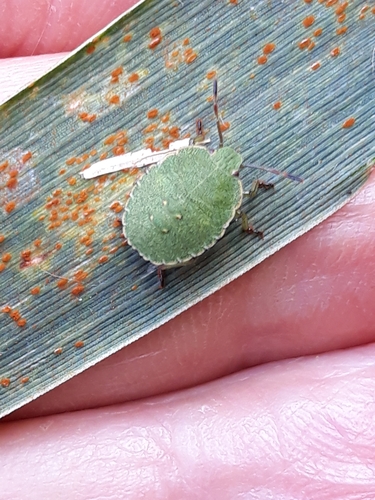
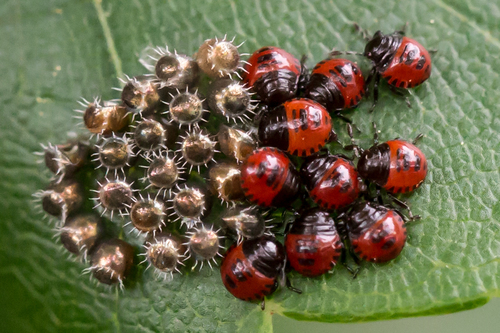
Lookalikes that also move indoors in autumn
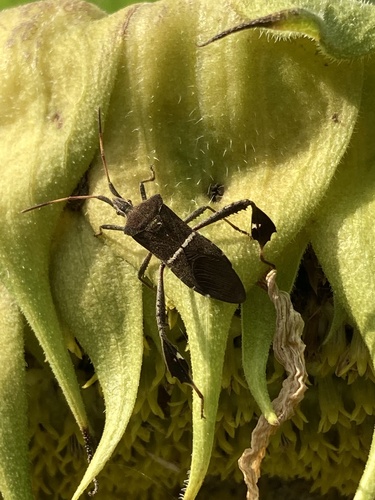
The western conifer seed bug is longer and narrower than a stink bug, about 2 cm, brown with a thin white zigzag across the middle of its back and flattened, leaf-like widenings on its hind legs. It flies with a loud buzz and smells of pine when handled. It's harmless and is now common across North America and Europe.
Boxelder bugs are black with red or orange lines on the back and wing edges, about 1.2 cm long. They feed on boxelder and maple seeds and gather in large numbers on sunny walls in autumn. They don't bite or damage the house, but their droppings can stain curtains.
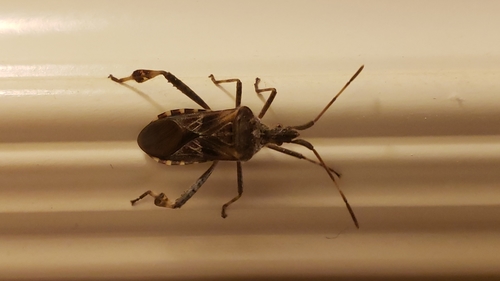
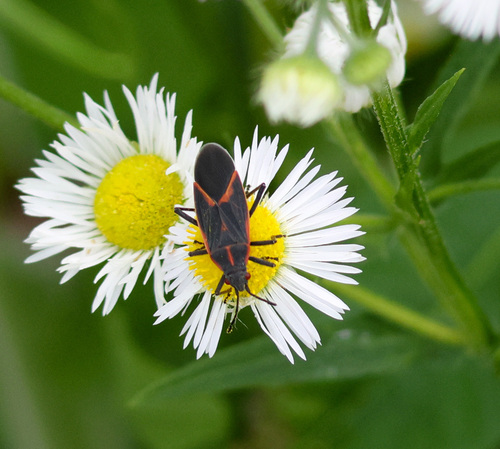
The one not to pick up: wheel bug
The wheel bug is a large grey assassin bug, up to about 3.5 cm long, with a curved crest on its back like a half cogwheel. It hunts caterpillars and other insects and is usually found outdoors on trees and shrubs.
Unlike stink bugs, it can bite people if handled, and the bite is very painful and can stay sore for days. Move it with a stick or a jar, not your hands.
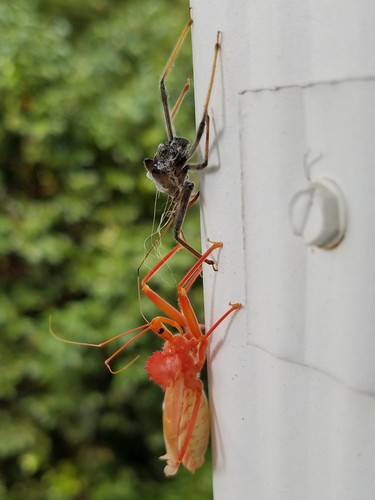
Garden bugs mistaken for stink bugs
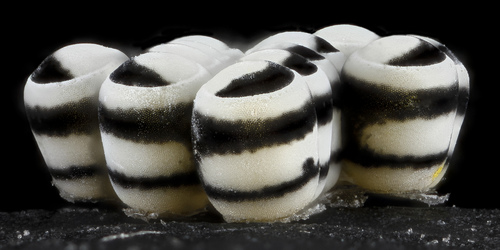
Squash bugs are flat, grey-brown and about 1.5 cm long. They gather in groups on squash and pumpkin plants and lay rows of shiny bronze eggs under the leaves. Leaf-footed bugs are longer, with flattened, leaf-shaped hind legs. Harlequin bugs are shield-shaped like stink bugs but black with bright orange, red or yellow patterns, and feed on cabbage-family plants.
They don't come indoors to overwinter like brown marmorated stink bugs do.

How to get rid of stink bugs without the smell
Don't crush or squash them. Pick them up gently with a tissue, or knock them into a jar of soapy water, where they sink and drown. Vacuuming works for larger numbers, but the vacuum can smell for a while; a stocking held over the end of the hose with a rubber band lets you empty them outside.
To keep them out next year, seal gaps around windows, doors, pipes, cables and siding before early autumn, repair window and door screens, and fit screening over roof and wall vents. Spraying insecticide indoors isn't recommended: the dead bugs in walls attract carpet beetles, and new ones keep emerging until spring anyway.
If you're not sure which bug you have, compare it with the photos on this page, or identify it from a photo.
?Frequently asked questions
Why are there stink bugs in my house?
They're looking for a sheltered place to spend the winter. In autumn, brown marmorated stink bugs gather on sunny walls and squeeze in through gaps around windows, doors and vents. They hide in walls and attics and come out on warm days. They don't breed indoors.
Can stink bugs bite you?
Practically never. Stink bugs have a beak for sucking plant sap and aren't venomous. The bug most often confused with them that does bite is the wheel bug, a large grey assassin bug with a cogwheel-shaped crest, which lives outdoors.
Are stink bugs harmful to dogs and cats?
They aren't poisonous. A pet that eats one may drool or vomit because of the bad taste, and eating many can upset the stomach. Call your vet if your pet keeps vomiting or seems unwell.
What bug looks like a stink bug but is longer?
Usually the western conifer seed bug. It's about 2 cm long, brown with a thin white zigzag across its back and leaf-like widenings on its hind legs. It also comes indoors in autumn and is harmless.
What's the best way to kill stink bugs in the house?
Drop them into a jar of soapy water, or vacuum them up, rather than crushing them, which releases the smell. Sealing gaps around windows, doors and vents before autumn is the best way to stop them coming in.
Written by the Insect Scanner team, last updated 2026-11-09. Identification from photos is never certain: don't handle insects you can't identify, and get medical advice for bites, stings or allergic reactions.