
Eastern leaf-footed bug
Leptoglossus phyllopus · Leaf-footed bugs
A medium-sized sap‑sucking true bug of eastern North America that feeds on developing fruits and seeds and can be a garden pest.
!Is the eastern leaf-footed bug dangerous?
No. Not venomous and not a disease vector. Can emit a strong, unpleasant odor when disturbed and may rarely jab with its beak if held, causing brief local pain. Wash skin with soap and water if contacted by the smell or defensive fluids; clean any puncture as a minor wound.
Pets
Generally harmless to cats and dogs. If a pet eats many bugs, it may cause mild digestive upset. The odor and taste usually deter pets from eating lots of them.
📖Overview
Leptoglossus phyllopus is a species of coreid (leaf-footed) bug found across the southern and eastern United States into Mexico and Central America. Adults and nymphs use piercing-sucking mouthparts to feed on seeds, fruits and developing pods, often causing dimpling, discoloration or aborted seeds in crops and garden fruits. They are most active during warm months; adults overwinter and reappear in spring.
They are not dangerous to people — they do not have venom — but will release a foul-smelling defensive odor if handled and may rarely jab with their beak if held. Populations can build up on crops such as tomatoes, pomegranates, citrus (in southern areas), peppers and certain field crops where they are considered an occasional pest.
🔍How to identify an eastern leaf-footed bug
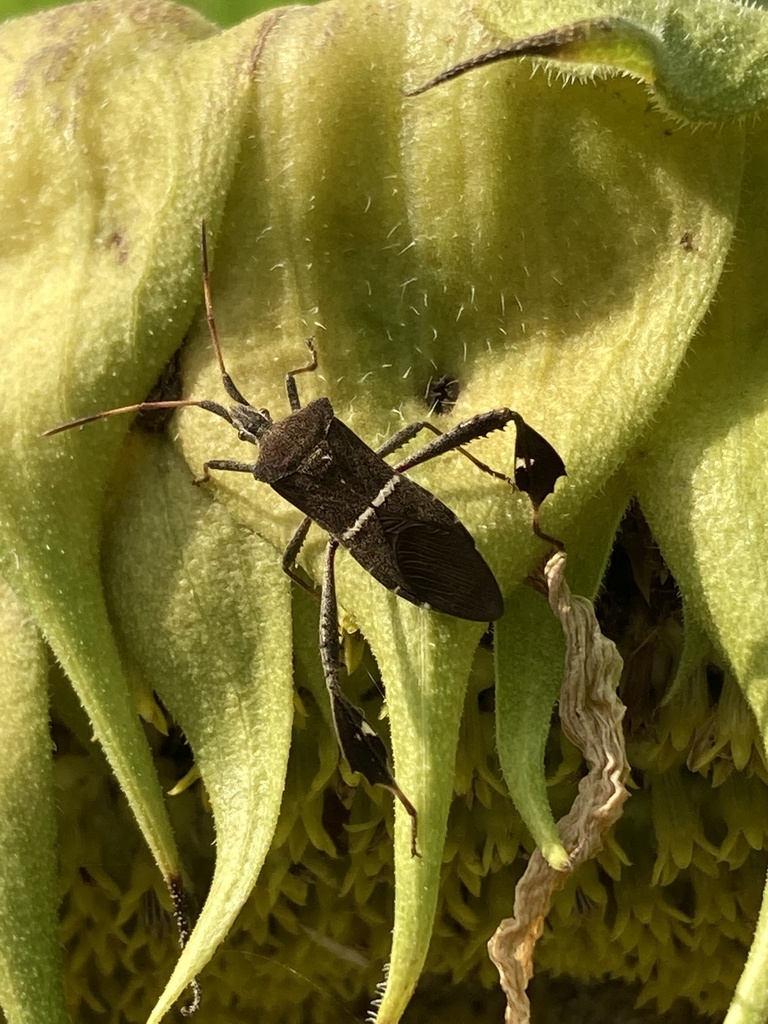
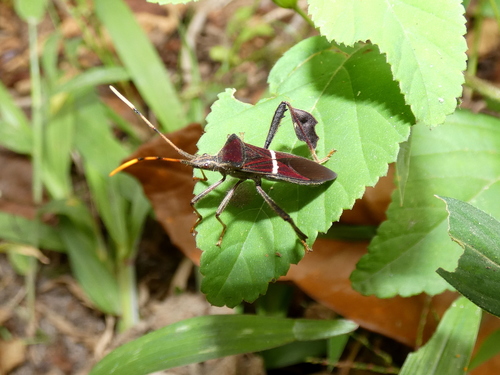
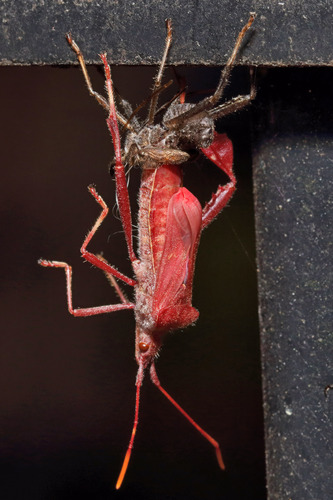
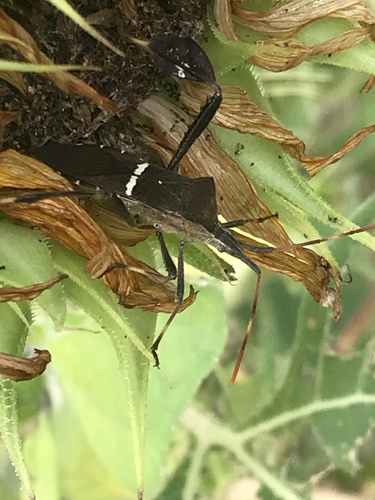
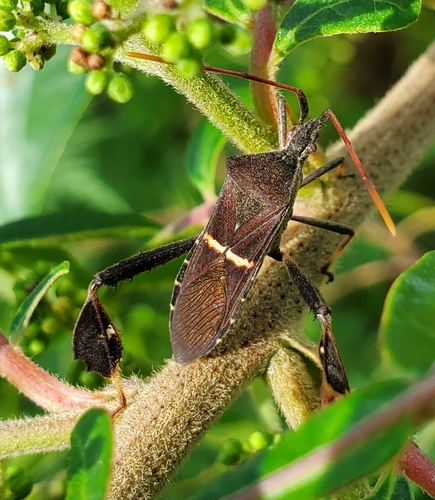
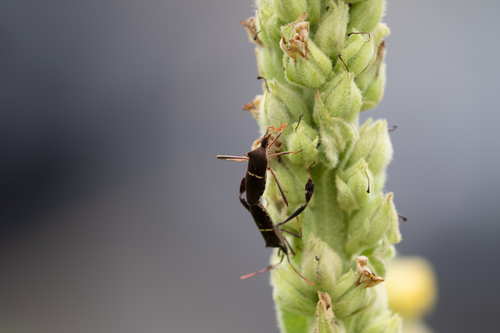
Adult eastern leaf-footed bugs are elongated, somewhat flattened true bugs about 18-21 mm long with long legs and antennae. The hind tibia has a flattened, leaf-like expansion (giving the family the common name). The overall coloration is dark brown with a distinct straight cream to whitish band across the wings and orange-tipped antennae. Nymphs hatch reddish to orange in early instars and darken as they mature; wing pads are visible in later nymphal stages. Adults have fully formed wings that lie flat along the back, creating a characteristic X-shaped pattern of the wing covers.
- Leaf-like expansion on the hind tibia (flattened 'leaf' on the hind leg) typical of many coreids
- Elongated body about 18-21 mm long with a straight cream band across the wings and an X-shaped wing pattern when closed
- Adults dark brown; early-stage nymphs reddish or orange
- Found on fruiting plants and seeds, often on tomatoes, peppers and fruit trees
Lookalikes
Western conifer seed bug Leptoglossus occidentalis
L. occidentalis is associated with conifers and has a thin white zigzag line across the wings; L. phyllopus has a straighter, bolder cream band and is associated with fruiting plants.
Leaf-footed bug (general) Leptoglossus spp.
Several Leptoglossus species look similar; confirm by host plant, regional range and details of body markings (banding and pronotum shape) to separate species.
↻Life cycle
Egg
Females lay clusters of barrel-shaped eggs on stems, leaves or fruiting structures; eggs are small and often aligned in rows.
Nymph (immature)
Nymphs hatch as bright red/orange, flightless nymphs and pass through several instars, gradually darkening and developing wing pads.
Adult
Adults are winged and capable of flight; they mate and feed on fruits and seeds. Adults overwinter in sheltered sites and resume activity in spring.
🍃Diet and predators
Young eat
Plant sap from seeds, developing fruits, pods and stems of host plants
Adults eat
Same as juveniles: seed and fruit juices from a variety of crops, ornamentals and weeds
Predators of the young
Predatory insects (assassin bugs, predatory beetles), spiders, birds; eggs are parasitized by small wasps
Predators of adults
Birds, spiders, predatory insects and small mammals; adults' smell and tough exoskeleton reduce some predation
🌱Effect on plants and gardens
Feeds on seeds and developing fruits of many plants: tomatoes, peppers, pomegranates, citrus (in southern areas), beans, magnolia, and various wild hosts. Feeding can cause blemishes, sunken spots, aborted seeds or reduced marketability of fruit.
How to get rid of eastern leaf-footed bugs
Hand-pick adults and nymphs into soapy water for small infestations. Remove nearby weeds and alternate host plants to reduce local populations. Use row covers early in the season to protect small plants. For larger or commercial outbreaks, insecticidal soaps, pyrethroid-based insecticides or other registered products can be effective when applied according to label instructions and integrated pest management principles. Encourage natural enemies (predatory insects, spiders and parasitoids).
📍Where and when to find it
Look on fruiting stems, pods and developing fruits of host plants (tomato, pepper, pomegranate, beans, citrus in the south); nymphs are often clustered on the same plants as adults.
Best time
Late spring through fall; warm, sunny days when adults are active and feeding.
Observation tips
Inspect plants early morning or late afternoon when bugs are less active. Photograph both dorsal and lateral views to show the leaf-like hind tibia and overall body shape for identification.
✨Fun facts
- Nymphs hatch bright red or orange, making them much more conspicuous than adults.
- The 'leaf' on the hind leg probably helps break up the bug's outline and may aid in camouflage on stems and leaves.
- Like other true bugs, leaf-footed bugs have piercing-sucking mouthparts rather than chewing mouthparts.
?Frequently asked questions
Do eastern leaf-footed bugs bite people?
They are not aggressive toward people and lack venom. If held they may rarely jab with their beak, causing brief pain; they more commonly release a foul odor as a defense.
Are they harmful to my garden tomatoes or fruit?
Yes, they feed on developing fruits and seeds and can cause dimpling, discoloration or aborted seeds, reducing fruit quality.
Why are they in my house?
Adults may wander indoors seeking overwintering shelter in cracks, attics or sheds, or may be accidentally brought in on plants or fruit.
How do I get rid of them?
For small numbers, pick them off into soapy water. Remove nearby weeds and alternate hosts, use row covers, and consider insecticidal soaps or registered insecticides for large outbreaks. Encourage predators and avoid broad-spectrum insecticides when possible.
Will insecticides always stop them?
Insecticides can reduce populations but may not prevent re-invasion from nearby plants. Integrated approaches (removal, exclusion, natural enemies) work best.
📷Photos of the eastern leaf-footed bug
More true bugs, cicadas & aphids
Bites cause itching
Non-venomous nuisance
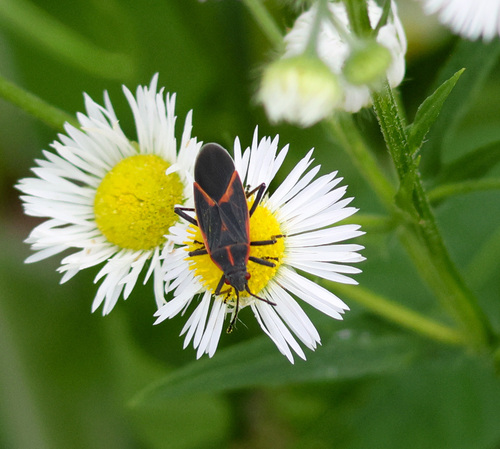
Non-toxic
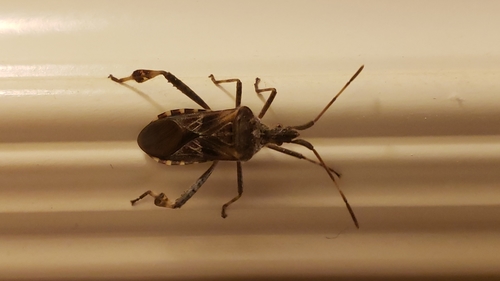
Smelly secretion
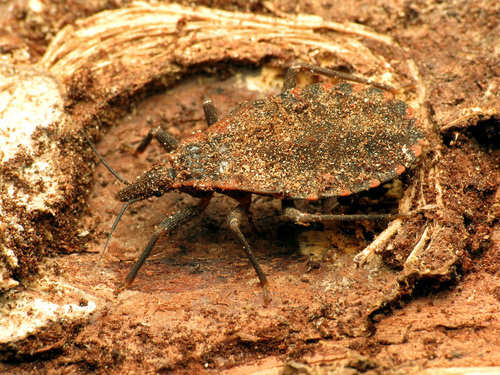
Potential disease vector
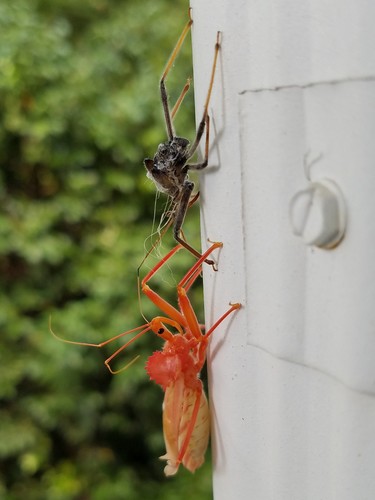
Painful bite
This guide was written with AI assistance and fact-checked, last updated 2026-10-10. Identification from photos is never certain: don't handle insects you can't identify, and get medical advice for bites, stings or allergic reactions. More about the eastern leaf-footed bug: iNaturalist, Wikipedia.