
Swamp cicada
Neotibicen tibicen · Cicadas
A large, loud summer cicada of eastern North American wetlands and riparian woodlands; males sing from trees to attract females.

!Is the swamp cicada dangerous?
No. Swamp cicadas are not venomous and do not sting. They can pinch with their mouthparts if handled roughly but bites are rare and not medically significant. Use gentle handling or avoid handling to prevent stress to the insect.
Pets
Generally harmless to pets. Curious dogs or cats may try to eat cicadas; while not toxic, a large number could cause mild gastrointestinal upset or choking in small animals.
📖Overview
Neotibicen tibicen, the swamp cicada, is a large annual cicada commonly found in wet or riparian habitats across much of eastern North America. Males create a loud, buzzing/whining daytime song during mid to late summer (the "dog days") to attract females. Adults are active above ground for a few weeks to a couple of months; nymphs live underground feeding on tree root xylem for several years before emerging to molt to adults. Swamp cicadas are not aggressive, do not sting, and are not medically dangerous.
🔍How to identify a swamp cicada
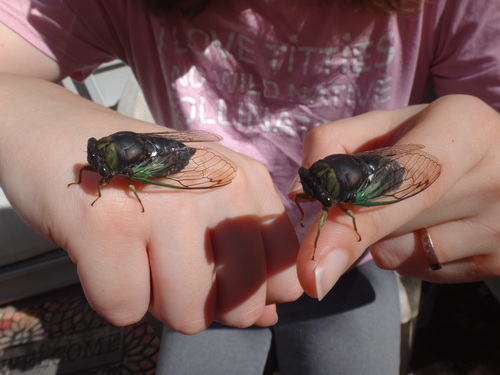
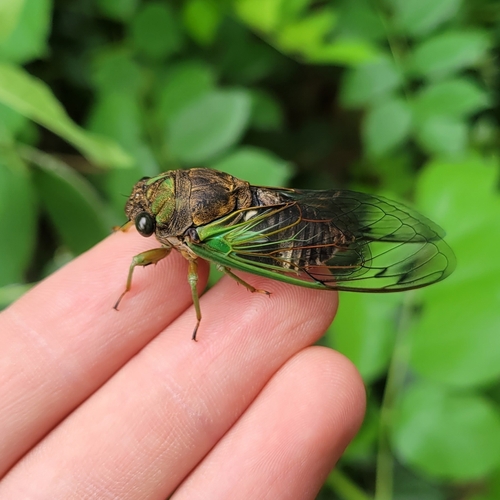
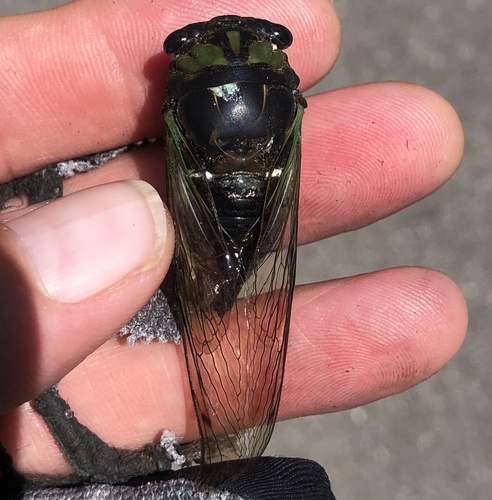
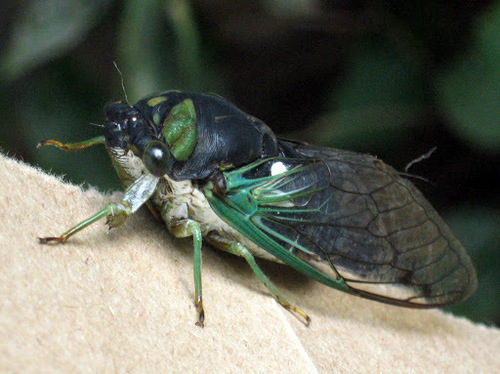
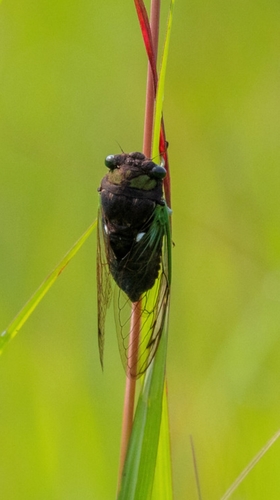
Adults are robust with clear, membranous wings and a stout body often patterned in greens, browns and black. The head and thorax typically show greenish or olive tones with darker markings; the abdomen is darker with pale dorsal markings. Forewings are long and narrow with prominent veins. Males and females look similar externally; males are identified by their calling behavior and more swollen terminal abdomen where the tymbal muscles are located.
- Large size with clear, elongated forewings and stout body 30-40 mm long
- Olive-green to brown body with darker markings and pale dorsal spots or stripes
- Loud, sustained daytime buzzing or whining song produced by males in mid to late summer
- Habitat association with wet or riparian wooded areas
Lookalikes
Dog-day cicada Neotibicen canicularis
N. canicularis is more uniformly green and often found in drier, upland trees; songs and subtle patterning differ — call and habitat help separate them.
Scissor grinder cicada Neotibicen pruinosus
N. pruinosus has more extensive dark markings and a different, mechanical-sounding call; check wing venation and call rhythm to distinguish.
↻Life cycle
Egg
Females lay eggs in slits cut into small twigs; eggs hatch in several weeks and tiny nymphs drop to the ground to burrow into soil.
Nymph (underground)
Nymphs live underground for multiple years feeding on root xylem; they grow through several instars until mature.
Adult
Nymphs emerge from soil, climb vegetation, and molt to winged adults. Adults mate, females lay eggs, and the cycle repeats. Adult stage lasts a few weeks.
🍃Diet and predators
Young eat
Root xylem fluids from trees and shrubs (sap)
Adults eat
Xylem sap tapped from twigs and small branches
Predators of the young
Underground predators include parasitic wasps, nematodes, fungi, small mammals and centipedes
Predators of adults
Birds, small mammals, bats, spiders, predatory wasps (including cicada killers), and predatory insects
🌱Effect on plants and gardens
Nymphs feed on xylem fluids from tree and shrub roots; adults feed on plant sap from twigs and branches. Heavy local egg-laying by many females can cause twig dieback in young or small trees (known as "flagging"), but established trees are rarely seriously damaged.
📍Where and when to find it
Perch on tree trunks, branches and twigs in wetlands, swamp edges, and riverside woodlands; nymphs are underground on root systems until emergence.
Best time
Mid to late summer during warm, sunny daytime hours; adult season typically lasts several weeks to a couple of months.
Observation tips
Approach quietly to photograph without startling; a telephoto or zoom helps since males sing from upper branches. Look for empty nymphal skins clinging to trunks after emergence.
✨Fun facts
- Male swamp cicadas have specialized ribbed membranes called tymbals that they vibrate to produce their loud daytime song.
- Despite their short adult lives, cicadas can spend several years as nymphs underground before emerging.
- Large cicada emergences provide a seasonal food bonanza that benefits many bird and mammal species.
?Frequently asked questions
Are swamp cicadas dangerous?
No. They are not venomous or poisonous and do not pose a health threat to people.
Do swamp cicadas bite or sting?
They do not sting. Biting is extremely rare; they may try to probe plants with mouthparts but are not dangerous to humans.
Why is a swamp cicada in my house?
Adults sometimes wander onto buildings or into homes during their active summer period, attracted to lights or by chance when resting on walls; they are accidental indoor visitors.
How do I get rid of cicadas around my house?
Physical removal or capture is safest: gently coax them into a container and release outdoors. Use fine netting to protect young trees during heavy emergences. Widespread insecticide use is not recommended and is often ineffective.
Will cicadas damage my trees or garden?
Minor damage (twig flagging) can occur where many females lay eggs in small branches, which can stress young or ornamental trees. Mature trees are usually unharmed.
When will I hear swamp cicadas singing?
Listen in mid to late summer during warm, sunny days — the males call mainly during daytime hours.
📷Photos of the swamp cicada
More true bugs, cicadas & aphids
Bites cause itching
Non-venomous nuisance
Non-toxic
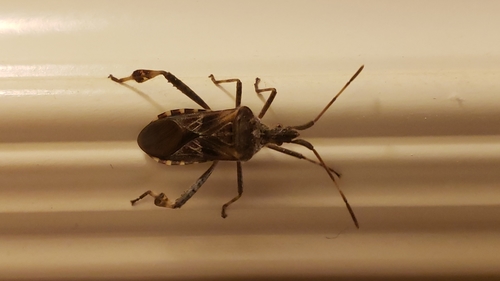
Smelly secretion
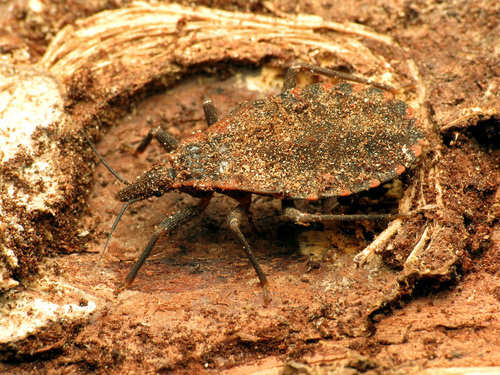
Potential disease vector
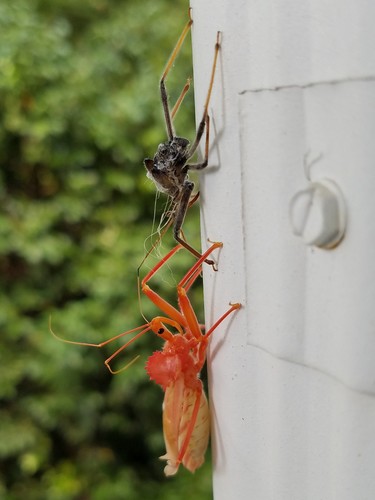
Painful bite
This guide was written with AI assistance and fact-checked, last updated 2026-10-10. Identification from photos is never certain: don't handle insects you can't identify, and get medical advice for bites, stings or allergic reactions. More about the swamp cicada: iNaturalist, Wikipedia.