
Scissor-grinder cicada
Neotibicen pruinosus · Cicadas
A large, loud summer cicada of eastern and central North America; males sing a sharp, metallic "scissor-grinding" call from trees and shrubs.
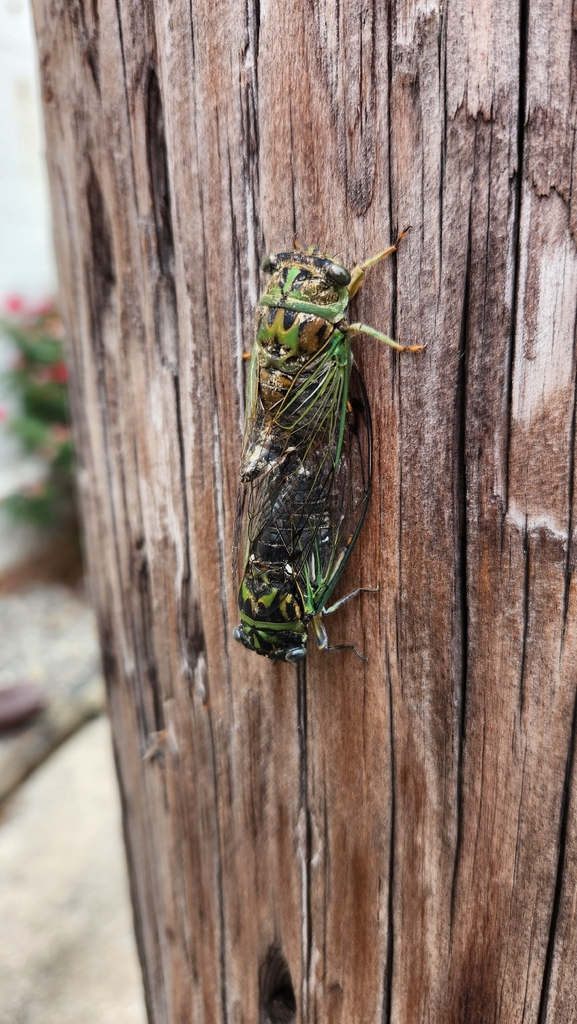
!Is the scissor-grinder cicada dangerous?
No. Scissor-grinder cicadas do not bite or sting as a defense; they may pinch gently if handled but are not venomous. They can be startlingly loud; exposure to very loud cicada choruses at close range for long periods could be unpleasant but is not a health hazard. No special first aid is needed beyond normal wound care if a minor pinch breaks the skin.
Pets
Generally harmless to pets. Curious pets may catch and eat cicadas; this can cause minor stomach upset in some animals but is rarely serious. Large numbers eaten at once could cause vomiting or intestinal blockage in small pets.
📖Overview
Neotibicen pruinosus is a widespread annual cicada found across much of eastern and central North America. Adult males produce a loud, rasping, metallic call that inspired the common name "scissor-grinder." Adults perch on trees and shrubs in summer to mate; females lay eggs in small twigs. Immature nymphs live underground feeding on sap from plant roots for multiple years before emerging to moult into adults.
This species is not dangerous to people or pets. It can cause localized damage to small branches and young trees from female egg-laying (oviposition) when population densities are high, but it does not transmit plant diseases and rarely kills established trees.
🔍How to identify a scissor-grinder cicada
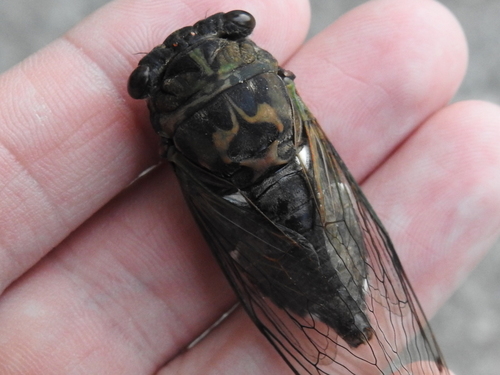
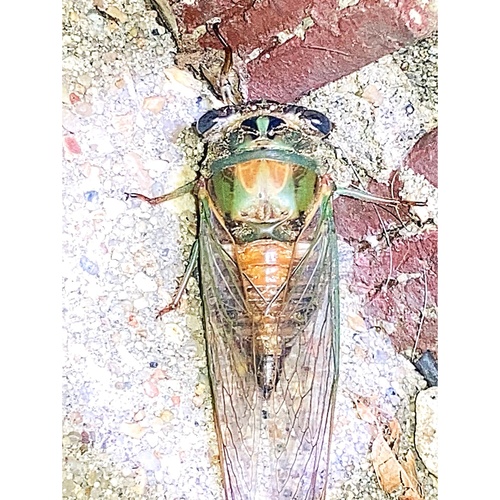
Adults are robust cicadas about 3-4.5 cm long (body length) with long, transparent forewings. The dorsal body and thorax are a mix of green and dark markings, often with a frosted or powdered (pruinose) look on parts of the abdomen. The head has large compound eyes set wide apart; tymbals (sound organs) are on the sides of the first abdominal segment in males. Wings show prominent veins and extend well beyond the abdomen when at rest.
- Large-bodied cicada with body length about 30-45 mm and long transparent wings.
- Green and dark patterned dorsal coloration with a frosted (pruinose) look on parts of the abdomen.
- Male's distinctive sharp, metallic "scissor-grinder" song heard from trees during summer.
- Wings extend well past the end of the abdomen when at rest; prominent wing venation visible.
Lookalikes
Swamp cicada Neotibicen tibicen
N. tibicen often has browner tones and a different, more nasal or buzzing call; call and subtle pattern differences separate them best.
Linne's cicada Neotibicen linnei
N. linnei typically has a darker overall pattern and a different song; geographic range and the male call help distinguish them.
↻Life cycle
Egg
Laid in slits cut into small twigs by the female; hatch in 6-10 weeks depending on temperature.
Nymph (underground)
Immature nymphs drop to the ground, burrow, and feed on root xylem for several years (commonly 2-5 or more) while growing through multiple instars.
Adult (winged)
Adults emerge from the ground, climb vertical surfaces, moult to the winged form, mate, and die within a few weeks. Males sing to attract females.
🍃Diet and predators
Young eat
Xylem sap from plant roots
Adults eat
Xylem sap from twigs and stems
Predators of the young
Underground predators (parasitic wasps, ants) and tunnelling mammals; also parasitic fungi can attack nymphs
Predators of adults
Birds, small mammals, spiders, predatory insects (wasps, dragonflies) and parasitoid flies
🌱Effect on plants and gardens
Nymphs feed on xylem sap from roots but rarely harm established plants. Females cut slits into small twigs to lay eggs; heavy oviposition can cause 'flagging' (dying of twig tips) on small branches and young trees, but mature trees usually tolerate this.
📍Where and when to find it
Adults on tree trunks, branches and shrubs; males singing from exposed perches. Nymphs are underground attached to roots; freshly emerged adults are found on trunks and vertical surfaces while they moult.
Best time
Summer months (June-September) during warm daytime and early evening.
Observation tips
To photograph, approach quietly and use a zoom lens; the best shots are of perched adults on trunks or of freshly moulted adults clinging to vegetation. Recording the male song can help confirm identification.
✨Fun facts
- Male scissor-grinder cicadas produce loud calls using specialized structures called tymbals; chorus sound can reach high decibel levels.
- These cicadas are not periodical brood cicadas like Magicicada; Neotibicen species appear every summer because generations overlap.
- The species name 'pruinosus' refers to the frosty or powdery appearance (pruinosity) seen on parts of the body.
?Frequently asked questions
Do scissor-grinder cicadas bite?
No—cicadas do not seek to bite people. They can pinch if handled roughly, but they are not aggressive and lack venom.
Are they dangerous or poisonous?
No. They are not poisonous or venomous to humans or pets.
Why are cicadas in my house?
Adults can fly into houses through open doors or windows, especially attracted to lights in summer evenings. Often they just rest indoors briefly and can be released outside.
Can cicadas damage my trees or garden?
Females cut small slits in twigs to lay eggs; heavy egg-laying can cause twig dieback on small branches and young trees. Mature trees typically tolerate cicada activity with little lasting harm.
How do I get rid of cicadas?
Control is usually unnecessary. For protection of young trees, cover them with fine netting or cheesecloth during peak emergence. Remove and destroy affected small branches if flagging occurs. Avoid insecticides that are ineffective against large, flying adult cicadas and harmful to beneficial insects.
When will I hear them singing?
Listen for males on warm, sunny days and early evenings in summer (June to September, depending on location).
📷Photos of the scissor-grinder cicada
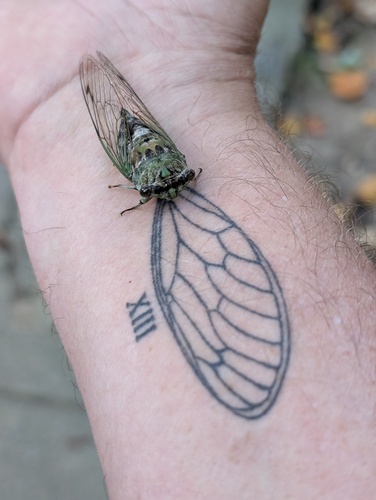
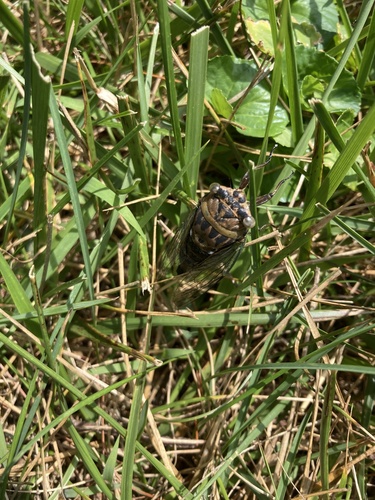
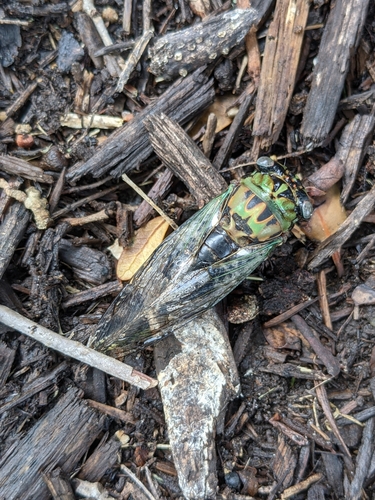
More true bugs, cicadas & aphids
Bites cause itching
Non-venomous nuisance
Non-toxic
Smelly secretion
Potential disease vector
Painful bite
This guide was written with AI assistance and fact-checked, last updated 2026-10-10. Identification from photos is never certain: don't handle insects you can't identify, and get medical advice for bites, stings or allergic reactions. More about the scissor-grinder cicada: iNaturalist, Wikipedia.