
Dog-day cicada vs Scissor-grinder cicada
These two are easy to mix up. Here's how to tell a dog-day cicada from a scissor-grinder cicada, and whether either one bites or stings.
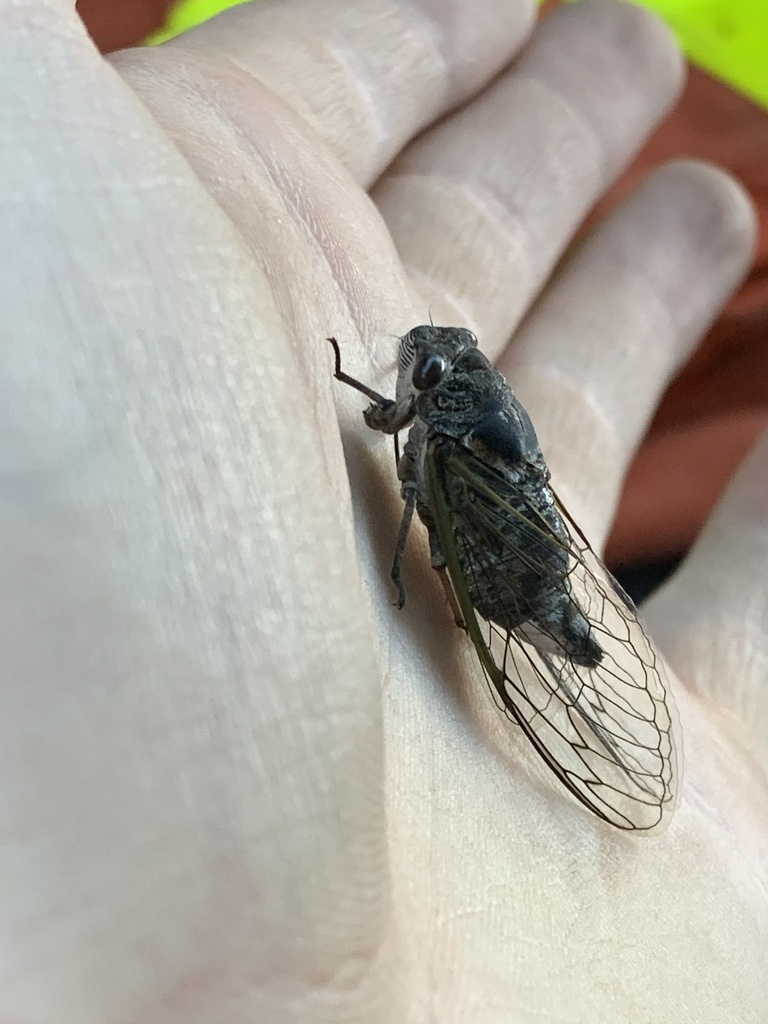
Dog-day cicada
Neotibicen canicularis
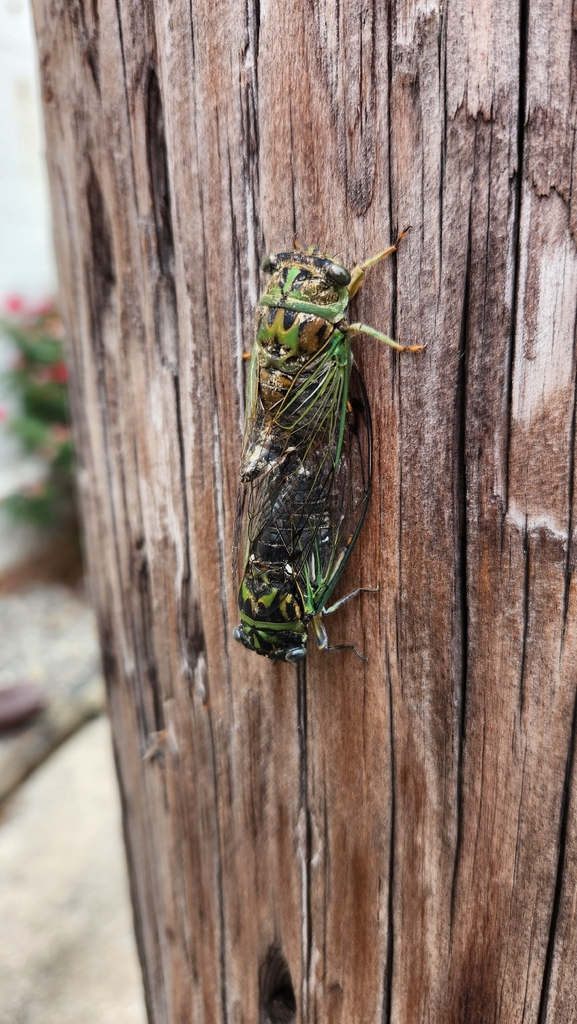
Scissor-grinder cicada
Neotibicen pruinosus
≠The key differences
N. pruinosus often has more brown/black overall and a different song (repetitive 'scissor-like' buzz); careful comparison of dorsal markings and local songs is needed.
⚖︎Side by side
| Dog-day cicada | Scissor-grinder cicada | |
|---|---|---|
| To humans | Non-toxic | Non-toxic |
| Size | Body 25-35 mm, wingspan about 65-80 mm | 30-45 mm body length; wingspan typically 80-100 mm |
| Colours | Olive green, Brown, Black, Cream | Green, Black, Brown, Whitish (pruinosity) |
| Family | Cicadidae | Cicadidae |
| Habitat | Deciduous and mixed woodlands, city trees, parks and suburban yards; often perches on tree branches and trunks | Deciduous and mixed woodlands, parks, suburban trees and shrubs, forest edges. |
| Range | Northeastern and north-central North America, from southern Canada through the northeastern and Great Lakes states and south along the Appalachians | Eastern and central North America, including parts of the United States and southern Canada. |
| Active | Mid to late summer (the 'dog days') and daytime; males call in hot weather, often midday to late afternoon | Summer months (most often June to September, depending on latitude); primarily daytime and early evening for singing males. |
| Pest? | No | No |
🔍How to spot a dog-day cicada
- Large, stout-bodied cicada with clear wings and mottled green-brown dorsal pattern
- Distinct dark central stripe on head and pronotum with lighter lateral markings
- Loud, continuous buzzing call from males heard during hot summer days
- Perches openly on tree branches and trunks in daylight
🔍How to spot a scissor-grinder cicada
- Large-bodied cicada with body length about 30-45 mm and long transparent wings.
- Green and dark patterned dorsal coloration with a frosted (pruinose) look on parts of the abdomen.
- Male's distinctive sharp, metallic "scissor-grinder" song heard from trees during summer.
- Wings extend well past the end of the abdomen when at rest; prominent wing venation visible.
?Frequently asked questions
What is the difference between a dog-day cicada and a scissor-grinder cicada?
N. pruinosus often has more brown/black overall and a different song (repetitive 'scissor-like' buzz); careful comparison of dorsal markings and local songs is needed.
Is a dog-day cicada or a scissor-grinder cicada more dangerous?
Dog-day cicada: Non-toxic. Scissor-grinder cicada: Non-toxic. Dog-day cicadas do not bite or sting in the sense of venomous insects. Scissor-grinder cicadas do not bite or sting as a defense; they may pinch gently if handled but are not venomous.
Identification from photos is never certain: don't handle insects you can't identify, and get medical advice for bites, stings or allergic reactions.