
Western conifer seed bug vs Box bug
These two are easy to mix up. Here's how to tell a western conifer seed bug from a box bug, and whether either one bites or stings.
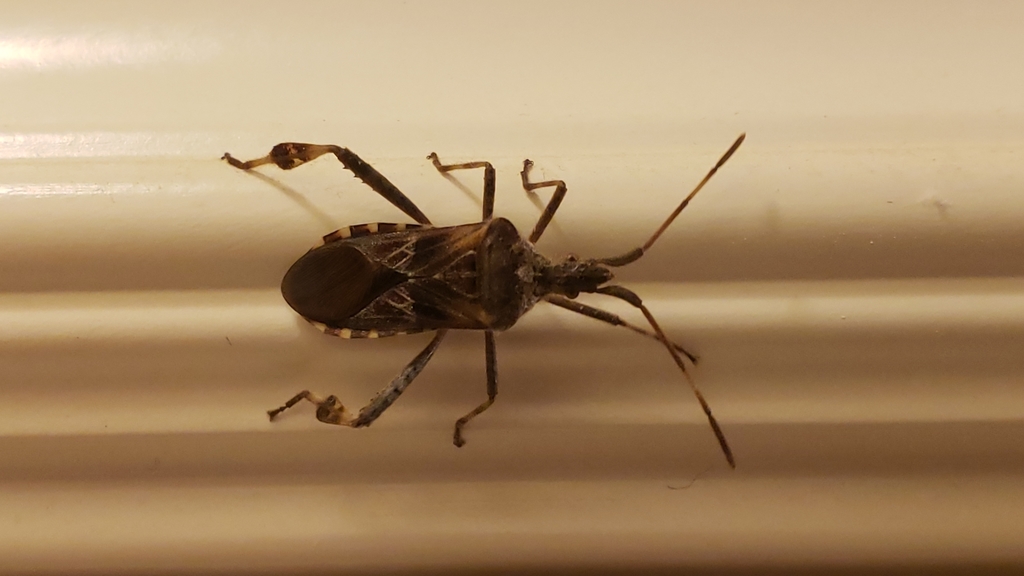
Western conifer seed bug
Leptoglossus occidentalis
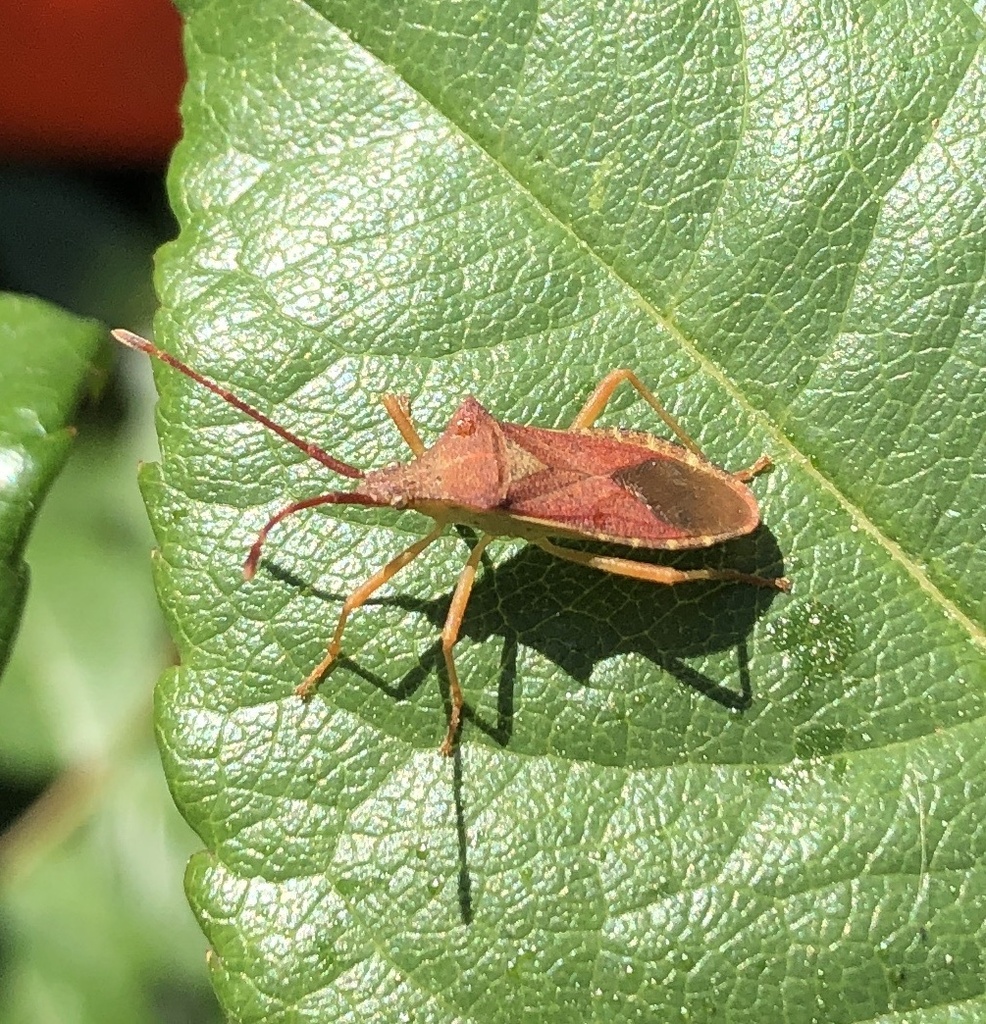
Box bug
Gonocerus acuteangulatus
≠The key differences
Larger (about 15-20 mm), has a distinct leaf-like expansion on the hind tibia and banded antennae; typically associated with conifers rather than broadleaf shrubs.
⚖︎Side by side
| Western conifer seed bug | Box bug | |
|---|---|---|
| To humans | Smelly secretion | Non-toxic |
| Size | 16-20 mm body length | 11-14 mm long |
| Colours | Brown, Reddish-brown, Cream, White | Chestnut brown, Reddish-brown, Olive green, Cream (ventral/markings) |
| Family | Coreidae | Coreidae |
| Habitat | Conifer forests, plantations, parks and gardens with pine, spruce, fir or cedar; buildings and houses where adults overwinter | Shrubs, hedgerows, orchards and gardens — especially on box (Buxus), hazel, elder, plum and other woody plants. |
| Range | Native to western North America; introduced and now widespread in Europe, parts of eastern North America, and East Asia | Western Palearctic: much of Europe (including expanding northwards), parts of North Africa and western Asia. |
| Active | Active in spring through autumn for feeding and reproduction; adults seek shelter and are visible indoors in autumn and winter | Spring to autumn (adults emerge and mate in spring, active through summer and autumn); diurnally active but may hide in foliage. |
| Pest? | Yes | Yes |
🔍How to spot a western conifer seed bug
- 16-20 mm elongated body with a distinct white or cream zigzag band across the forewings
- Leaf-like widened hind tibiae (appears as a 'leaf-foot' on the rear legs)
- Brown to reddish-brown overall color with lighter markings on the pronotum and wing edges
- When disturbed adults may emit a strong, unpleasant odor
🔍How to spot a box bug
- Length about 11-14 mm with elongate, slightly flattened body and distinct acute lateral angles on the pronotum.
- Overall chestnut to reddish-brown or olive tones with paler margins; triangular scutellum visible behind pronotum.
- Four-segmented antennae and piercing-sucking beak; hind legs not strongly leaf-expanded (unlike some other coreids).
- Found on woody shrubs and fruit trees rather than on herbaceous plants.
?Frequently asked questions
What is the difference between a western conifer seed bug and a box bug?
Larger (about 15-20 mm), has a distinct leaf-like expansion on the hind tibia and banded antennae; typically associated with conifers rather than broadleaf shrubs.
Is a western conifer seed bug or a box bug more dangerous?
Western conifer seed bug: Smelly secretion. Box bug: Non-toxic. They do not seek to bite people and are not venomous. Not venomous.
Identification from photos is never certain: don't handle insects you can't identify, and get medical advice for bites, stings or allergic reactions.