
Eastern leaf-footed bug vs Squash bug
These two are easy to mix up. Here's how to tell an eastern leaf-footed bug from a squash bug, and whether either one bites or stings.
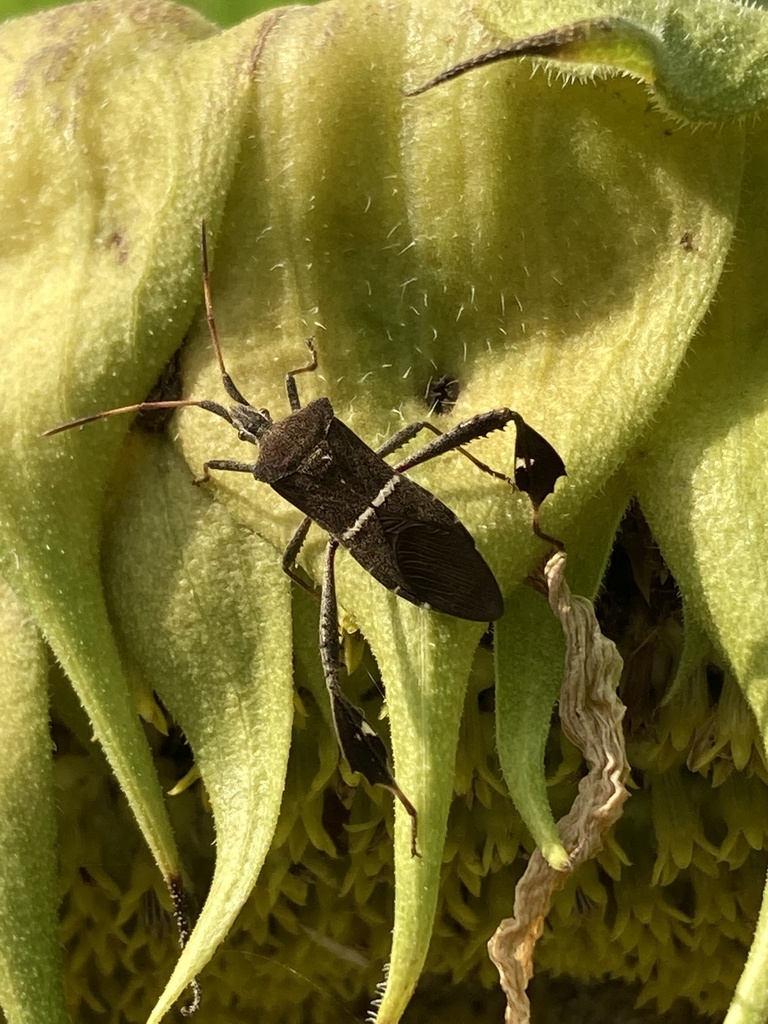
Eastern leaf-footed bug
Leptoglossus phyllopus
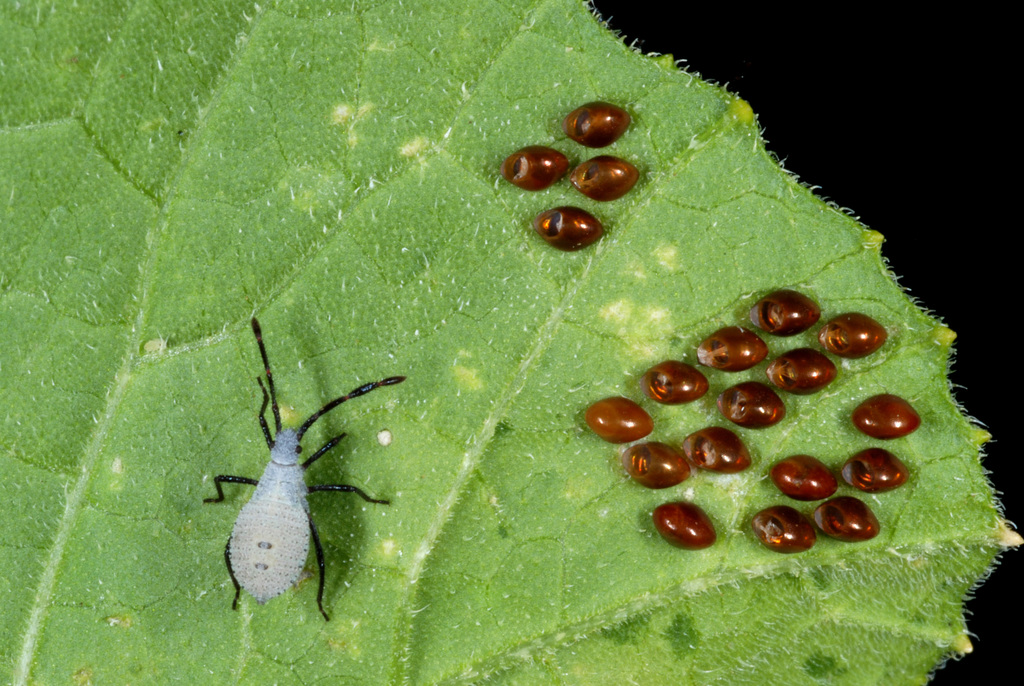
Squash bug
Anasa tristis
≠The key differences
Leaf-footed bugs (Leptoglossus) are larger (often 18-25 mm), have expanded leaf-like hind tibiae and a distinct white zigzag band across the wings, while Anasa tristis lacks the leaf-like hind legs and has a more evenly brown-gray body.
⚖︎Side by side
| Eastern leaf-footed bug | Squash bug | |
|---|---|---|
| To humans | Non-toxic | Non-toxic |
| Size | 18-21 mm body length | 12-17 mm long |
| Colours | Brown, Tan, Reddish orange (nymphs) | Brown, Gray, Black, Orange |
| Family | Coreidae | Coreidae |
| Habitat | Gardens, orchards, crop fields, hedgerows, and wooded edges; often on host plants and fruiting trees/shrubs | Gardens, agricultural fields and weedy edges where cucurbit plants grow; overwintering in leaf litter, compost piles, fence rows and buildings |
| Range | Southern and eastern United States (most common in the Southeast), west to the Southwest and south into Mexico and Central America | Widespread across North America; also reported in parts of Central America |
| Active | Spring through fall; adults overwinter and are active on warm days | Spring to fall (most damaging mid-summer); active during daylight |
| Pest? | Yes | Yes |
🔍How to spot an eastern leaf-footed bug
- Leaf-like expansion on the hind tibia (flattened 'leaf' on the hind leg) typical of many coreids
- Elongated body about 18-21 mm long with a straight cream band across the wings and an X-shaped wing pattern when closed
- Adults dark brown; early-stage nymphs reddish or orange
- Found on fruiting plants and seeds, often on tomatoes, peppers and fruit trees
🔍How to spot a squash bug
- Look for flattened, shield-like adults 12-17 mm long with gray-brown coloration and long antennae.
- Find clusters of small, barrel-shaped eggs in neat rows on the undersides of cucurbit leaves.
- Young nymphs are green with red heads and legs before turning pale gray and developing wing pads.
- Damage: wilting patches on vines and stippled or sunken areas on fruit are typical signs of feeding.
?Frequently asked questions
What is the difference between an eastern leaf-footed bug and a squash bug?
Leaf-footed bugs (Leptoglossus) are larger (often 18-25 mm), have expanded leaf-like hind tibiae and a distinct white zigzag band across the wings, while Anasa tristis lacks the leaf-like hind legs and has a more evenly brown-gray body.
Is an eastern leaf-footed bug or a squash bug more dangerous?
Eastern leaf-footed bug: Non-toxic. Squash bug: Non-toxic. Not venomous and not a disease vector. Squash bugs are not venomous and do not pose a medical threat.
Identification from photos is never certain: don't handle insects you can't identify, and get medical advice for bites, stings or allergic reactions.