
Sycamore lace bug
Corythucha ciliata · Lace bugs
A small sap-sucking bug that feeds on plane and sycamore leaves, leaving characteristic pale stippling and dark frass on the underside.
!Is the sycamore lace bug dangerous?
No. Sycamore lace bugs are not venomous and normally feed only on plant sap. There are occasional reports, mainly where they swarm on city plane trees, of them probing human skin and leaving small itchy red bumps, but they pose no real health risk. Wash the area and use an anti-itch cream if needed.
Pets
Not poisonous to pets. Pets might pick up insects on fur but there is no known toxic risk from ingestion or contact.
📖Overview
Corythucha ciliata is a small hemipteran insect in the lace bug family (Tingidae) that feeds on the underside of leaves of plane trees and sycamores (Platanus spp.). Adults and nymphs use piercing mouthparts to suck sap, producing whitish stippling and sometimes premature leaf drop on heavily infested trees. Native to North America, it has spread to Europe, parts of Asia and South America and is often noticed in urban plantings of plane trees. Populations are usually seen as a cosmetic pest rather than a tree-killing threat, although heavy repeated infestations can weaken individual trees over time.
🔍How to identify a sycamore lace bug
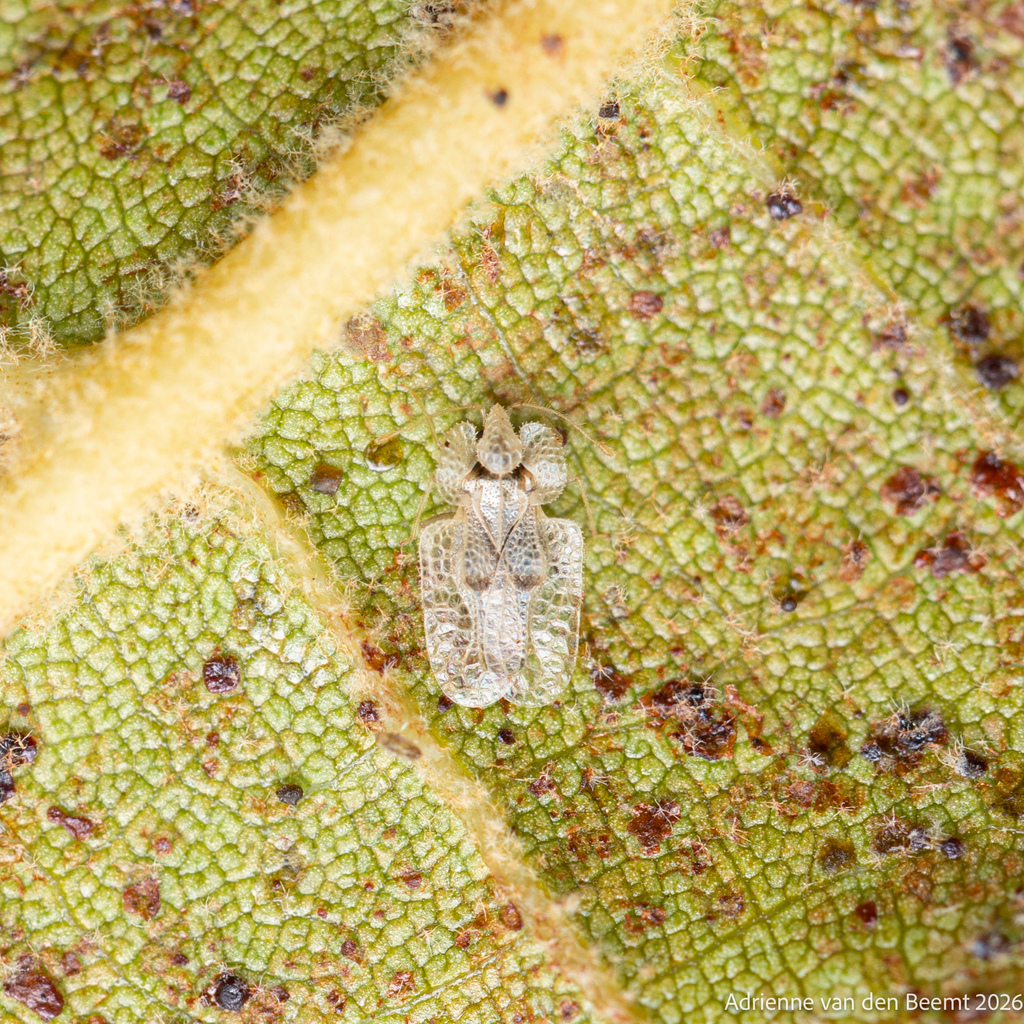
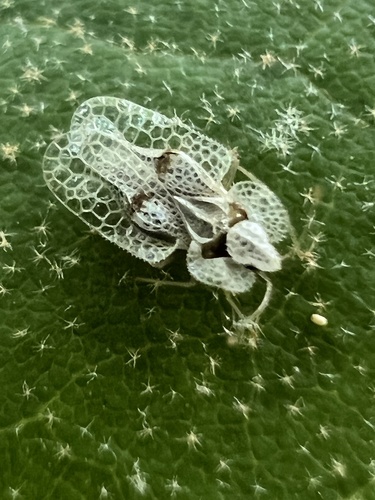
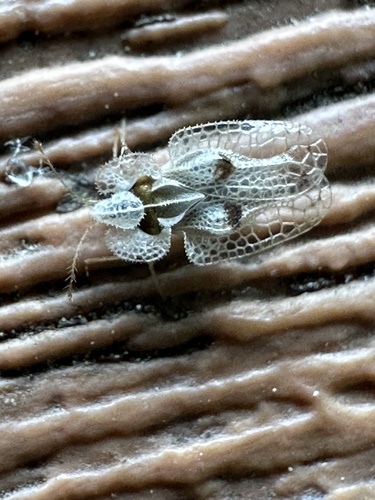
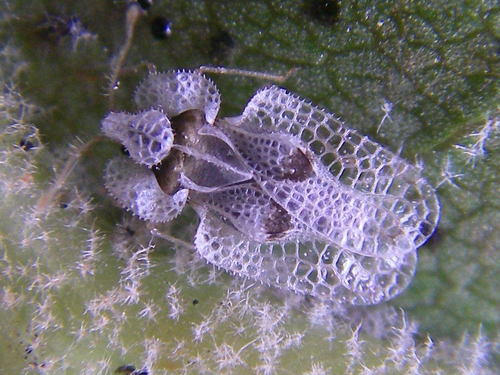
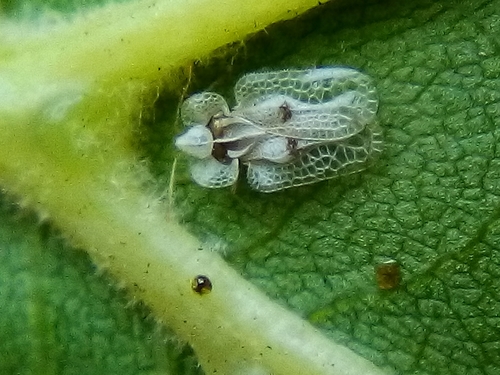
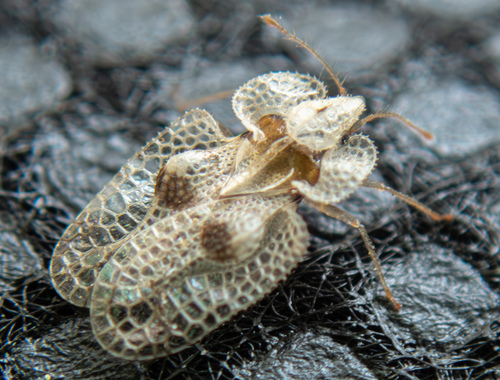
Adults are small (about 3-5 mm long) with broad, flattened bodies and elaborately reticulated, lace-like forewings and hood-like pronotum that give a delicate, sculptured appearance. Colouration is mostly pale cream to whitish with brown or gray markings on the wings and body. Nymphs are small, flattened and darker, lacking the full lace pattern of adults; nymphs often carry dark excrement (frass) on the leaf underside.
- Look on the underside of plane/sycamore leaves for small (3-5 mm) flattened insects with delicate, netted 'lace' wings.
- Upper leaf surface shows pale stippling and a dusty or bronzed appearance when feeding is heavy.
- Check leaf underside for dark frass and rows of small eggs glued to veins or between veins.
Lookalikes
Oak lace bug Corythucha arcuata
Prefers oak leaves rather than plane; differs slightly in wing markings and host plant helps separate them.
Azalea lace bug Stephanitis pyrioides
Similar in size but associated with azaleas and rhododendrons; different wing pattern and host plant.
↻Life cycle
Egg
Adults overwinter under loose bark; in spring females glue tiny eggs to the underside of host leaves, usually along the veins.
Nymph
Nymphs hatch and go through several instars while feeding on leaf undersides; they are wingless and darker than adults.
Adult
Winged adults emerge, mate and continue feeding and laying eggs; there are multiple generations per year in warm areas.
🍃Diet and predators
Young eat
Sap from the undersides of plane and sycamore leaves (Platanus spp.).
Adults eat
Sap from the undersides of plane and sycamore leaves (Platanus spp.).
Predators of the young
Generalist predators such as ladybird beetle larvae, lacewing larvae, spiders and predatory bugs.
Predators of adults
Predatory insects and spiders; birds may eat adults but lace bugs' small size limits bird predation.
🌱Effect on plants and gardens
Feeds mainly on plane and sycamore trees (Platanus spp.). Feeding causes pale stippling on the upper leaf surface, darkened areas and frass on the underside, and in severe cases reduced photosynthetic capacity and early leaf drop.
How to get rid of sycamore lace bugs
For light infestations, hose leaves to dislodge adults and nymphs and promote natural predators (ladybirds, lacewing larvae, predatory bugs). Prune heavily infested small branches. For persistent or severe infestations on high-value trees, targeted insecticide treatments (horticultural oil, insecticidal soap, or systemic insecticides) applied according to label instructions can be effective. Avoid broad, repeated insecticide use that harms beneficial insects. Consult a certified arborist for large specimen trees.
📍Where and when to find it
Inspect underside of plane or sycamore (Platanus) leaves; eggs are glued to veins or between veins, nymphs and adults congregate below the leaf.
Best time
Spring through autumn; daytime inspections reveal feeding damage and active adults, best seen on warm days.
Observation tips
Turn leaves over slowly and look for the lace pattern and dark frass. Photograph undersides with a macro setting or a phone camera close-up for identification.
✨Fun facts
- The ornate 'lace' pattern on the wings and pronotum is formed by a reticulated network of raised veins and membranes unique to lace bugs.
- Although native to North America, the sycamore lace bug has spread widely with planted plane trees and is now established in several other continents.
- Damage is mostly cosmetic; many large plane trees tolerate repeated infestations without long-term decline.
?Frequently asked questions
Do sycamore lace bugs bite?
Rarely. They feed on plant sap, but people occasionally report small itchy bumps after the bugs land on skin where they are very numerous on plane trees. They are not venomous and are not dangerous.
Why are there small pale spots on my sycamore leaves?
Those pale stipples are feeding damage from lace bugs sucking sap from leaf tissues, commonly from sycamore lace bug.
Will sycamore lace bugs kill my tree?
Usually not. Damage is typically cosmetic; repeated heavy infestations can weaken trees over time, but healthy mature trees usually survive.
How can I get rid of sycamore lace bugs?
For small trees, blast undersides of leaves with a strong spray of water, encourage natural predators, or use horticultural oil/insecticidal soap. For severe infestations on valuable trees, consult an arborist about targeted insecticide options.
Why are they appearing in my yard now?
They become noticeable in spring and summer when eggs hatch and populations build; warm seasons and dense plantings of plane trees favour population growth.
📷Photos of the sycamore lace bug
More true bugs, cicadas & aphids
Bites cause itching
Non-venomous nuisance
Non-toxic
Smelly secretion
Potential disease vector
Painful bite
This guide was written with AI assistance and fact-checked, last updated 2026-10-10. Identification from photos is never certain: don't handle insects you can't identify, and get medical advice for bites, stings or allergic reactions. More about the sycamore lace bug: iNaturalist, Wikipedia.