
Four-lined plant bug
Poecilocapsus lineatus · Plant bugs
A small, yellow-and-black hemipteran that feeds on sap of many ornamental trees and shrubs, causing conspicuous leaf spotting and browning.
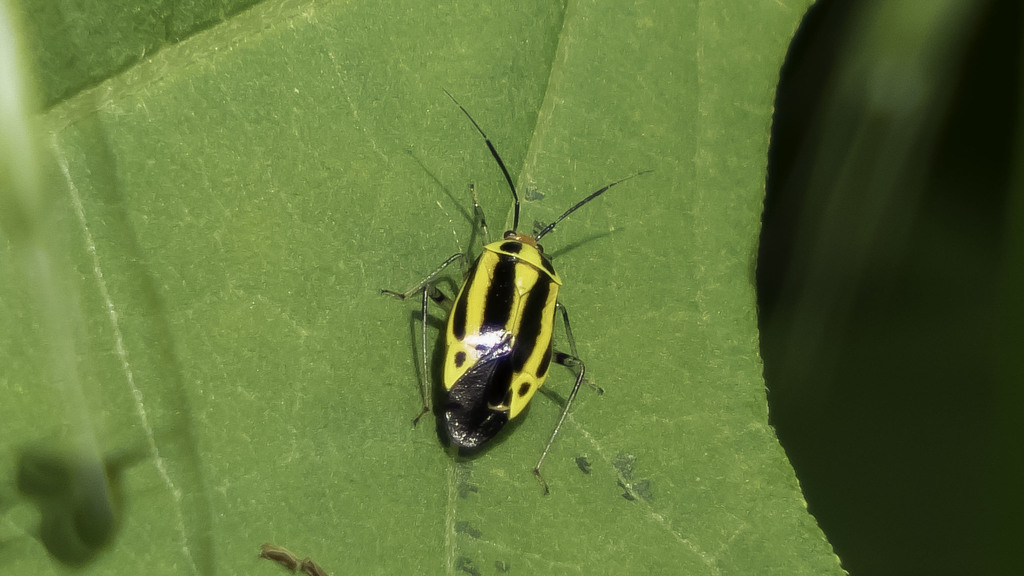
!Is the four-lined plant bug dangerous?
No. Four-lined plant bugs do not have a venomous bite and are not known to transmit disease. They may produce a mild defensive odor if handled or crushed. No special first aid is needed beyond washing the skin if crushed material contacts it.
Pets
Not poisonous to pets. A pet that eats one is not at risk, and the bugs do not bite or sting animals.
📖Overview
Poecilocapsus lineatus is a common sap-feeding true bug in the family Miridae. Adults and nymphs feed on the leaves of a wide range of herbaceous perennials, herbs and some shrubs, producing small round sunken spots that turn dark brown or translucent and may cause leaf distortion. They are most noticeable in late spring and early summer when young leaves are present and populations peak. Four-lined plant bugs are mainly a cosmetic pest of ornamentals rather than a serious plant killer.
They overwinter as eggs inserted into the stems of host plants, hatch in spring, and develop through five nymphal instars to the adult stage. Populations can build locally where preferred hosts (mint, basil, Shasta daisy, chrysanthemum, coreopsis, forsythia, currant and many others) are abundant. Natural enemies reduce numbers but do not always prevent outbreaks in gardens.
🔍How to identify a four-lined plant bug
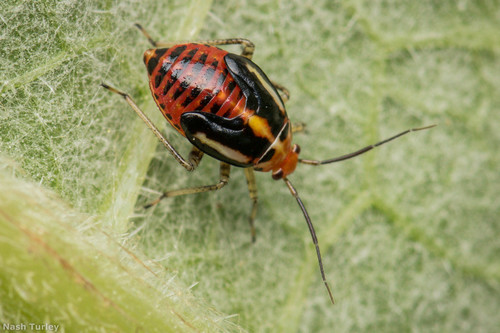
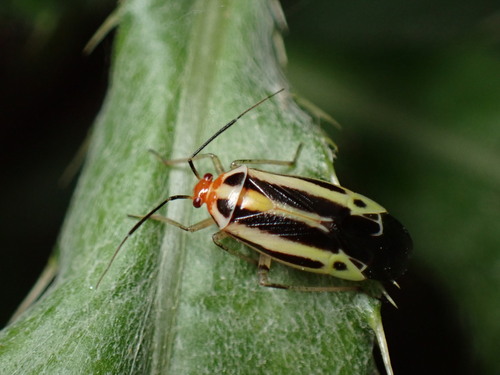
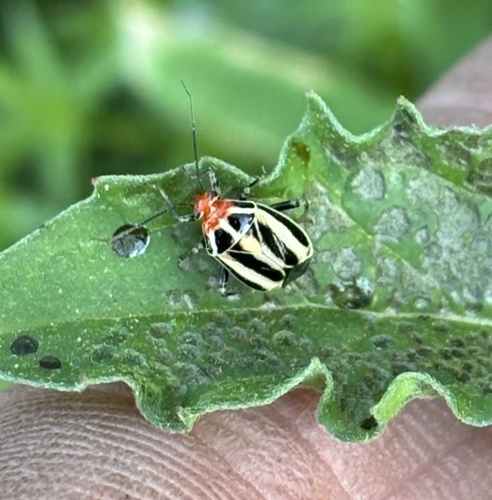
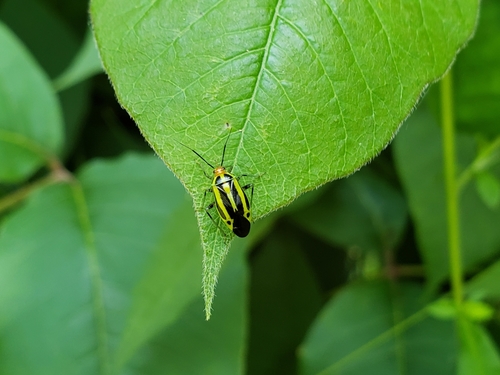
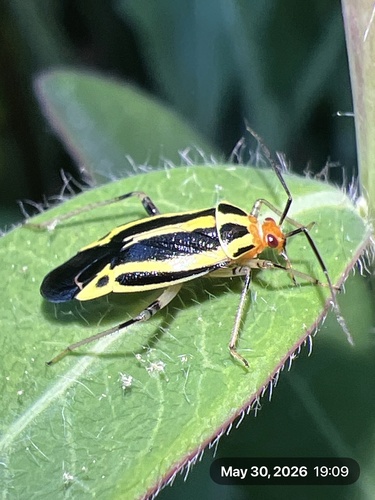
Adults are elongated, about 6-8 mm long, greenish-yellow with four distinct longitudinal black stripes running down the wings and thorax; the head and front of the thorax are often orange. Nymphs are wingless, bright red to orange with black dots when young; older nymphs develop wing pads with a yellow stripe and resemble adults in shape.
- Four distinct longitudinal dark stripes on a yellow-orange body and wings in adults
- Small size: adults about 6-7 mm long
- Nymphs are bright orange to red when young and lack wings
- Damage to young leaves: whitish stippling or raised spots that later brown
Lookalikes
Lygus bug (tarnished plant bug) Lygus lineolaris
Lygus is more mottled brown/green without the regular four longitudinal stripes; Lygus also attacks a broader range of herbaceous crops.
↻Life cycle
Egg
Laid in clusters in slits cut into the stems of host plants in early to midsummer; eggs overwinter and hatch in spring.
Nymph
Several orange to yellow nymphal instars; nymphs are wingless and actively feed on young leaves in spring and early summer.
Adult
Winged adults appear after the final molt, continue feeding and mate; one generation per year in most areas.
🍃Diet and predators
Young eat
Sap from the leaves of many herbaceous perennials, herbs and some shrubs, especially mint, basil, Shasta daisy, chrysanthemum, coreopsis, forsythia and currant
Adults eat
Sap from leaves of the same host plants as nymphs
Predators of the young
Predatory insects (assassin bugs, predatory stink bugs, spiders) and birds
Predators of adults
Birds, predatory bugs and spiders
🌱Effect on plants and gardens
Feeds by piercing leaf tissue and sucking sap. Damage appears as small, round, sunken spots on new leaves that turn dark brown or translucent; heavy feeding can cause leaf curling, holes and unsightly foliage, but rarely kills established plants.
How to get rid of four-lined plant bugs
Cultural: cut back and remove old stems of herbaceous hosts in fall or early spring, and prune egg-bearing shoots of shrubs, to remove overwintering eggs. Handpick nymphs and adults on small plants. Water-stressed plants tolerate damage less, so maintain plant vigor. Mechanical: use a strong spray of water to knock nymphs off leaves. Chemical: insecticidal soaps or horticultural oils can reduce nymphs when applied thoroughly; pyrethroid or other labeled insecticides can control severe outbreaks—follow label instructions and consider beneficial insects. Biological control: encourage birds and predatory insects. For ornamental plantings, combine cultural and targeted treatments rather than routine broad-spray programs.
📍Where and when to find it
Look on the upper surfaces of new leaves of mint, basil, Shasta daisy, chrysanthemum, coreopsis and other perennials, as well as shrubs such as forsythia and currant.
Best time
Best observed in spring and late spring to early summer during daylight when nymphs and adults are feeding.
Observation tips
Photograph the dorsal view to show the four stripes. Check young foliage and new shoots; a hand lens helps for nymphs. Look for the characteristic round, dark spots on leaves.
✨Fun facts
- The species gets its common name from the four dark longitudinal stripes on the adult's back.
- Damage is most obvious on newly flushed leaves, so you often notice them right after trees put out new foliage.
- Although conspicuous, they are usually a cosmetic pest and rarely kill established plants.
?Frequently asked questions
Do four-lined plant bugs bite people?
No. They do not have a medically significant bite. They may probe if handled, which can feel like a tiny pinprick, but they are not venomous.
Why are they on my mint, basil or perennials?
They feed on the sap of young leaves; mint, basil, Shasta daisy, chrysanthemum and many other herbaceous perennials and some shrubs are favored hosts, especially where many hosts grow together.
How do I get rid of four-lined plant bugs?
For small infestations: handpick nymphs and adults, blast them with water, or use insecticidal soap sprayed thoroughly on foliage in spring when nymphs are active. For heavy infestations on valuable specimens, targeted insecticides labeled for mirid bugs can be used following label directions. Cutting back and removing old stems of host plants in fall or early spring removes overwintering eggs and can reduce populations.
Will they kill my plants?
Unlikely. Damage is mostly cosmetic; heavy feeding can stress young or already weakened plants, but established plants rarely die from four-lined plant bug feeding alone.
When will I see them?
Nymphs hatch in spring when buds open and are most visible in late spring to early summer; adults may persist into summer.
📷Photos of the four-lined plant bug
More true bugs, cicadas & aphids
Bites cause itching
Non-venomous nuisance
Non-toxic
Smelly secretion
Potential disease vector
Painful bite
This guide was written with AI assistance and fact-checked, last updated 2026-10-10. Identification from photos is never certain: don't handle insects you can't identify, and get medical advice for bites, stings or allergic reactions. More about the four-lined plant bug: iNaturalist, Wikipedia.