
European firebug
Pyrrhocoris apterus · True bugs
A common red-and-black seed-eating bug of Europe that forms conspicuous aggregations on warm walls and tree bases but is harmless to people and most plants.
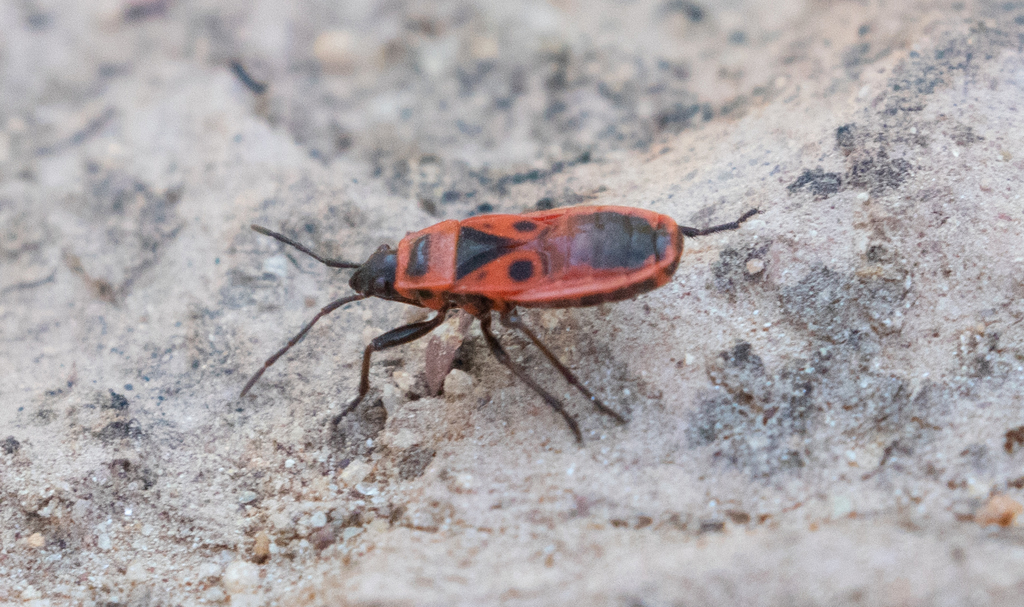
!Is the European firebug dangerous?
No. Not venomous and not known to bite people. Firebugs are harmless to handle; no first aid is needed.
Pets
Generally harmless to pets. Large numbers could be a nuisance if eaten, but they are not known to be toxic to cats or dogs.
📖Overview
Pyrrhocoris apterus is a widespread true bug often seen in groups on sunny walls, tree trunks and around the base of lime and mallow trees. Adults and nymphs feed mainly on seeds (especially from Malvaceae and Tilia) and sometimes on dead insects. They are gregarious, overwinter as adults in sheltered sites, and typically produce one to a few generations per year depending on climate. They are not venomous or aggressive toward people.
🔍How to identify an European firebug
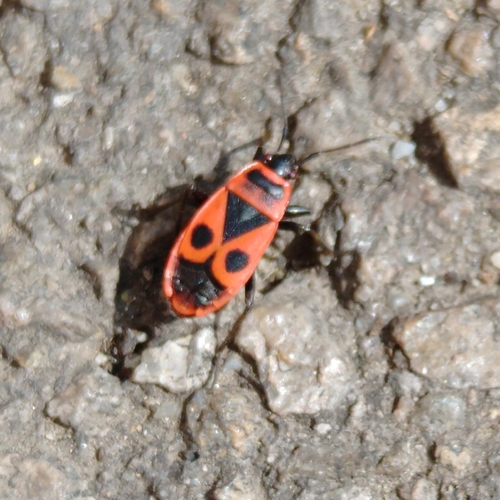
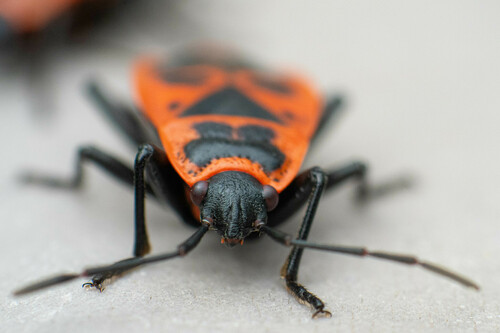
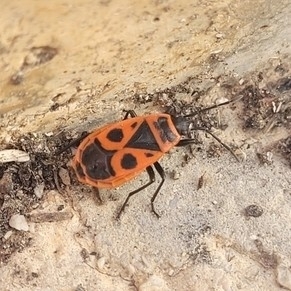
Adults are oval, flattened and strikingly patterned with red and black: a red dorsal background with distinct black spots and a black triangular 'scutellum' marking. Body length is small (about 7-12 mm). Many individuals have short, non-functional wings (brachypterous) though fully winged forms occur in some populations. Nymphs are similar in color but lack fully developed wings and are smaller.
- Bright red and black dorsal pattern with black triangular scutellum and round black spots.
- Small size, 7-12 mm, with a flattened, oval body.
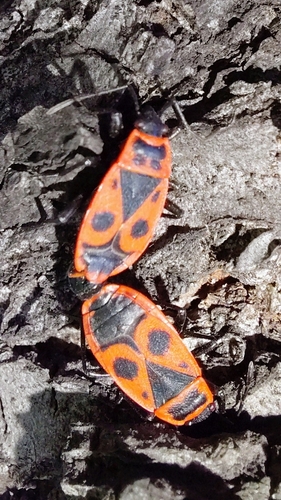
- Often seen in conspicuous groups on sunny walls, tree trunks or around base of host plants.
- Many adults have reduced wings (short wing covers) though fully winged forms exist.
Lookalikes
Black-and-red bug Lygaeus equestris
Fully winged and able to fly, with a black wing membrane marked by white spots; firebugs are usually short-winged and lack the white spots.
Cinnamon bug Corizus hyoscyami
Hairier, fully winged with transparent wing tips, and usually found singly on low vegetation rather than in dense groups on walls and tree bases.
↻Life cycle
Egg
Females lay small batches of eggs in shallow holes in the soil or in leaf litter; eggs hatch in spring or early summer depending on climate.
Nymph
Immature stages resemble adults in color but lack wings; nymphs pass through several instars while feeding on seeds and developing together in groups.
Adult
Adults are winged or short-winged, sexually mature, and may aggregate in large groups; adults overwinter in sheltered sites and resume activity in spring.
🍃Diet and predators
Young eat
Seeds (especially from Malvaceae and Tilia), and occasionally sap or fluids from dead insects.
Adults eat
Seeds from mallows, limes and similar plants; adults also feed on plant juices and scavenged insect fluids.
Predators of the young
Ants, spiders and predatory insects.
Predators of adults
Birds, spiders and predatory arthropods; aggregation is thought to reduce individual predation risk.
🌱Effect on plants and gardens
Feeds mainly on seeds of mallows (Malvaceae), limes (Tilia), and other seed-bearing plants; usually does not damage healthy plants or crops to a significant extent.
📍Where and when to find it
Look on sunny walls, at the base of lime and mallow trees, under bark flakes, among leaf litter and near seed-bearing plants. Eggs are hidden in crevices; nymphs on or near host plants.
Best time
Spring to autumn on warm, sunny days; midday is often best when they bask and aggregate.
Observation tips
Approach slowly to photograph groups, use a macro lens for close-ups. Note their patterns and any wing forms; avoid disturbing large aggregations if you wish to observe natural behaviour.
✨Fun facts
- Despite the name 'apterus' meaning wingless, many European firebugs have short wing pads or small wings rather than being completely wingless.
- They commonly gather in large groups, a behaviour that makes them easy to spot on warm surfaces.
- Aggregations are thought to help the bugs find mates, conserve heat and reduce predation.
?Frequently asked questions
Are European firebugs dangerous?
No. They are not venomous, do not spread disease to humans, and are not considered medically dangerous.
Do European firebugs bite?
They do not seek out people and rarely bite; any ‘bite’ would be defensive and is uncommon and not medically significant.
Why are there so many on my wall or tree?
Firebugs are gregarious and gather on warm, sunny surfaces near food sources or overwintering sites. Large groups are normal, especially in spring and autumn.
How can I get rid of them in my house or garden?
Remove nearby seed sources (mallows, limes), seal entry points, use a vacuum for indoor groups, and reduce daytime sunlit crevices where they congregate. Chemical controls are rarely necessary.
Do they damage plants or crops?
They feed on seeds but rarely cause significant damage to healthy plants or agricultural crops; they are generally considered harmless to gardens.
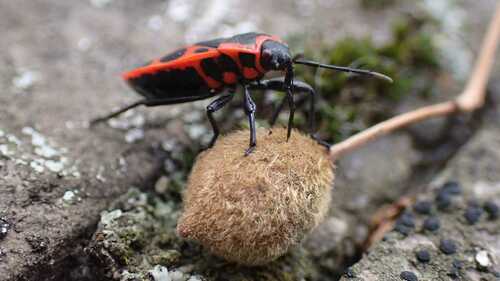
📷Photos of the European firebug
More true bugs, cicadas & aphids
Bites cause itching
Non-venomous nuisance
Non-toxic
Smelly secretion
Potential disease vector
Painful bite
This guide was written with AI assistance and fact-checked, last updated 2026-10-10. Identification from photos is never certain: don't handle insects you can't identify, and get medical advice for bites, stings or allergic reactions. More about the European firebug: iNaturalist, Wikipedia.