
Seven-spot ladybird
Coccinella septempunctata · Ladybirds
A common, bright red ladybird with seven black spots that is a voracious predator of aphids and other soft-bodied pests.
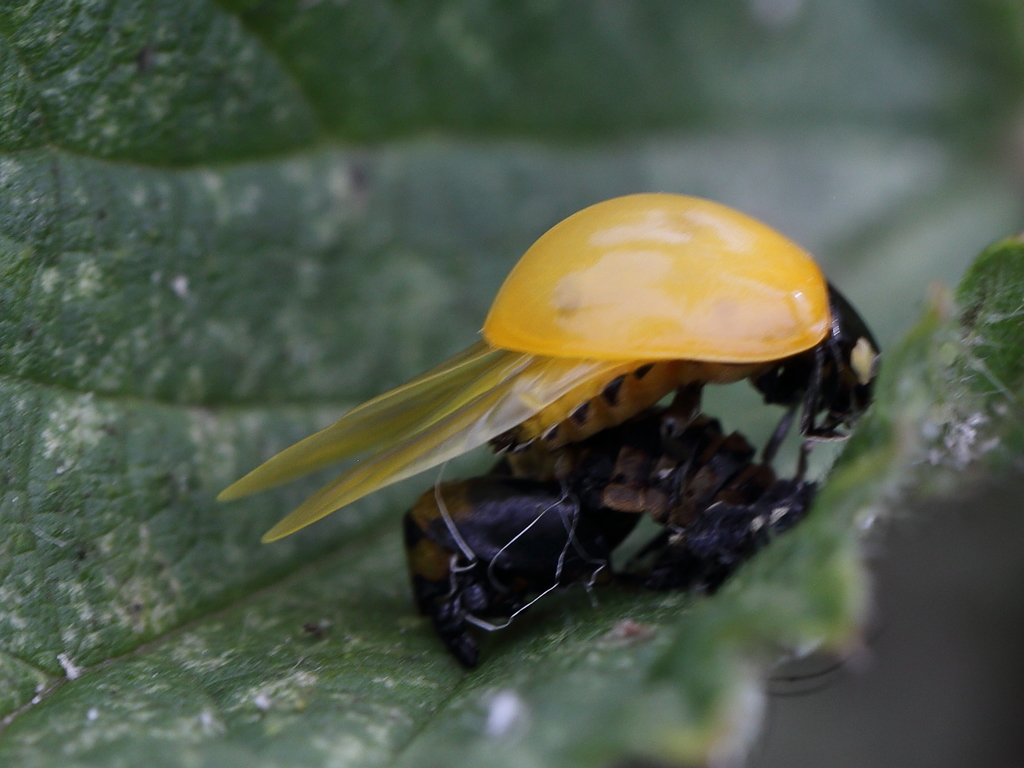
!Is the seven-spot ladybird dangerous?
No. Not dangerous. They do not have venom. Adults can secrete a yellow defensive fluid that smells and tastes unpleasant and may cause mild skin staining; rare cases of mild allergic skin reactions are reported. They do not transmit disease. If bitten, any irritation is usually minor; wash the area with soap and water.
Pets
Generally harmless to pets. If a pet eats large numbers of beetles it may vomit or show mild gastrointestinal upset from the beetles' defensive fluids, but serious toxic effects are not expected.
📖Overview
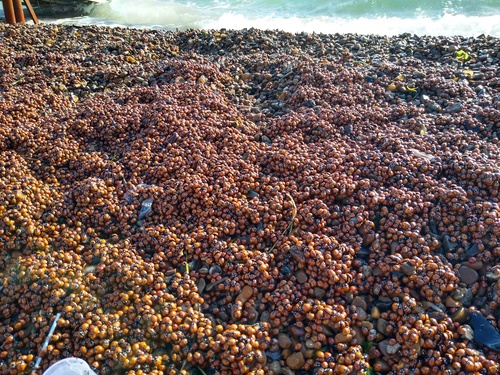
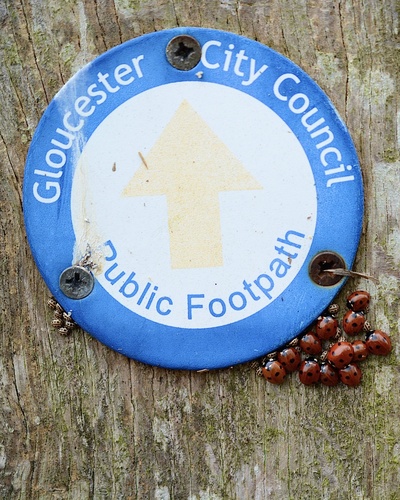
Coccinella septempunctata is one of the most widespread and familiar ladybird species across Europe and parts of Asia; it has also been introduced in North America for biological control. Adults and larvae are active predators that eat large numbers of aphids and other small plant pests, making them beneficial in gardens and agriculture. They are often found on flowering plants, shrubs and crop foliage where prey is abundant. In cooler months adults sometimes gather in sheltered spots to overwinter.
🔍How to identify a seven-spot ladybird
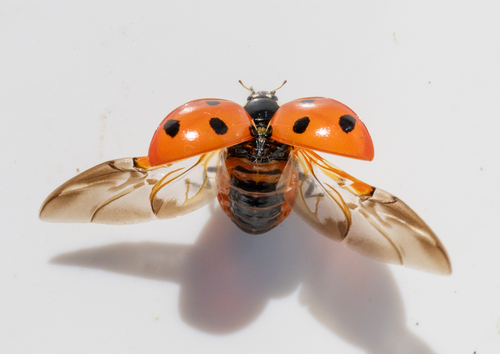
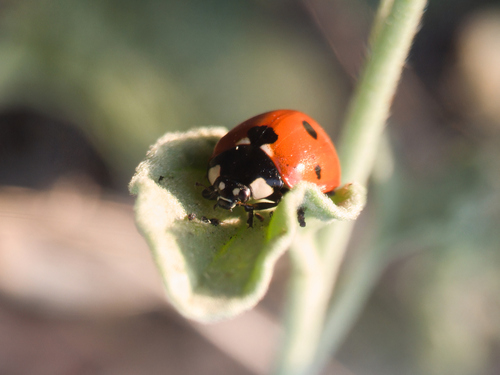
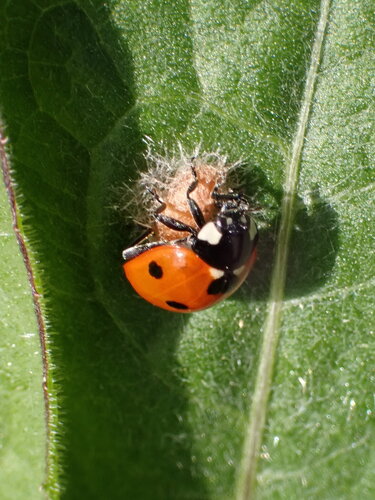
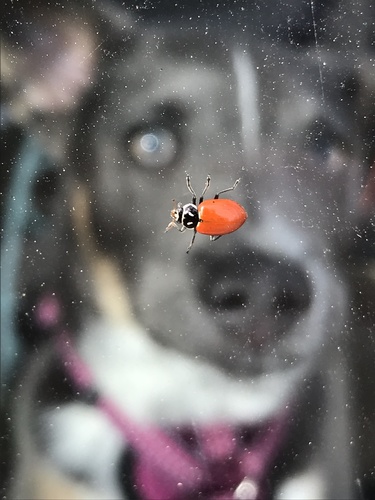
Adult seven-spot ladybirds are broadly oval and dome-shaped with a bright red to orange elytra (wing covers) bearing seven distinct black spots: three on each elytron and one shared spot that straddles the midline at the front, just behind the pronotum, plus a black head and white or pale markings on the pronotum. Legs and underside are dark and the beetle is shiny. Size and exact hue vary slightly with region and season.
- Bright red to orange elytra with seven clear black spots (three on each elytron and one shared spot at the front of the wing covers).
- Black head and pronotum with distinct white or pale markings on the pronotum.
- Broad, dome-shaped beetle 5-8 mm long with shiny appearance.
- Larvae are dark, elongated and alligator-like with orange markings (if present on plants with aphids).
Lookalikes
Two-spot ladybird Adalia bipunctata
Has two black spots on red elytra and different pronotum markings; usually smaller and the spot arrangement differs.
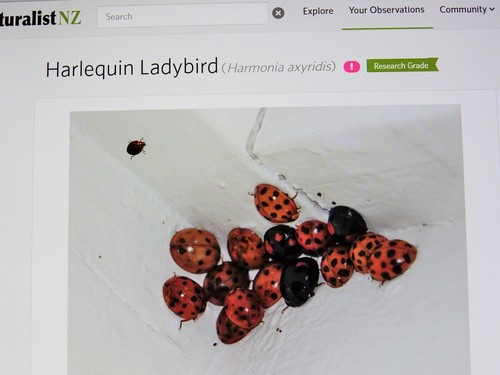
Asian lady beetle Harmonia axyridis
Highly variable in colour and spot number; its pale pronotum often bears a black M- or W-shaped mark and variable spot patterns, while C. septempunctata has a consistent seven-spot pattern.
14-spot ladybird Propylea quatuordecimpunctata
Smaller and has many small spots (around 14) often on a yellow or orange background, not the seven large spots of C. septempunctata.
↻Life cycle
Egg
Small, elongate yellow eggs are laid in clusters on leaves near aphid colonies; eggs hatch in several days depending on temperature.
Larva
Larvae are elongated, alligator-like and usually dark with orange markings; highly active predators that consume many aphids while growing through several instars over 2-3 weeks.
Pupa
Larvae attach to vegetation and pupate for several days to two weeks while transforming into the adult form.
Adult
Winged, brightly coloured beetles that continue to hunt aphids; adults can reproduce and produce multiple generations in a season in warm climates, and some survive to overwinter.
🍃Diet and predators
Young eat
Predatory: mainly aphids, also small soft-bodied arthropods and insect eggs.
Adults eat
Predatory: aphids and similar pests; occasionally pollen and nectar when prey are scarce.
Predators of the young
Parasitic wasps, predatory bugs, birds and spiders.
Predators of adults
Birds, larger predatory insects, spiders and parasitic wasps; adults use warning coloration and chemical defenses to deter some predators.
🌱Effect on plants and gardens
Adults and larvae prey on aphids, scale insects, whiteflies and other soft-bodied pests, helping control infestations in gardens and crops. They may also feed on pollen and nectar when prey is scarce.
📍Where and when to find it
Look on flowering plants, new shoots, aphid-infested leaves, shrubs and crop foliage for adults and larvae. Overwintering adults may be found in cracks, buildings, woodpiles and leaf litter.
Best time
Spring through autumn for active feeding and breeding; daytime when temperatures are warm. Overwintering aggregations are visible in autumn and winter in mild climates.
Observation tips
Scan plants with aphid colonies and check underside of leaves. Photograph from above to show spot pattern; handle gently and release outdoors if you remove one from indoors.
✨Fun facts
- The seven-spot ladybird is one of the species historically used in biological control of aphids.
- Its bright colours warn predators that it tastes bad; the yellow defensive fluid contains alkaloids that deter many predators.
- Overwintering adults often gather in groups in sheltered spots such as buildings, leaf litter or tree crevices.
?Frequently asked questions
Do seven-spot ladybirds bite?
They do not normally bite people. If handled roughly a ladybird can nip with its mandibles; any sensation is minor and not medically significant.
Are seven-spot ladybirds harmful in the house?
No. They are harmless but may be a nuisance if many enter to overwinter. They do not damage property or food.
How do I get rid of ladybirds in my home?
Seal entry points, use a vacuum to remove indoor beetles and release them outside when possible. Avoid pesticides indoors; if necessary use targeted insecticide following label instructions.
Why are there ladybirds on my plants?
They are hunting aphids and other pests. Their presence is usually beneficial and indicates a natural control of pest populations.
Where does the seven-spot ladybird live?
It lives wherever aphids occur: gardens, agricultural fields, meadows, hedgerows and shrubs across Europe, parts of Asia and introduced regions such as North America.
📷Photos of the seven-spot ladybird
More beetles
This guide was written with AI assistance and fact-checked, last updated 2026-10-09. Identification from photos is never certain: don't handle insects you can't identify, and get medical advice for bites, stings or allergic reactions.