
Convergent lady beetle
Hippodamia convergens · Lady beetles
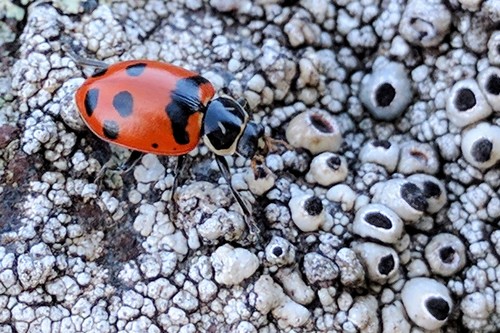
A common North American aphid-eating lady beetle, orange-red with black spots and distinctive converging white lines on the pronotum.
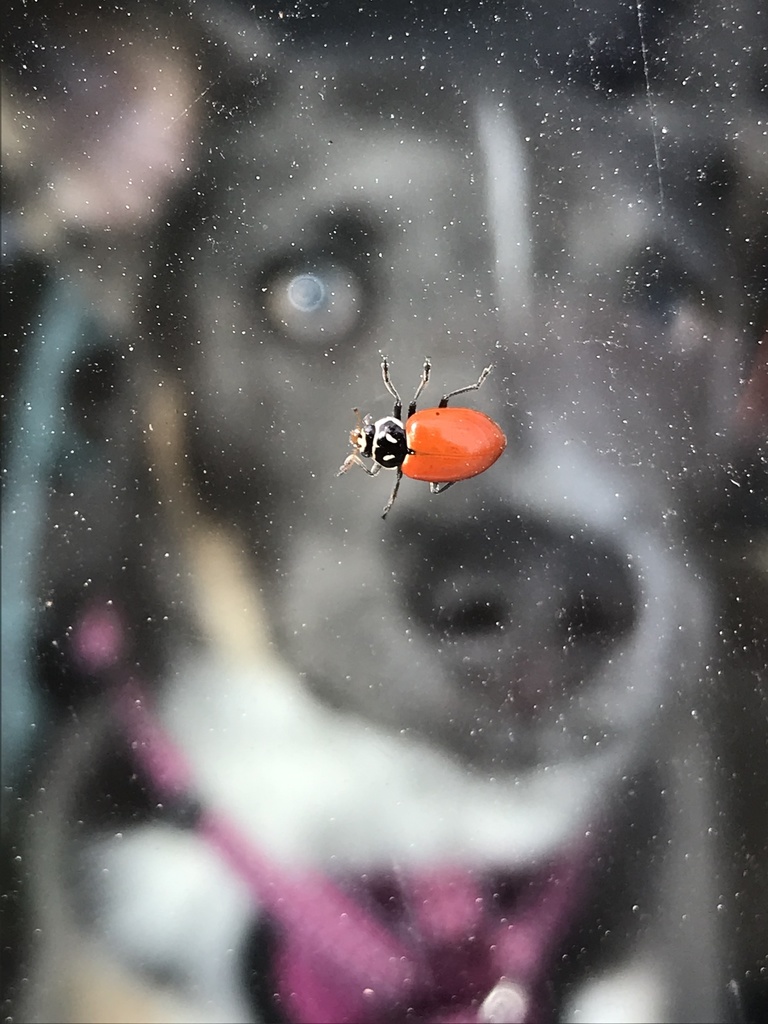
!Is the convergent lady beetle dangerous?
No. Harmless to people. Adults do not have a venomous bite; they may nip if handled but bites are not dangerous. When disturbed they can exude a yellowish defensive fluid (reflex bleeding) that smells and can stain clothing and may cause mild skin irritation in sensitive individuals.
Pets
Not poisonous to dogs or cats, though beetles taste bitter and may be spat out; reflex blood can cause mild stomach upset if large numbers are eaten.
📖Overview
The convergent lady beetle (Hippodamia convergens) is a small, predatory beetle widely known as an effective natural enemy of aphids and other soft-bodied plant pests. Adults are commonly found on flowering and woody plants hunting prey; they often form large overwintering aggregations in buildings, rock outcrops and on hillsides. H. convergens has been used commercially for biological control and is widespread across North America, and has been moved to other regions for pest control.
🔍How to identify a convergent lady beetle
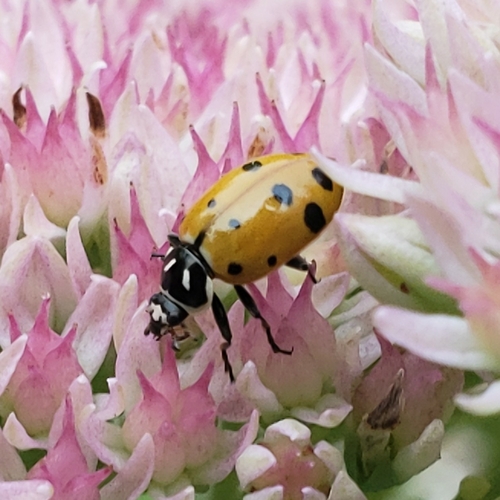
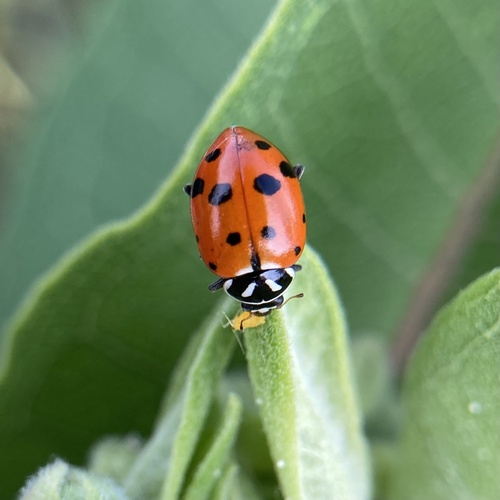
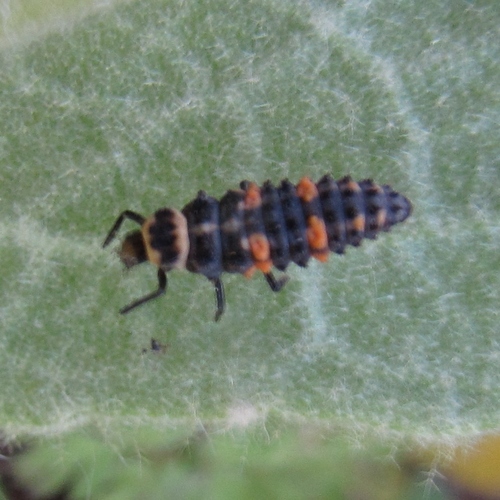
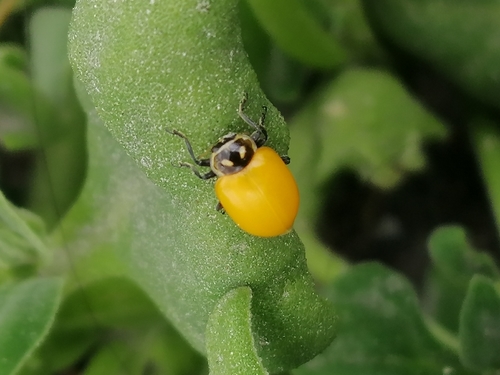
Adults are dome-shaped, usually orange to red with up to 13 black spots on the elytra (spot number varies and some individuals have few or none). The pronotum (area behind the head) is black with two white converging lines or spots that give the species its common name. Size ranges from small to medium for lady beetles, with the overall shape rounded and convex. Larvae look like elongated alligators: black or dark grey with orange markings and spiny bumps.
- Look for orange-red, dome-shaped beetles about 3.5-7 mm long with black spots on the elytra.
- Check the pronotum behind the head for two white markings or lines that converge toward the center (the 'convergent' mark).
- Larvae are elongated, dark and spiny with orange spots (look like tiny alligators), often on plants with aphids.
Lookalikes
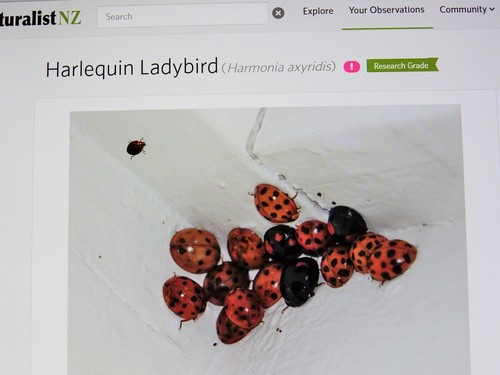
Asian lady beetle Harmonia axyridis
Often more variable in color and spot number; pronotum is mostly pale with a black M- or W-shaped marking rather than the two converging white spots of H. convergens.
Two-spotted lady beetle Adalia bipunctata
Usually has two large black spots on the elytra and lacks the converging white pronotal marks; body proportions and spot pattern differ.
↻Life cycle
Egg
Females lay clusters of yellowish eggs on leaves near aphid colonies. Eggs hatch in several days to a week, depending on temperature.
Larva
Larvae are active predators resembling tiny alligators (elongated, spiny, dark with orange markings), consuming large numbers of aphids as they grow through several instars over 2-3 weeks.
Pupa
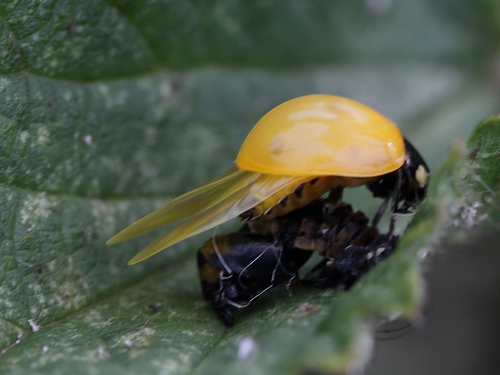
Larvae attach to a leaf or stem and pupate for several days to a week while transforming into the adult beetle.
Adult
Adults emerge from pupae, continue to feed on pests, reproduce through summer, and often form overwintering aggregations in autumn.
🍃Diet and predators
Young eat
Aphids, small soft-bodied insects and their eggs
Adults eat
Aphids, scale crawlers, small insects, sometimes pollen and nectar when prey is scarce
Predators of the young
Predatory insects, ants, birds and spiders
Predators of adults
Birds, spiders, predatory insects and small mammals; ants may attack larvae and eggs.
🌱Effect on plants and gardens
Adults and larvae feed on aphids, scale crawlers, mites and other small soft-bodied pests, reducing pest pressure in gardens, orchards and crops.
📍Where and when to find it
On flowering plants, crops, shrubs and trees that host aphids (eggs and larvae on undersides of leaves). Overwintering adults on rock outcrops, buildings, and in crevices.
Best time
Spring through fall for feeding and breeding; autumn for overwintering aggregations. Daytime is best for photographing active adults.
Observation tips
Look on the undersides of leaves where aphids cluster. Use a macro lens to show pronotal markings to confirm identification. For overwintering groups, approach slowly to avoid disturbing the aggregation.
✨Fun facts
- Hippodamia convergens has been sold commercially for biological control of aphids; mass-collection for sale has affected wild populations in some areas.
- They form spectacular overwintering aggregations of thousands to millions of beetles in rocky or sheltered sites.
- Adults can fly long distances to locate aphid outbreaks and may appear suddenly in gardens.
?Frequently asked questions
Are convergent lady beetles harmful to people?
No. They do not have venom. They can reflex-bleed a foul-smelling fluid that may stain clothing and rarely cause mild skin irritation in sensitive people.
Do convergent lady beetles bite?
They may nibble if handled, but bites are harmless and not medically significant.
Why are convergent lady beetles in my house?
Adults commonly seek sheltered sites to overwinter and sometimes enter buildings through gaps or windows in the autumn, forming indoor aggregations.
How can I get rid of them indoors?
Gently vacuum them up or sweep them into a container and release them outdoors away from the building. Seal entry points (cracks, vents, gaps) and use screens to prevent re-entry.
Where do convergent lady beetles live?
They live on plants and trees where aphids and other prey are present, and overwinter in sheltered sites such as rock faces, buildings, woodpiles and tree bark crevices.
📷Photos of the convergent lady beetle
More beetles
This guide was written with AI assistance and fact-checked, last updated 2026-10-09. Identification from photos is never certain: don't handle insects you can't identify, and get medical advice for bites, stings or allergic reactions.