
Ladybug or Asian lady beetle? How to identify ladybugs, and why they're in your house
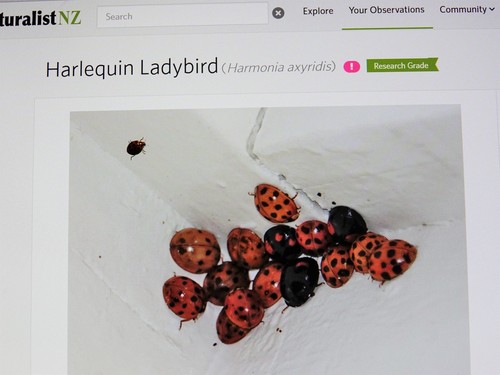
Ladybugs, also called ladybirds or lady beetles, are some of the most welcome insects in the garden: adults and larvae eat aphids and other pests. But on sunny autumn days, hundreds of orange beetles can gather on walls and windows and find their way indoors. Those are almost always Asian lady beetles, not native ladybugs.
None of them are dangerous. Here's how to tell them apart, and what to do when they move in for the winter.
The one in your house: Asian lady beetle
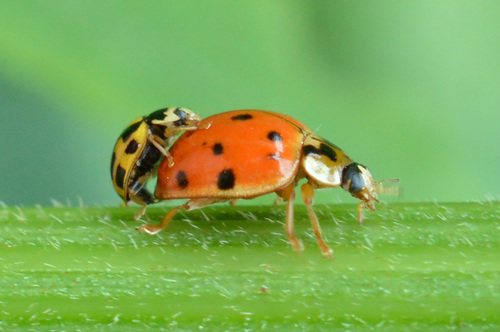
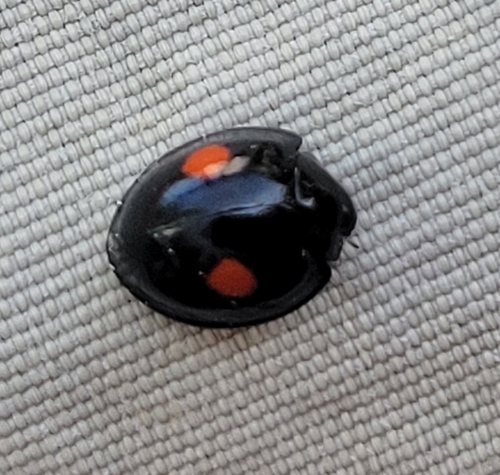
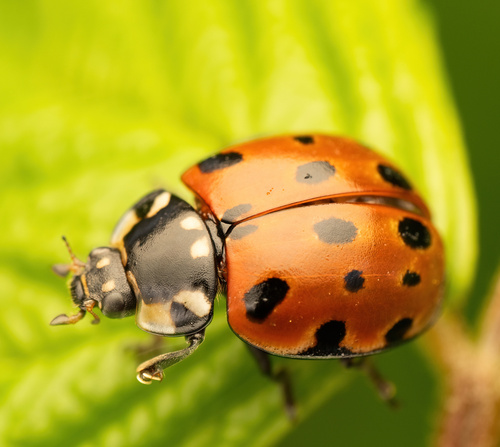
The Asian lady beetle, called the harlequin ladybird in the UK, is about 5-8 mm long and very variable: yellow, orange or red with anything from no spots to about 20, or black with two or four red spots. The best clue is behind the head. Most have a white or cream area with a black mark shaped like an M or a W, depending on which way you look.
It was brought to North America and Europe from eastern Asia to control aphids and has spread widely. In autumn, adults gather on sunny, light-coloured walls, especially south- and west-facing ones, then squeeze through gaps around windows, siding and roof spaces to spend the winter inside walls and attics. On warm winter and spring days they wake up and wander into rooms.
Do ladybugs bite? Are they poisonous?
Ladybugs can nip, and Asian lady beetles do it more often, especially when they land on skin in autumn. It feels like a pinprick, rarely breaks the skin, and isn't venomous.
When disturbed, lady beetles squeeze out drops of yellow fluid from their leg joints. It's bitter, smells unpleasant and can stain walls and fabrics, but it isn't harmful to touch. Some people are allergic to Asian lady beetles and get a runny nose, itchy eyes or asthma symptoms when large numbers are indoors.
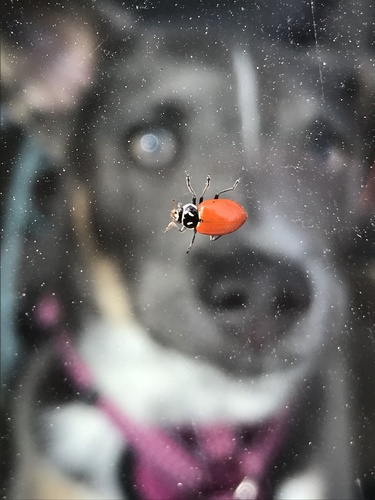
Lady beetles aren't poisonous to people, and a cat or dog that eats one or two is usually fine apart from drooling at the bitter taste. Dogs that eat many Asian lady beetles have occasionally had them stick to the roof of the mouth and cause sores. Call your vet if a dog keeps drooling, paws at its mouth or won't eat.
Red with black spots: seven-spot and two-spot ladybirds
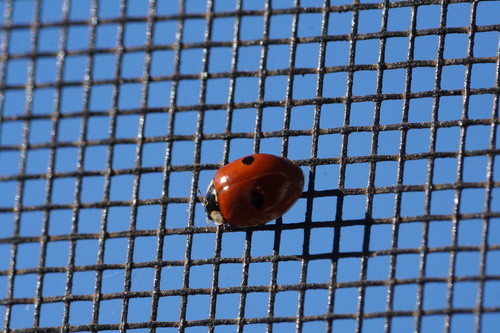
The seven-spot ladybird is the classic ladybug: 5-8 mm, bright red with seven black spots, three on each side and one shared spot at the front, and a black area behind the head with a white patch at each front corner. It's common across Europe and Asia and was introduced to North America.
The two-spot lady beetle is smaller, about 4-5 mm, usually red with one black spot on each side. It also comes in black forms with four or six red spots, which can be confused with Asian lady beetles; two-spots are smaller and lack the white M or W mark.
The convergent lady beetle of North America is orange-red with up to 13 small black spots and two white lines behind the head that slant towards each other. It's the ladybug most often sold for releasing in gardens.
Yellow, pink or black: other lady beetles you might find
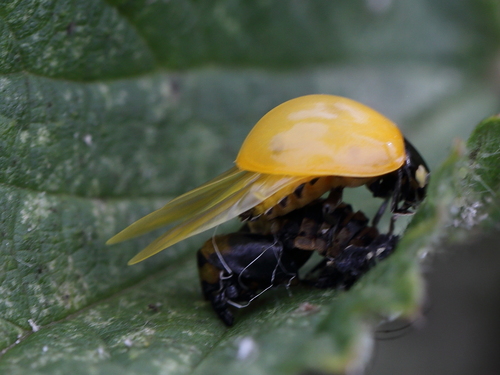
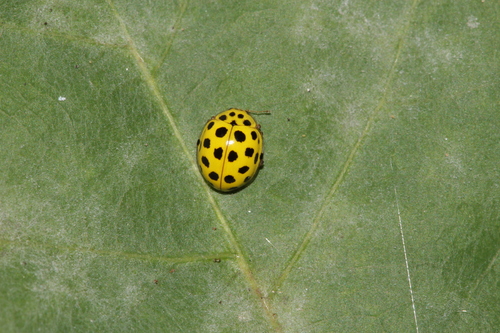
The 22-spot ladybird is small, 3-4 mm, bright lemon-yellow with 22 round black spots. It eats mildew on leaves rather than aphids. The 14-spot ladybird is also yellow, but its black spots are squarish and often join up into an anchor-like pattern.
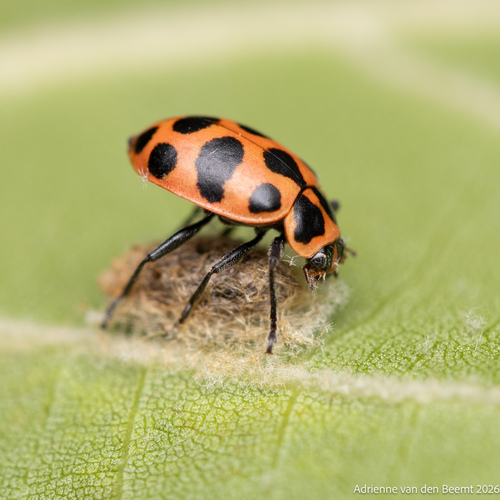
The pink spotted lady beetle of North America is a slightly longer, oval beetle about 5-6 mm long, pink to red with black spots. It eats aphids and pollen and is common in gardens and crops.
The twice-stabbed lady beetle is shiny black and very domed, about 4-5 mm, with one round red spot on each side. It feeds on scale insects on trees and shrubs.
All of these are harmless to people and pets, and good to have in the garden.
Big ladybirds: eyed and large spotted ladybirds
The eyed ladybird is the largest ladybird in Europe, about 8-9 mm, red with black spots that are each ringed in pale yellow, like little eyes. It lives mainly on conifers.
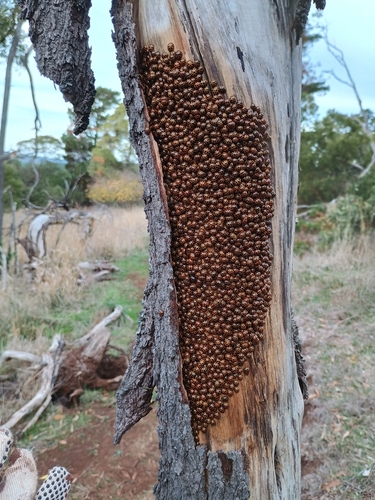
In Australia, the large spotted ladybird is orange with about 20 black spots and gathers in sheltered spots, sometimes on houses, to spend the winter.
Not ladybugs: spotted beetles that look similar
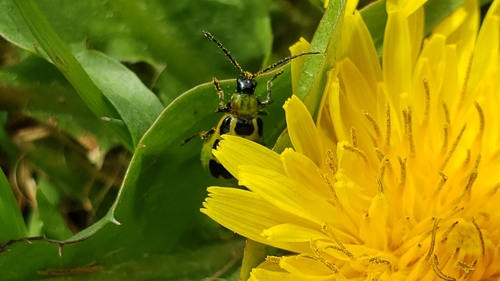
The spotted cucumber beetle is yellow-green with 12 black spots, but it's longer and flatter than a ladybug, with long antennae. It's a garden pest that eats cucumbers, squash and melons.
The golden tortoise beetle is round and flat with a clear rim around its body and looks like a drop of shiny gold. When disturbed it can turn dull reddish with black spots and look like a ladybug.

How to get rid of lady beetles in the house
Don't crush or sweep them, which releases the smelly, staining fluid. Vacuum them up instead; putting a stocking over the end of the hose, held on with a rubber band, lets you empty them outside. A simple light trap in a dark attic also catches many.
The long-term fix is keeping them out before they arrive in early autumn: seal gaps around windows, doors, pipes and cables, repair screens, and fit screening over roof and wall vents. Spraying insecticide indoors isn't recommended; the beetles in walls will keep emerging until spring and then leave on their own.
If you're not sure whether you have Asian lady beetles or native ladybugs, compare yours with the photos on this page, or identify it from a photo.
?Frequently asked questions
How do you tell an Asian lady beetle from a ladybug?
Look behind the head. Most Asian lady beetles have a white or cream area with a black M- or W-shaped mark. They're also usually orange rather than red, slightly larger, and they're the ones that gather on and in houses in autumn.
Why are there so many ladybugs in my house?
They're almost always Asian lady beetles looking for a sheltered place to spend the winter. They gather on sunny walls in autumn and crawl in through gaps around windows, siding and vents. Seal those gaps before early autumn to keep them out next year.
Can ladybugs bite you?
They can nip, and Asian lady beetles do it more often. It feels like a pinprick, rarely breaks the skin and isn't venomous or dangerous.
Are ladybugs poisonous to dogs and cats?
Not usually. A pet that eats one or two may drool at the bitter taste. Dogs that eat many Asian lady beetles have occasionally had them stick to the roof of the mouth and cause sores, so call your vet if your dog keeps drooling or won't eat.
Is the 22-spot ladybird poisonous?
No. The 22-spot ladybird is a small yellow ladybird with black spots that eats mildew on plants. It's harmless to people and pets.
Written by the Insect Scanner team, last updated 2026-11-06. Identification from photos is never certain: don't handle insects you can't identify, and get medical advice for bites, stings or allergic reactions.