
Fourteen-spotted ladybird
Propylea quatuordecimpunctata · Ladybirds
A small, usually yellow-and-black ladybird species that eats aphids and is a beneficial predator in gardens and crops.
!Is the fourteen-spotted ladybird dangerous?
No. This species does not pose a health risk. Ladybirds do not sting; they can exude a yellowish defensive fluid that may stain skin or clothes and can cause mild irritation in rare cases. If that happens, wash the area with soap and water.
Pets
Generally harmless to pets. Large numbers swallowed by small pets could cause mild stomach upset, but there is no known venom risk.
📖Overview
Propylea quatuordecimpunctata is a small coccinellid (ladybird) frequently found on herbs, shrubs and crops where aphids occur. Adults are active in spring and summer, hunt aphids and other soft-bodied insects, and often overwinter as adults in sheltered places. Colour and spot pattern can be variable; the typical form is yellow with fourteen black spots, but melanic (dark) forms occur. The species is native to much of Europe and western Asia and has established populations in parts of North America.
🔍How to identify a fourteen-spotted ladybird
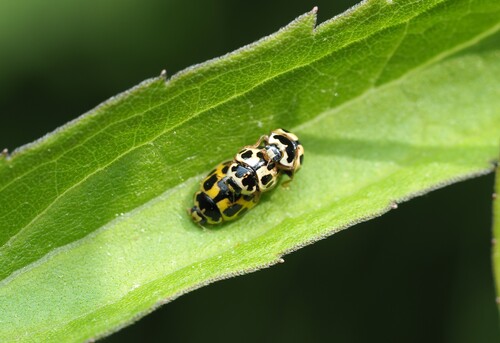
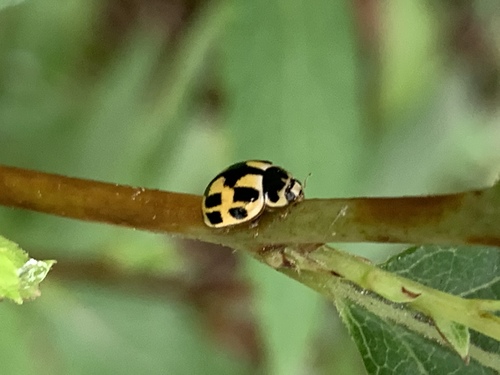
Typical adults are small (about 3.5-5 mm long), rather flattened for a ladybird, and usually lemon-yellow to cream with squarish black spots that commonly total fourteen (seven on each elytron). The spots often merge, giving a chequered or 'anchor'-like black pattern along the centre line where the wing cases meet. The pronotum (area behind the head) is pale with a central dark marking. There is notable individual variation: some beetles are much darker with pale markings, and spot number/shape can vary, so identification uses overall size, shape and the squarish, merging spot pattern together with range.
- Small size (about 3.5-5 mm) and rounded, domed beetle shape
- Yellow to cream elytra marked with squarish black spots, often counted as fourteen and frequently merged
- Pronotum pale with a dark central marking; body outline and spot pattern differ from larger ladybirds
- Be aware of dark (melanic) variants; check size and habitat if spot pattern is unclear
Lookalikes
Seven-spot ladybird Coccinella septempunctata
Larger beetle with seven distinct black spots on red or orange elytra; overall bigger and less densely spotted than P. quatuordecimpunctata.
Two-spot ladybird Adalia bipunctata
Usually red with two black spots (melanic forms are black with red spots); fewer spots and a different pronotum pattern distinguish it.
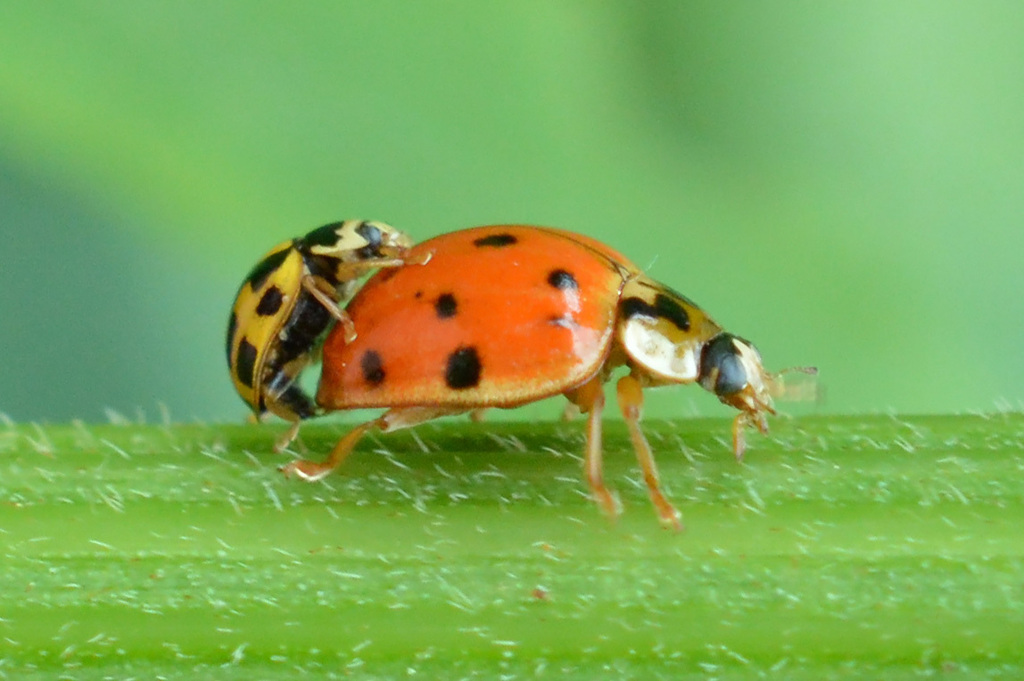
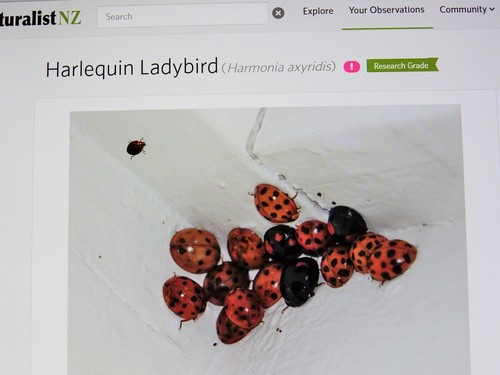
Harlequin ladybird Harmonia axyridis
Highly variable in colour and pattern and often larger; harlequin may have a distinctive M- or W-shaped marking on the pronotum and frequently outcompetes native species.
↻Life cycle
Egg
Females lay small clusters of elongate yellow eggs on leaves or plant stems near aphid colonies.
Larva
Larvae are elongate and somewhat alligator-like; they are active predators that consume many aphids as they grow through several instars.
Pupa
Larvae pupate attached to leaves or stems; pupal stage lasts several days before the adult emerges.
Adult
Adults are the familiar round, domed beetles that continue to feed on aphids and eventually seek sheltered places to overwinter.
🍃Diet and predators
Young eat
Aphids and other small soft-bodied arthropods
Adults eat
Aphids, small scale insects, mite eggs and occasionally pollen or nectar when prey are scarce
Predators of the young
Spiders, predatory insects and some parasitic wasps
Predators of adults
Birds, spiders, predatory bugs and small mammals
🌱Effect on plants and gardens
Adults and larvae feed on aphids, small scale insects and other soft-bodied pests, helping control infestations on garden and crop plants.
📍Where and when to find it
Look on aphid-infested plants, shrubs and low woody vegetation; larvae and adults forage on leaves and stems. In autumn and winter, search sheltered leaf litter, crevices and undisturbed buildings for overwintering adults.
Best time
Spring through early autumn for active feeding (daytime, warm sunny weather). Overwintering adults best found in late autumn and winter in sheltered sites.
Observation tips
Scan undersides of leaves and along stems where aphids congregate. Use a shallow tray or jar to collect individuals for a close photo, then release them.
✨Fun facts
- Despite the common name, not every individual shows exactly fourteen spots; spot number and colour vary across individuals and populations.
- Like many ladybirds, this species can overwinter as an adult in groups inside leaf litter, hollow stems or buildings.
- Both larvae and adults are voracious aphid predators and can help naturally control pests in gardens and farms.
?Frequently asked questions
Do fourteen-spotted ladybirds bite?
Not in any way that matters. They may occasionally give a tiny nip if handled, which is harmless.
Are they harmful or poisonous?
No — they are not poisonous to humans. They may release a yellow defensive fluid that can smell or stain and rarely causes mild skin irritation.
Why are they in my house?
Adults sometimes enter houses in autumn to find warm sheltered overwintering sites, or may wander indoors from nearby vegetation while searching for food.
How do I get rid of them?
Because they are beneficial, it is best to gently remove them: sweep or coax into a container and release outdoors near vegetation. Seal entry points to prevent winter invasions.
Will they damage my plants?
No — they are predators of pests and help protect plants by eating aphids and other small insects.
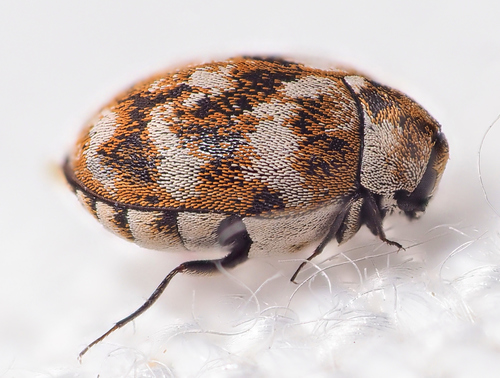
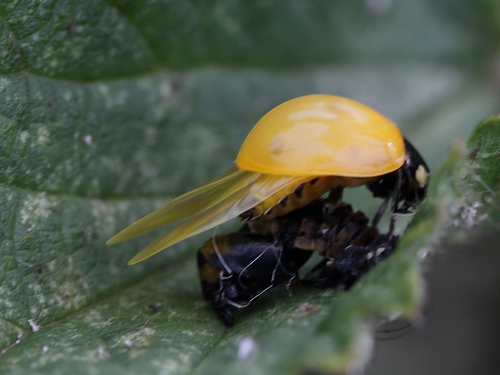
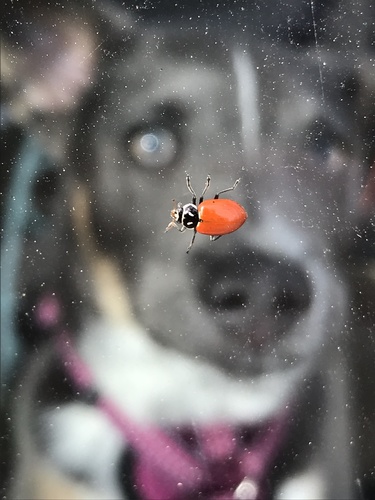
📷Photos of the fourteen-spotted ladybird



More beetles
This guide was written with AI assistance and fact-checked, last updated 2026-10-10. Identification from photos is never certain: don't handle insects you can't identify, and get medical advice for bites, stings or allergic reactions. More about the fourteen-spotted ladybird: iNaturalist, Wikipedia.