
Asian lady beetle
Harmonia axyridis · Lady beetles
A variable, often orange-and-black lady beetle species introduced worldwide as an aphid predator but now an invasive nuisance in many regions.
!Is the asian lady beetle dangerous?
Only mildly. Bites are uncommon and usually produce only minor, short-lived discomfort. When threatened they release an orange defensive fluid that can stain skin, fabrics and food and may cause skin or respiratory allergic reactions in sensitive people. If bitten, wash the area with soap and water and apply a cold compress if needed. Seek medical care for severe allergic reactions or if symptoms worsen.
Pets
Generally not dangerous to pets, but ingestion of many beetles can cause mild gastrointestinal upset. The defensive fluid can irritate the mouth or paws; wash pets if they come in contact with large numbers.
📖Overview
Harmonia axyridis is a medium-sized lady beetle native to eastern Asia that has been widely introduced as a biological control agent against aphids. It is highly variable in color and spot pattern, which makes it easy to confuse with native lady beetles. The species established outside its native range in North America, Europe, South America and Africa and is considered invasive in many areas because it competes with native lady beetles and can damage fruit and invade buildings in large numbers.
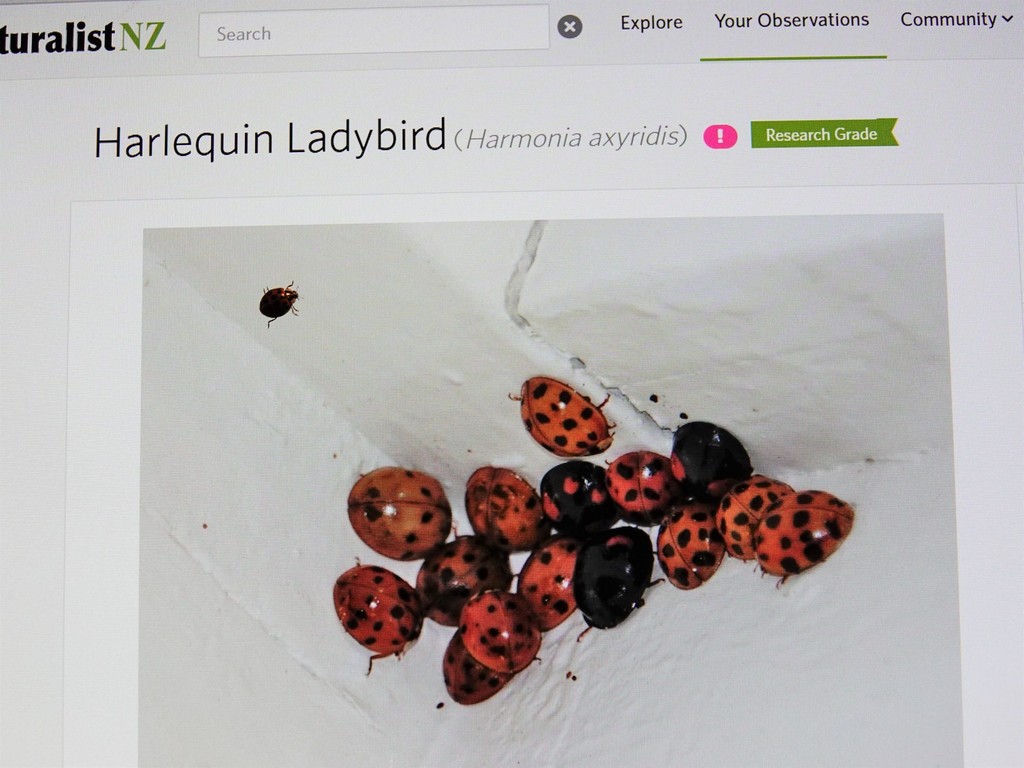
Asian lady beetles are active predators of aphids and other soft-bodied arthropods but will also feed on pollen, nectar, honeydew and soft fruit when prey is scarce. In autumn they congregate and seek shelter in buildings and cracks to overwinter, which is why homeowners often encounter large numbers indoors. While generally harmless to people, they can bite, leave yellow-orange defensive fluids that stain fabrics, and trigger allergic reactions in sensitive individuals.
🔍How to identify a asian lady beetle
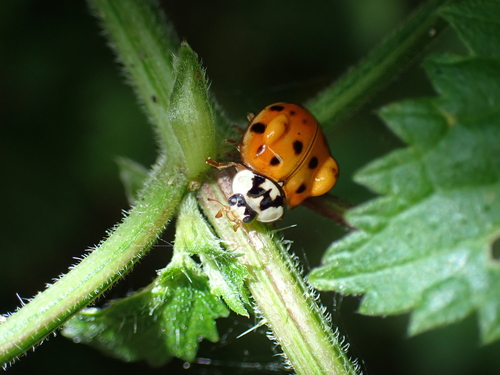
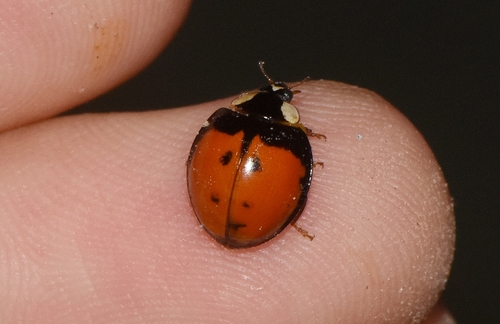
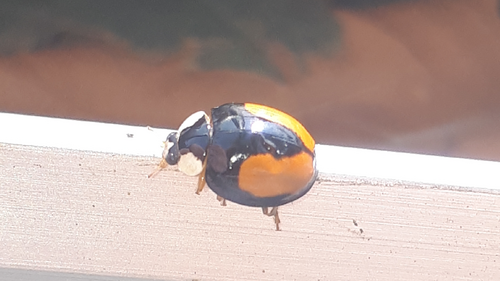
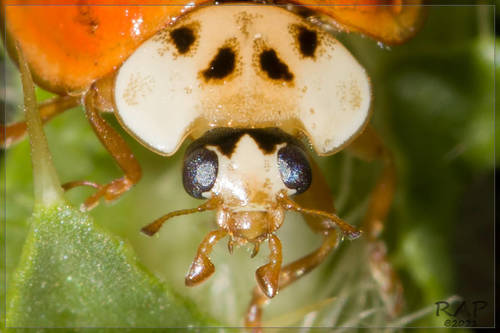
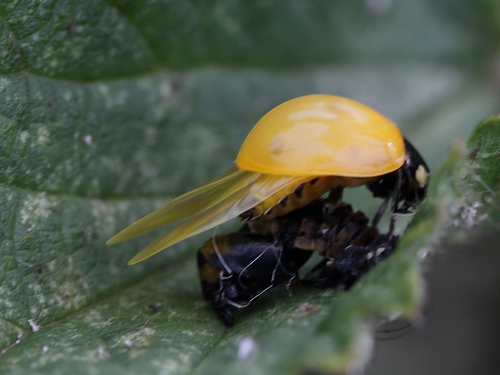
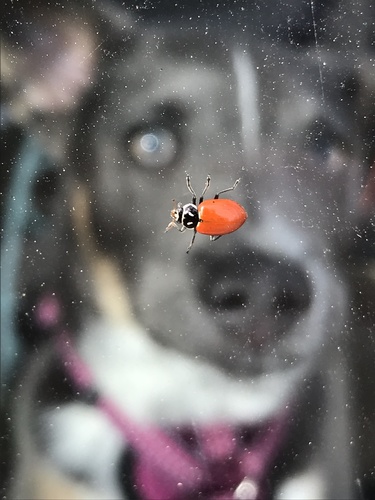
Adults are dome-shaped, 5-8 mm long, and highly variable in color from pale yellow to orange to red, with 0 to many black spots (commonly 0-19). Many morphs show a distinctive M- or W-shaped black marking on the pronotum (behind the head). A common form is orange with several black spots; melanic (very dark) forms occur and may appear nearly all black. Larvae are elongate, alligator-like, black with orange markings. Pupae are attached to vegetation and are yellow-orange to brown.
- Size 5-8 mm long, dome-shaped beetle with highly variable color and spot pattern.
- Look for the M- or W-shaped black marking on the pale pronotum behind the head.
- Melanic individuals may be nearly all black; count of spots is unreliable because pattern varies.
- Larvae are elongate, black with orange markings and look like tiny alligators.
Lookalikes
Seven-spot ladybird Coccinella septempunctata
Usually has a consistent pattern of seven black spots on red elytra and lacks the M-shaped pronotal mark commonly seen in H. axyridis.
Two-spot ladybird Adalia bipunctata
Typically has two distinct black spots on a red background and a different pronotal pattern; smaller and less variable than H. axyridis.
Convergent lady beetle Hippodamia convergens
Usually orange with many smaller spots and convergent white lines on the pronotum; lacks H. axyridis typical pronotal M-mark.
↻Life cycle
Egg
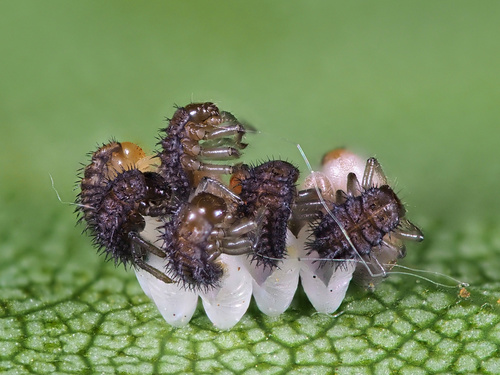
Small, yellow to orange eggs laid in clusters on leaves near aphid colonies; hatch in 3-10 days depending on temperature.
Larva
Four instars of active, alligator-like larvae that voraciously feed on aphids for 2-4 weeks.
Pupa
Larvae pupate attached to vegetation; pupal stage lasts about 5-7 days before adults emerge.
Adult
Adults feed, reproduce and may produce several generations per year; in autumn adults seek sheltered sites to overwinter in groups.
🍃Diet and predators
Young eat
Predatory on aphids, scale insects, mites and other soft-bodied arthropods.
Adults eat
Predatory on aphids and other pests; will also consume pollen, nectar, honeydew and soft or damaged fruit when prey is scarce.
Predators of the young
Predatory insects (larger beetles), spiders and some parasitic wasps.
Predators of adults
Birds, spiders and some predatory insects; however, chemical defenses make many predators avoid them.
🌱Effect on plants and gardens
Adults and larvae eat aphids and other soft-bodied pests, which can benefit crops and gardens. Invasive populations can sometimes feed on soft fruit (berries, grapes) and cause staining or blemishes on ripe fruit.
How to get rid of asian lady beetles
Seal cracks and gaps around windows, doors and eaves to prevent overwintering beetles from entering. Use weather stripping and screens. Indoors, vacuum beetles and dispose of the vacuum bag or empty canister promptly; avoid crushing them on fabrics to prevent stains. Chemical controls provide temporary reduction but are not a long-term solution and may harm non-target insects; consult a pest professional for large infestations.
📍Where and when to find it
On aphid-infested plants (roses, fruit trees, ornamentals), in gardens and orchards; in autumn on sunny walls, window sills and inside buildings where they overwinter.
Best time
Spring through autumn for feeding and breeding; autumn for large aggregations seeking shelter. Daytime on sunny days is best for observation.
Observation tips
Check undersides of leaves for eggs and larvae. Photograph the pronotum and elytra pattern to help identify variable color forms. Use gentle handling or a soft brush to move individuals for closer view.
✨Fun facts
- Harmonia axyridis was intentionally introduced in many countries for aphid control but later became an invasive species in those regions.
- They congregate in large groups to overwinter and often enter houses through small gaps, where they can remain for months.
- Some color forms have no spots at all, which once led to confusion and misidentification.
?Frequently asked questions
Are Asian lady beetles harmful to humans?
Not typically dangerous. They can bite occasionally and their defensive fluid can cause skin staining or allergic reactions in sensitive people; seek medical care for severe allergic responses.
Do Asian lady beetles bite?
Yes, they can nip humans if handled or trapped, but bites are usually minor and not medically serious.
Why are they in my house?
In autumn adult beetles seek warm, sheltered sites to overwinter and may enter houses through gaps around windows, doors and eaves.
How do I get rid of them?
Seal entry points, use screens and weather stripping, and vacuum beetles indoors rather than crushing them. For large infestations consult a pest control professional.
Do they eat garden plants?
They are primarily aphid predators and usually benefit gardens, but large populations may feed on soft or damaged fruit and cause blemishes.
📷Photos of the asian lady beetle
More beetles
This guide was written with AI assistance and fact-checked, last updated 2026-10-09. Identification from photos is never certain: don't handle insects you can't identify, and get medical advice for bites, stings or allergic reactions.