
Asian lady beetle vs Eyed ladybird
These two are easy to mix up. Here's how to tell an Asian lady beetle from an eyed ladybird, and whether either one bites or stings.
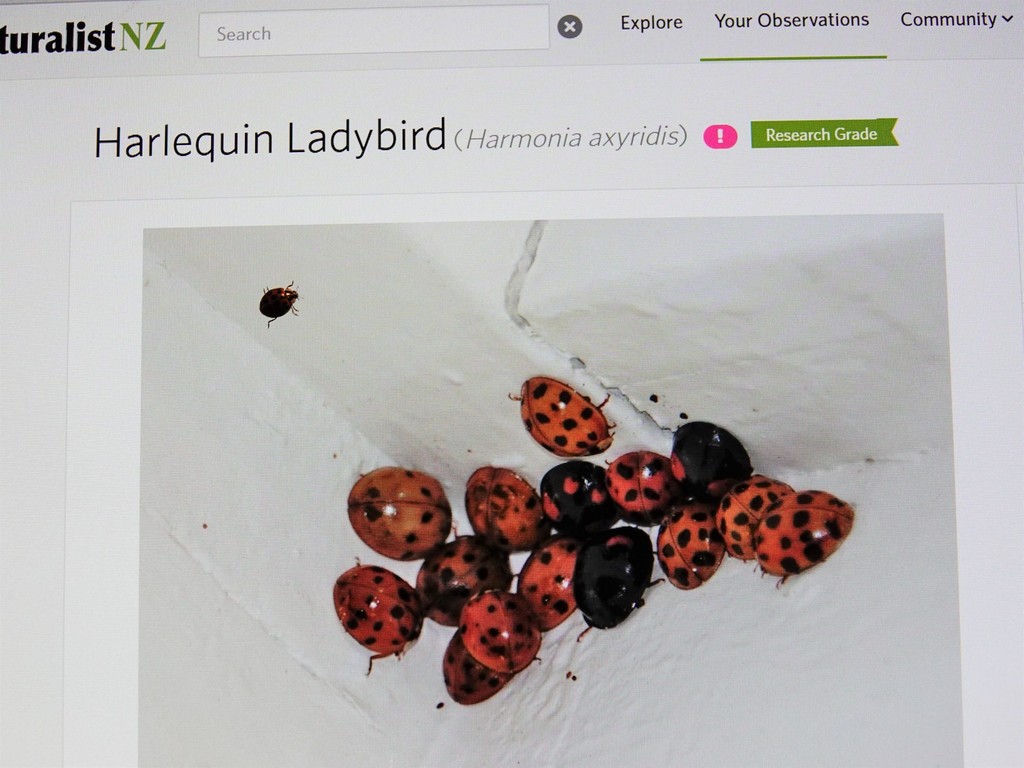
Asian lady beetle
Harmonia axyridis
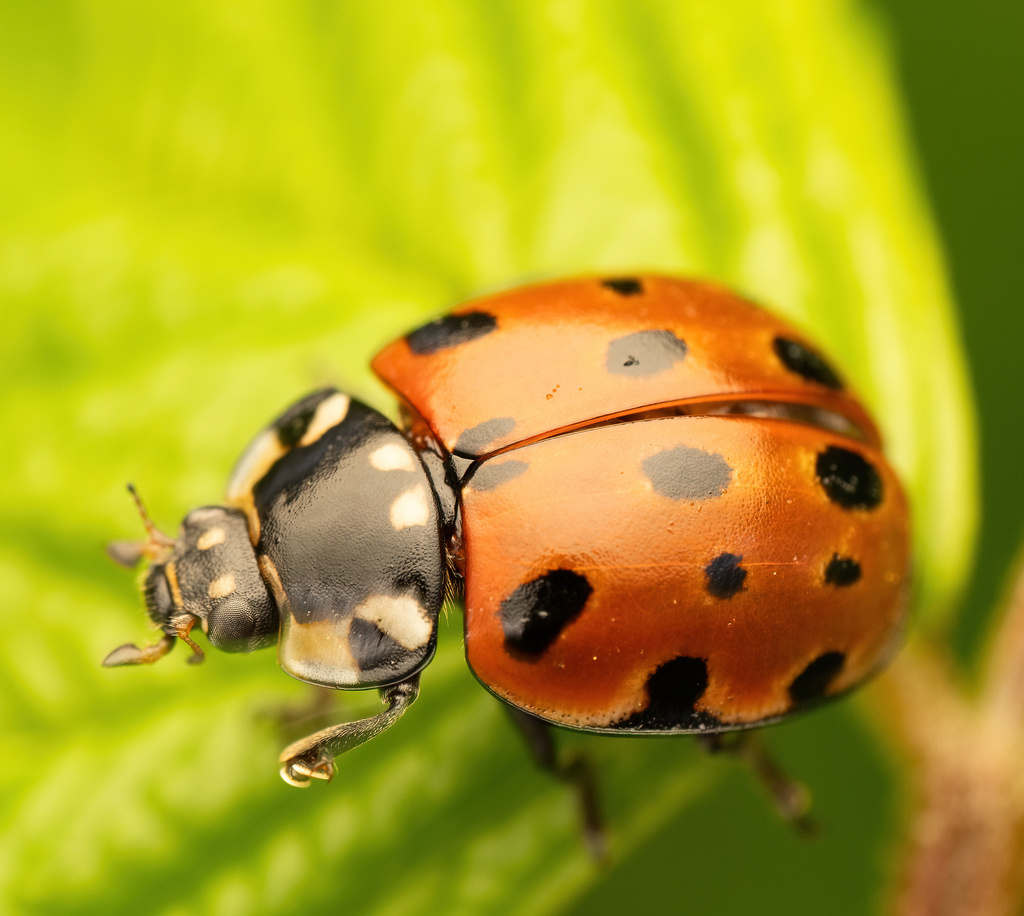
Eyed ladybird
Anatis ocellata
≠The key differences
Extremely variable in color and pattern but usually lacks the clear haloed 'eye' spots of Anatis ocellata and is often found on low vegetation and crops as well as trees
⚖︎Side by side
| Asian lady beetle | Eyed ladybird | |
|---|---|---|
| To humans | Mild irritant | Non-toxic |
| Size | 5-8 mm long | 7-9 mm long |
| Colours | Orange, Red, Black, Yellow | Orange-red, Black, Cream |
| Family | Coccinellidae | Coccinellidae |
| Habitat | Gardens, orchards, agricultural fields, parks and buildings; often found on aphid-infested plants and congregating on sunny walls and window frames in autumn. | Coniferous and mixed forests, plantations, wooded hedgerows and occasionally gardens near trees |
| Range | Native to eastern Asia; introduced and now widespread across North America, Europe, South America, southern Africa and parts of Oceania. | Northern and central Europe across Russia into Siberia and east to Japan; generally Palearctic in distribution |
| Active | Active spring through autumn; aggregates to overwinter in autumn and are mostly inactive during winter. | Spring to autumn; adults most active by day (diurnal); overwinter as adults |
| Pest? | Yes | No |
🔍How to spot an Asian lady beetle
- Size 5-8 mm long, dome-shaped beetle with highly variable color and spot pattern.
- Look for the M- or W-shaped black marking on the pale pronotum behind the head.
- Melanic individuals may be nearly all black; count of spots is unreliable because pattern varies.
- Larvae are elongate, black with orange markings and look like tiny alligators.
🔍How to spot an eyed ladybird
- Large, rounded ladybird 7-9 mm long (larger than many common garden ladybirds)
- Elytra orange-red with several large black spots each surrounded by a pale ring (gives the 'eyed' look)
- Pronotum with distinctive black and pale markings; overall domed shape and short antennae
- Found on conifers or nearby trees rather than low garden plants
?Frequently asked questions
What is the difference between an Asian lady beetle and an eyed ladybird?
Extremely variable in color and pattern but usually lacks the clear haloed 'eye' spots of Anatis ocellata and is often found on low vegetation and crops as well as trees
Is an Asian lady beetle or an eyed ladybird more dangerous?
Asian lady beetle: Mild irritant. Eyed ladybird: Non-toxic. Bites are uncommon and usually produce only minor, short-lived discomfort. Not dangerous.
Identification from photos is never certain: don't handle insects you can't identify, and get medical advice for bites, stings or allergic reactions.