
Eyed ladybird
Anatis ocellata · Ladybird beetles
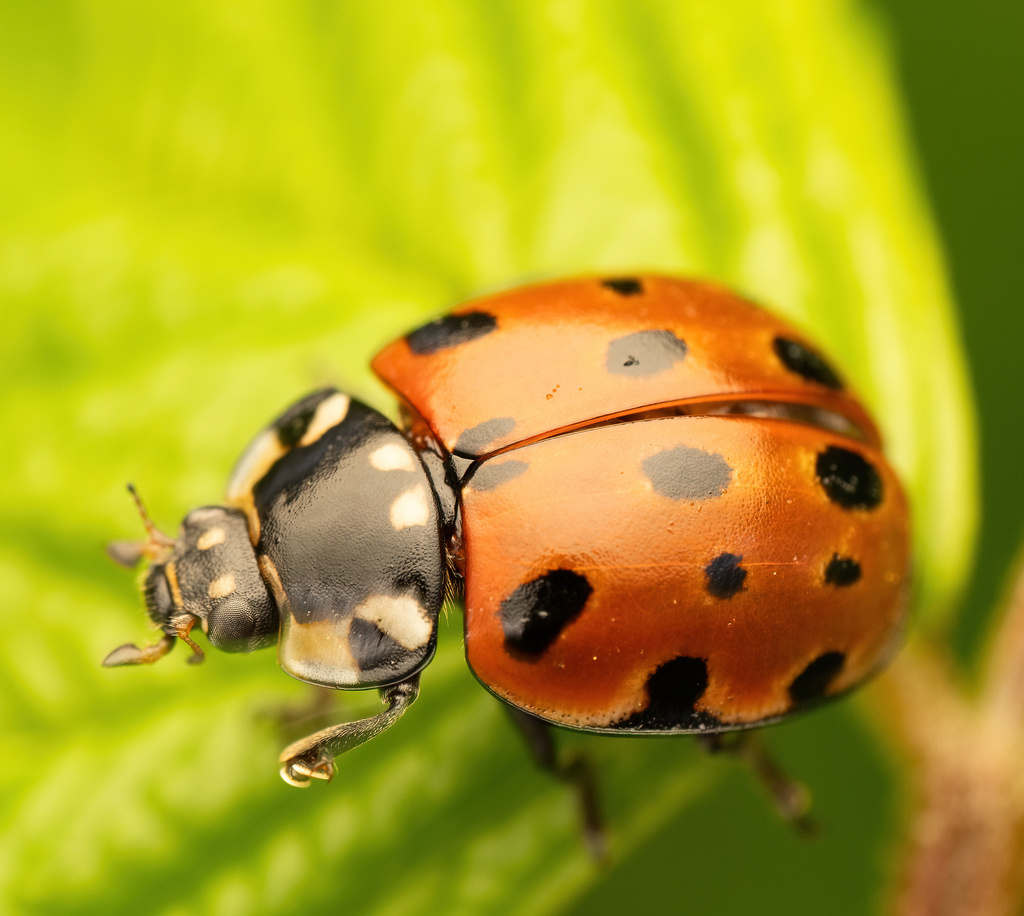
A large, striking ladybird with ringed 'eye' spots that feeds on aphids in conifer and mixed forests across northern Eurasia.
!Is the eyed ladybird dangerous?
No. Not dangerous. Does not have a venomous bite or sting. If handled roughly they may reflexively exude a yellow fluid (reflex bleeding) that can stain skin or clothing and has a noticeable odor; wash with soap and water if contact occurs.
Pets
Generally harmless to cats and dogs. The defensive fluid can be unpleasant or mildly irritating if licked; discourage pets from eating beetles.
📖Overview
Anatis ocellata is a relatively large and conspicuous ladybird (family Coccinellidae) found across northern and central Europe and much of northern Asia. Both larvae and adults are predators of aphids and other small soft-bodied insects, especially on conifers. They are primarily forest inhabitants and are often seen on tree trunks, branches and foliage where prey is abundant.
This species overwinters as an adult, often sheltering under bark, in leaf litter or occasionally in buildings. It is harmless to people and provides useful biological control of aphids in forests and plantations.
🔍How to identify an eyed ladybird
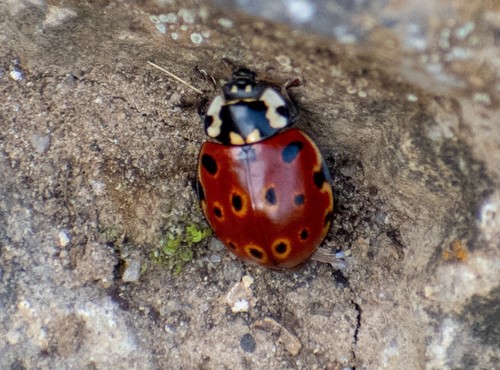
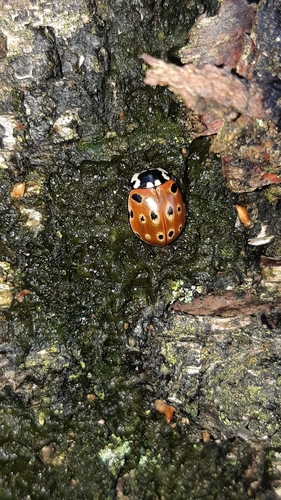
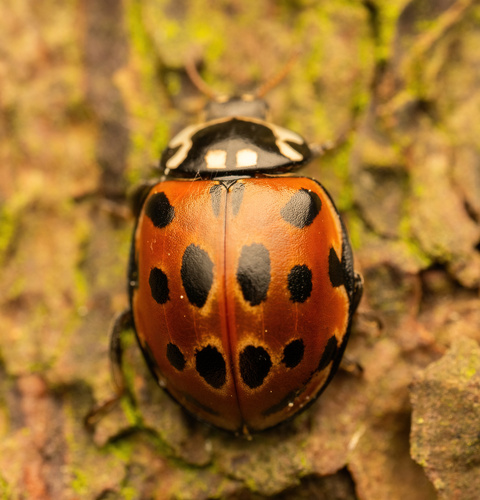
Adults are relatively large for ladybirds with a rounded, domed body. The elytra (wing covers) are typically orange to red or sometimes more orange-brown and bear several large black spots each surrounded by a pale ring or halo, producing an "eyed" appearance. The pronotum (just behind the head) usually shows a pattern of black and pale markings. Legs and antennae are dark. When disturbed they can exude a yellow defensive fluid (reflex bleeding) that smells and can stain.
- Large, rounded ladybird 7-9 mm long (larger than many common garden ladybirds)
- Elytra orange-red with several large black spots each surrounded by a pale ring (gives the 'eyed' look)
- Pronotum with distinctive black and pale markings; overall domed shape and short antennae
- Found on conifers or nearby trees rather than low garden plants
Lookalikes
Seven-spot ladybird Coccinella septempunctata
Smaller on average and its black spots lack pale halo rings; different spot pattern (seven spots)
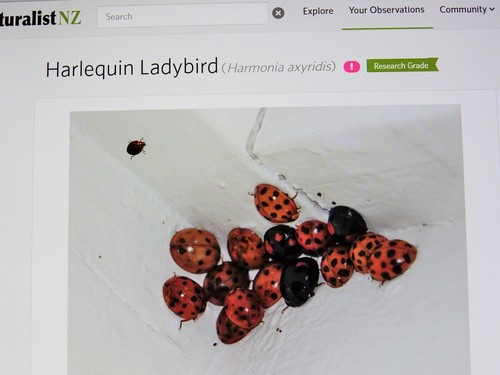
Harlequin ladybird Harmonia axyridis
Extremely variable in color and pattern but usually lacks the clear haloed 'eye' spots of Anatis ocellata and is often found on low vegetation and crops as well as trees
↻Life cycle
Egg
Laid in clusters near aphid colonies on needles, leaves or bark crevices; hatch after several days depending on temperature.
Larva
Active, elongated predatory larvae that consume many aphids as they grow through several instars.
Pupa
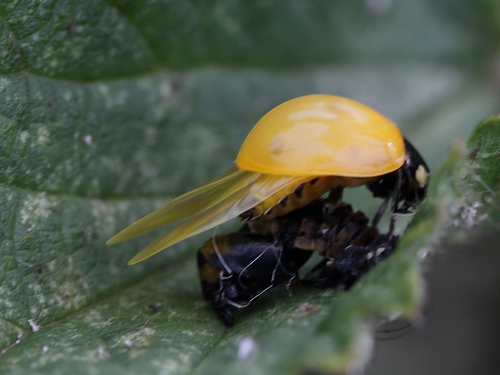
Pupation occurs on foliage or bark; pupal stage lasts several days to weeks before the adult emerges.
Adult
Winged, flight-capable beetles that continue to hunt aphids; adults overwinter and reproduce the following spring.
🍃Diet and predators
Young eat
Predatory on aphids and other small soft-bodied insects
Adults eat
Predatory on aphids, scale insects and similar pests on trees and shrubs
Predators of the young
Predatory insects, birds and spiders
Predators of adults
Birds, spiders, parasitic wasps and some predatory insects; defensive chemicals reduce but do not eliminate predation
🌱Effect on plants and gardens
Feeds on aphids and similar pests on conifers and other trees; helps reduce pest populations in forests and plantations.
📍Where and when to find it
Look on conifer needles, branches and tree trunks where aphid colonies occur; larvae are found near prey, adults on foliage or resting under bark and leaf litter when overwintering.
Best time
Spring through early autumn for active feeding; autumn for dispersal and overwintering behaviour. Daytime is best for observation.
Observation tips
Scan conifers for clusters of aphids and check nearby bark crevices. A macro lens or close-focus camera helps capture the haloed spots; avoid disturbing overwintering adults.
✨Fun facts
- The common name 'eyed' comes from the pale rings around the black spots that resemble eyes.
- Both larvae and adults are voracious aphid-eaters and can consume large numbers of pests in forest stands.
- They commonly overwinter under bark, leaf litter or in crevices and may sometimes enter buildings seeking shelter.
?Frequently asked questions
Do eyed ladybirds bite?
No. They do not bite people in a way that pierces skin or injects venom. They may nibble if forced but are not harmful.
Are eyed ladybirds poisonous or dangerous?
No — they are not poisonous to people. They can release a yellow defensive fluid that may stain and has an unpleasant smell, so avoid handling them excessively.
Why is an eyed ladybird in my house?
Adults may wander into buildings in autumn seeking overwintering sites or accidentally enter through open windows; they do not infest homes or breed indoors.
How can I get rid of eyed ladybirds in my home?
Gently collect them in a jar or cup and release them outdoors near trees. To prevent entry, seal gaps around windows and doors and screen vents.
Where does the eyed ladybird live?
Mainly in coniferous and mixed forests, on tree trunks, branches and foliage across northern and central Europe and much of northern Asia.
📷Photos of the eyed ladybird
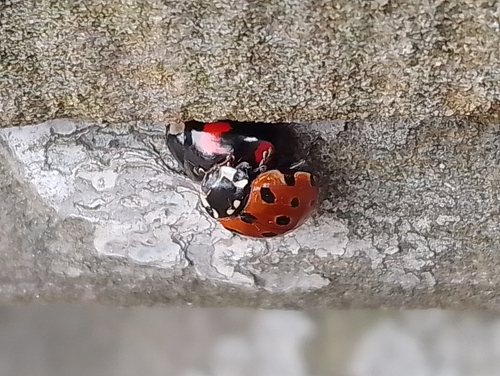
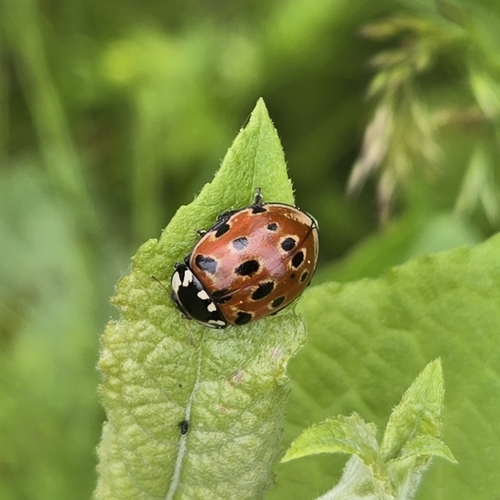
More beetles
This guide was written with AI assistance and fact-checked, last updated 2026-10-10. Identification from photos is never certain: don't handle insects you can't identify, and get medical advice for bites, stings or allergic reactions. More about the eyed ladybird: iNaturalist, Wikipedia.