
Striped cucumber beetle
Acalymma vittatum · Leaf beetles
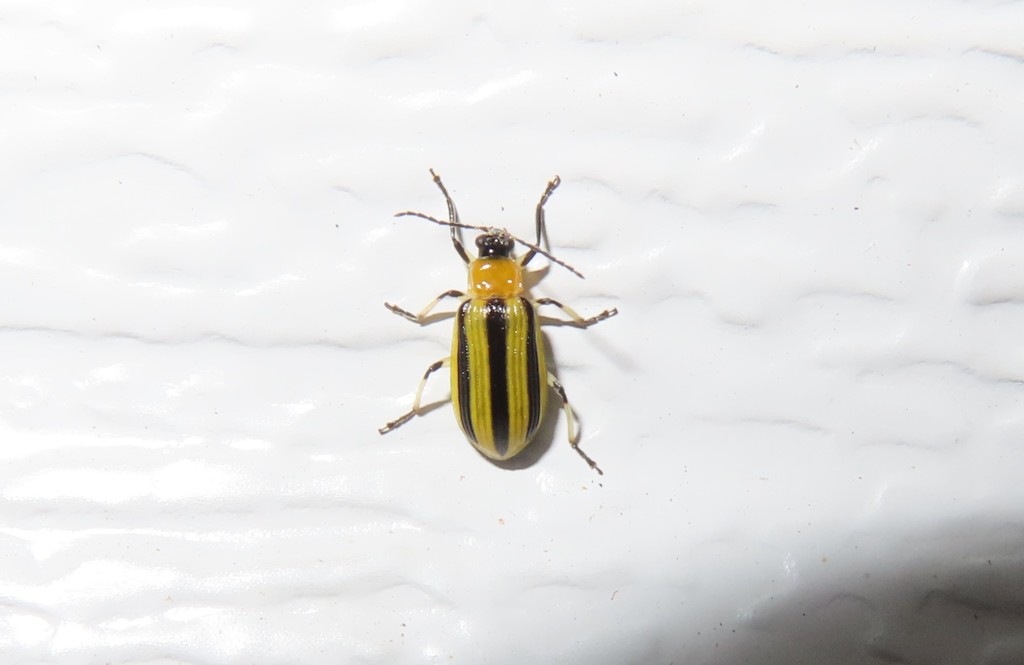
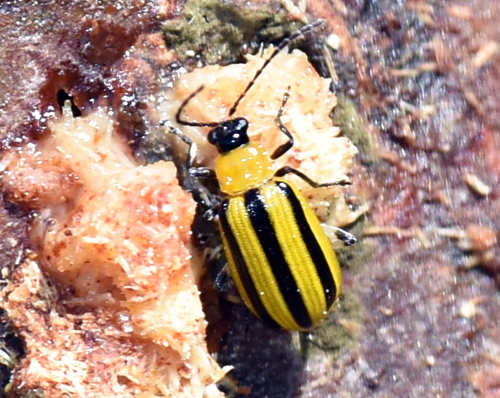
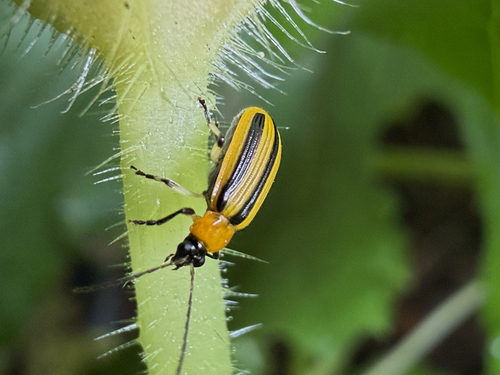
Small yellow-orange beetle with three bold black stripes; a major pest of cucurbits and vector of bacterial wilt.
!Is the striped cucumber beetle dangerous?
No. Striped cucumber beetles do not pose a bite or sting risk to people and are not venomous. They can be a nuisance in large numbers but pose no direct health threat. Handle with care if needed; wash hands after contact.
Pets
Not toxic to pets. Small beetles may be eaten by pets but generally cause no harm. If pets consume large numbers and show digestive upset, consult a veterinarian.
📖Overview
Acalymma vittatum is a small leaf beetle strongly associated with plants in the squash, cucumber and melon family (Cucurbitaceae). Adults feed on leaves, flowers and fruit of cucurbits, and their larvae feed on roots and crowns. In addition to direct feeding damage, striped cucumber beetles are the primary insect vectors of Erwinia tracheiphila, the bacterium that causes bacterial wilt in cucurbits. They are common across eastern and central North America and appear in gardens and farms during warm months.
🔍How to identify a striped cucumber beetle
Adults are elongated, about 4.5-7 mm long, with a yellow to orange background and three distinct longitudinal black stripes running the length of the elytra. The head is black and the pronotum (area behind the head) is yellow; the underside is black and the legs are mostly yellow with dark markings. Larvae are slender, worm-like, white grubs with a brown head, and live in soil where they feed on roots. Pupae develop in the soil.
- Three distinct black longitudinal stripes on a yellow-orange elytra (wing covers).
- Small size: roughly 4.5-7 mm long with a black head and a yellow pronotum.
- Found on cucurbit leaves, flowers or young fruit during warm months.
Lookalikes
Spotted cucumber beetle Diabrotica undecimpunctata
Spotted cucumber beetle has yellow elytra with black spots (usually 11) rather than continuous stripes; pronotum is yellow or with a dark central spot.
Western striped cucumber beetle Acalymma trivittatum
Very similar striped pattern; ranges and subtle morphological differences separate them (A. vittatum is the common eastern species, check local range to distinguish).
↻Life cycle
Egg
Females lay clusters of small yellow eggs in soil near host plants; eggs hatch in about 1-2 weeks depending on temperature.
Larva (grub)
Larvae are slender, white, worm-like grubs with a brown head that feed on roots and crowns in soil for several weeks, reducing plant vigor.
Pupa
Larvae pupate in the soil; pupal development lasts several days to weeks before adults emerge.
Adult
Adults emerge in spring, feed on foliage and flowers, mate, and may produce one or more generations per season depending on climate; many adults overwinter in plant debris or soil.
🍃Diet and predators
Young eat
Roots and crowns of cucurbit plants
Adults eat
Leaves, flowers, stems and developing fruit of cucurbits; will also feed on pollen and nectar
Predators of the young
Soil-dwelling predators such as some beetles, ants and parasitic nematodes (limited impact)
Predators of adults
Birds, spiders, predatory insects and parasitoids; however, natural control is often insufficient in crops
🌱Effect on plants and gardens
Adults skeletonize leaves and feed on flowers and young fruit of cucurbits (squash, pumpkin, cucumber, melon). Larvae feed on roots and crowns, weakening plants. They are important vectors of bacterial wilt (Erwinia tracheiphila), which can kill cucurbit plants.
How to get rid of striped cucumber beetles
Use integrated methods: cover young plants with floating row cover until flowering to prevent adult feeding and transmission of bacterial wilt; rotate cucurbit crops and remove crop debris to reduce overwintering sites; hand-pick adults early in the morning and drop into soapy water; place yellow sticky traps to monitor and reduce numbers; use trap crops (e.g., early-planted squash) to concentrate beetles and then treat those plants; if necessary, use registered insecticides targeted to cucumber beetles following label directions and local regulations. Encourage natural enemies and maintain field sanitation. Bacterial wilt cannot be treated; preventing beetle feeding and transmission is the best protection.
📍Where and when to find it
Adults on leaves, flowers and fruit of cucurbits; larvae in soil feeding on roots and crowns near host plants.
Best time
Warm months (spring through fall); early morning is a good time to find adults when they are less active and easier to hand-pick.
Observation tips
Inspect undersides of leaves and flowers on cucurbit plants. Use a yellow sticky card to monitor early-season arrival. Photograph dorsal view to capture the characteristic three stripes.
✨Fun facts
- Striped cucumber beetles are important because they spread bacterial wilt, which often causes more crop loss than their feeding damage alone.
- They are attracted to yellow and flowers as adults feed on pollen and nectar, which is why yellow traps work well for monitoring.
- Some growers use early-planted 'trap crops' to concentrate beetles on sacrificial plants that can be treated or removed.
?Frequently asked questions
Do striped cucumber beetles bite?
No, they do not bite people. They will chew plant tissue but are not harmful to humans.
Can striped cucumber beetles ruin my cucumber plants?
Yes. Heavy feeding can stunt seedlings and damage fruit, and more importantly the beetles spread bacterial wilt which can kill plants.
Why are cucumber beetles in my garden?
They are attracted to your cucurbit crops (cucumber, squash, melon, pumpkin) for food and breeding. Adults feed on foliage, flowers and fruit and lay eggs in nearby soil.
How do I get rid of them organically?
Use floating row covers until plants flower, hand-pick beetles into soapy water, use yellow sticky traps for monitoring, employ trap crops, remove crop debris to reduce overwintering, and consider organic insecticides (pyrethrin, spinosad) following label directions.
Do insecticides stop bacterial wilt?
Insecticides can reduce beetle numbers and lower the chance of bacterial wilt transmission but cannot cure infected plants. Preventing beetle feeding is the best strategy.
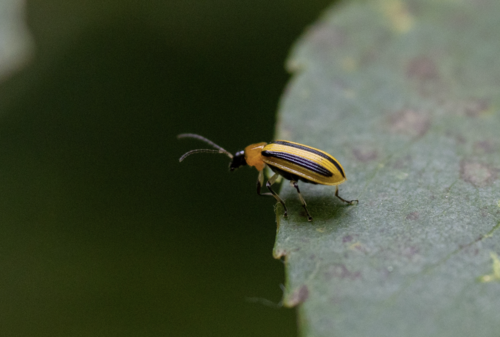
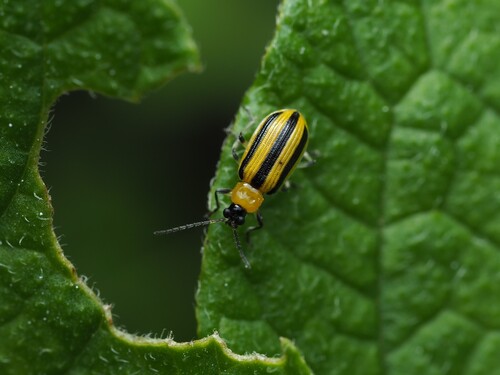
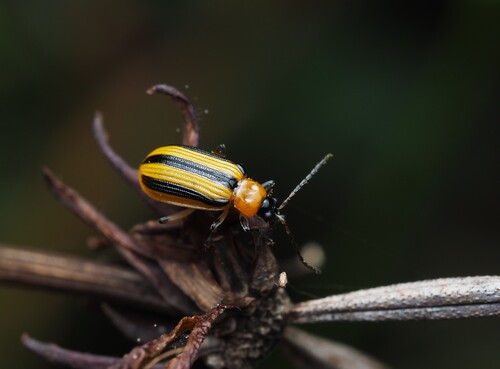
📷Photos of the striped cucumber beetle
More beetles
This guide was written with AI assistance and fact-checked, last updated 2026-10-10. Identification from photos is never certain: don't handle insects you can't identify, and get medical advice for bites, stings or allergic reactions. More about the striped cucumber beetle: iNaturalist, Wikipedia.