
Rainbow scarab
Phanaeus vindex · Dung beetles
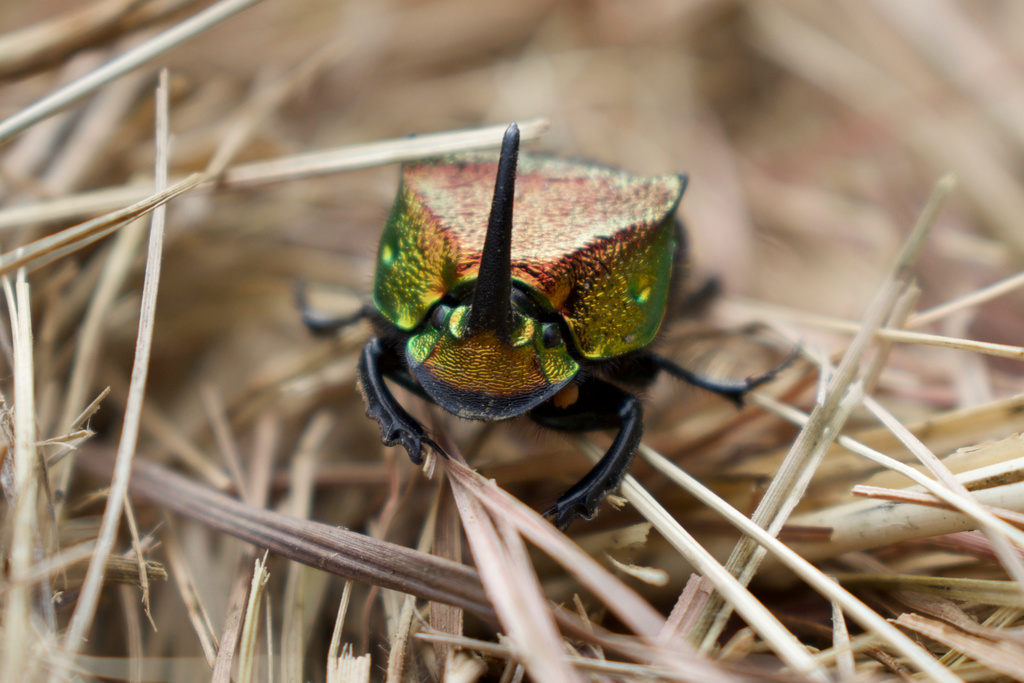
A metallic dung beetle (Phanaeus vindex) that buries mammal dung to feed and rear young, often bright green, bronze or blue.
!Is the rainbow scarab dangerous?
No. Not venomous and not aggressive. Adults can be handled briefly without risk; they do not bite or sting in a way that causes medical concern. As with any wild insect, wash hands after handling to avoid transfer of bacteria from dung.
Pets
Harmless to pets. Not known to transmit diseases directly to pets; primary risk is indirect through the dung resources they use.
📖Overview
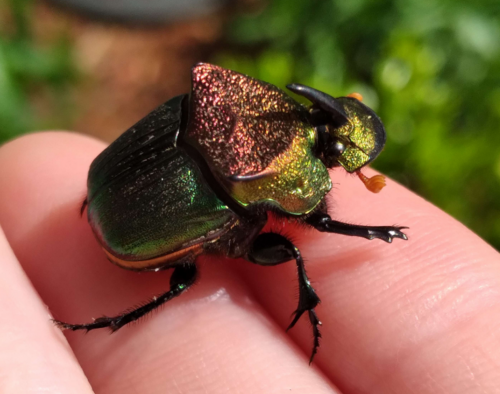
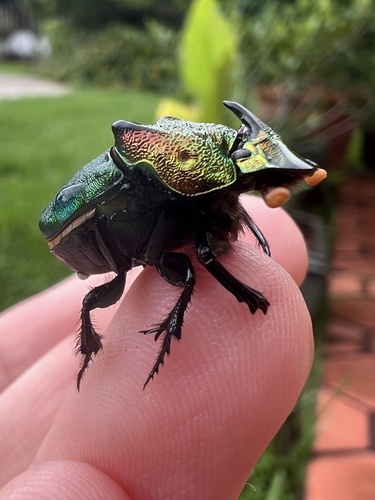
Phanaeus vindex is a strikingly colored dung beetle native to North America that plays an important ecological role by burying and recycling mammal dung. Large males have a long, curved horn on the head used in contests; females have a smoother head. Adults are active in warm months and are commonly found on or near fresh dung from livestock and wild mammals. They are solitary tunnelers (paracoprid): they bury dung below the pat rather than rolling it long distances.
🔍How to identify a rainbow scarab
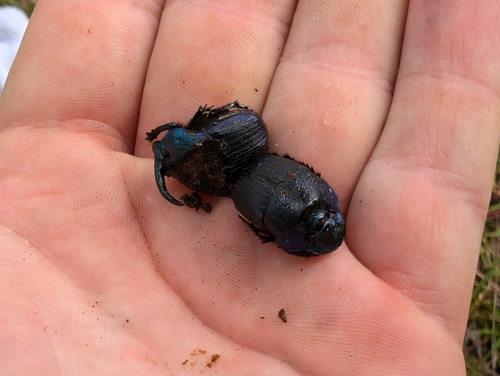
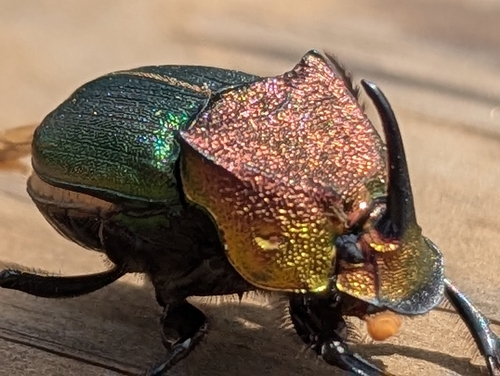
Adults are compact, stocky, convex beetles with a shiny, metallic exoskeleton that ranges from green to bronze, copper or blue. Large males have a long, curved horn on the head and a flattened, sculptured pronotum with pointed rear corners; females and small males have only a short tubercle or small horn. The elytra are grooved and usually green or blue-green. Legs are strong and adapted for digging.
- Look for a medium-sized (11-22 mm), glossy metallic beetle on or under fresh mammal dung.
- Large males have a long, curved horn on the head; females lack a long horn.
- Shiny green, bronze, copper or blue coloration distinguishes it from duller scarabs.
- Strong forelegs adapted for digging and a compact, convex body shape indicate a dung-burying scarab.
Lookalikes
Phanaeus difformis Phanaeus difformis
Similar metallic colouring but differs in horn shape and specific body sculpturing; identification often requires close examination or expert comparison.
Fiery rainbow scarab Phanaeus igneus
A closely related southeastern species, often with more red or coppery tones on the pronotum; separating the two can require close examination of pronotal sculpturing and location.
↻Life cycle
Egg
Female lays eggs in brood chambers or brood balls made from buried dung beneath the dung pat.
Larva (grub)
Larvae feed on the dung provisioned in the brood chamber, go through several instars while enclosed in the brood ball.
Pupa
After completing larval development the grub pupates in an underground chamber and later emerges as an adult.
Adult
Adults dig to the surface and search for fresh dung to feed and to make new brood chambers; many adults overwinter in soil in cooler climates.
🍃Diet and predators
Young eat
Dung supplied in brood balls (coprophagous).
Adults eat
Feed on fresh mammal dung, sometimes carrion or decaying matter; do not feed on live plants.
Predators of the young
Underground predators and parasitoids, plus small mammals that dig, ants and soil-dwelling predators.
Predators of adults
Birds, small mammals, reptiles and larger insects.
🌱Effect on plants and gardens
Does not eat live plants; by burying dung it improves soil fertility, aeration and nutrient recycling, which benefits pasture and garden plants.
📍Where and when to find it
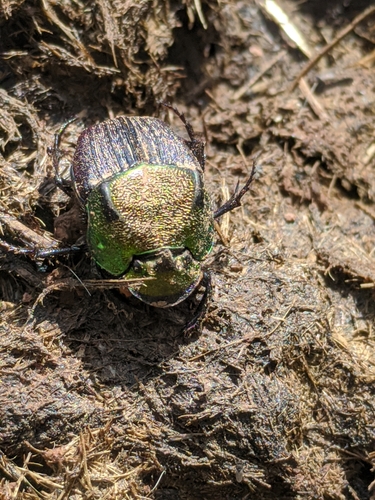
Search fresh cow, horse or deer dung in pastures, edges of woodlands and fields. Adults are on the dung surface or digging underneath; look for freshly turned soil.
Best time
Warm months (spring through early fall); daytime when temperatures are warm and during the morning and early afternoon.
Observation tips
Approach slowly and check the underside of fresh dung pats and loose soil nearby. A shallow trowel can reveal buried brood chambers but avoid disturbing too many nests.
✨Fun facts
- Rainbow scarabs bury dung directly beneath the pat to create brood chambers, which reduces fly breeding and recycles nutrients.
- Males use their head horn in fights over dung and mates; horn size varies with nutrition and condition.
- Their brilliant metallic colors come from microstructure in the cuticle, not pigments alone.
?Frequently asked questions
Are rainbow scarabs dangerous?
No. They are not venomous or poisonous and do not pose a health risk. Avoid handling if you are concerned about bacteria from dung.
Do rainbow scarabs bite?
They are not known to bite people. If handled roughly they may try to nip but this is not harmful.
Why is a rainbow scarab in my yard or pasture?
They are attracted to fresh mammal dung (livestock, deer, etc.) which they bury to feed and to lay eggs. Pastures and yards with animals or wildlife are common places to find them.
How can I get rid of rainbow scarabs?
They are beneficial and usually do not need control. Reducing piles of fresh dung (regular pasture cleaning) and limiting livestock dung exposure near buildings reduces local numbers. No chemical control is recommended for routine situations.
Where does the rainbow scarab live?
In grasslands, pastures and nearby woodlands across the eastern and central United States. They live in soil where they dig brood chambers under dung pats.
Do rainbow scarabs help farms or gardens?
Yes. By burying dung they improve soil nutrients, reduce pests such as flies, and help seed burial and soil aeration.
📷Photos of the rainbow scarab
More beetles
This guide was written with AI assistance and fact-checked, last updated 2026-10-10. Identification from photos is never certain: don't handle insects you can't identify, and get medical advice for bites, stings or allergic reactions. More about the rainbow scarab: iNaturalist, Wikipedia.