
Mealworm beetle
Tenebrio molitor · Darkling beetles
A common darkling beetle whose larvae (mealworms) feed on stored grains, decaying plant matter and are widely reared for feed and food.
!Is the mealworm beetle dangerous?
Only mildly. Mealworm beetles and their larvae are not venomous and do not pose a toxic threat. They do not bite in any medically significant way; adults may nip if handled roughly but injuries are trivial. Stored-product infestations can contaminate food. Mealworm dust and cast skins can cause allergic reactions in sensitive people (respiratory or skin). For contaminated food, discard affected product; wash storage areas. If allergic symptoms occur, seek medical advice.
Pets
Mealworms are commonly fed to reptiles, birds and fish and are nutritious. Wild-caught mealworms or those from infested stores may carry molds, mites or pathogens; use farmed, food-grade mealworms for pet feed. Large infestations in homes are nuisance pests rather than a direct health threat to pets.
📖Overview
Tenebrio molitor is a species of darkling beetle whose cream-to-brown larvae are known as mealworms. It is closely associated with stored grain, animal feed, and decaying organic matter; adults often appear near seeds, flour, bran and compost. The species is synanthropic (lives around people) in many regions and is widely farmed for pet food, fishing bait and human consumption in some places.
Adults are nocturnal and typically avoid light during the day. In human settings they are usually harmless but can become a stored-product pest when populations build up in pantries, grain stores or pet-food stores. Mealworms are also used in laboratory research and commercial insect production because they are easy to rear and protein-rich.
🔍How to identify a mealworm beetle
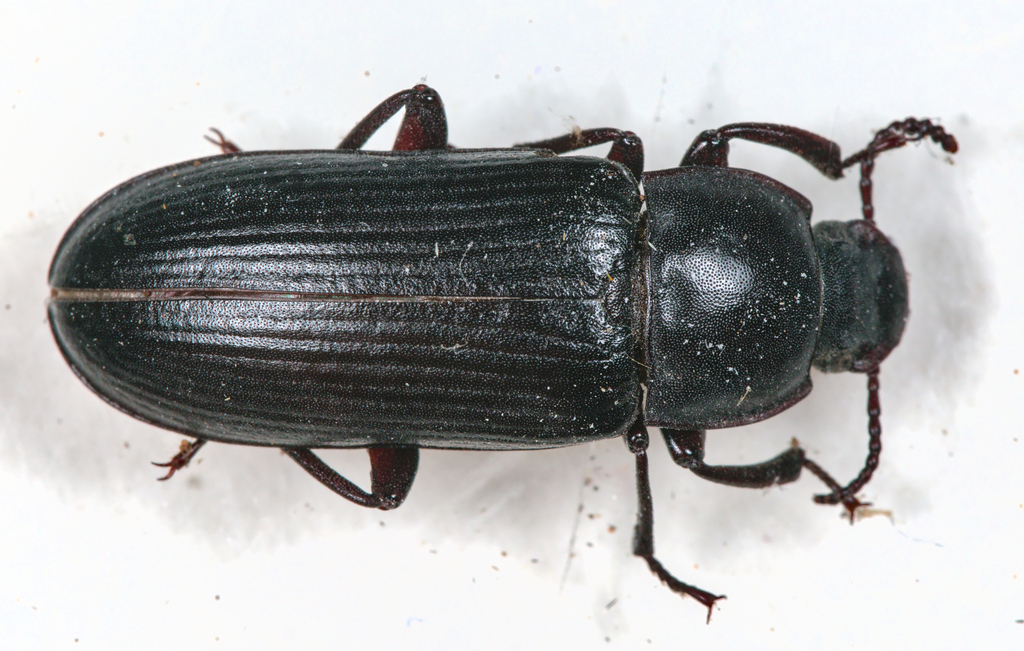
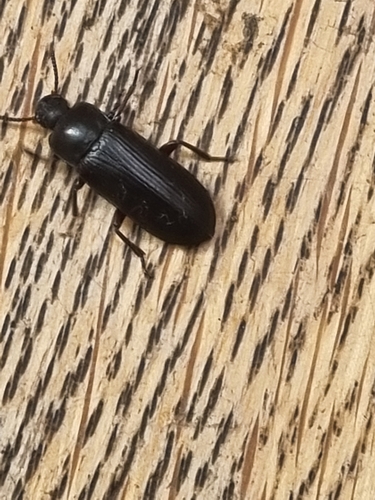
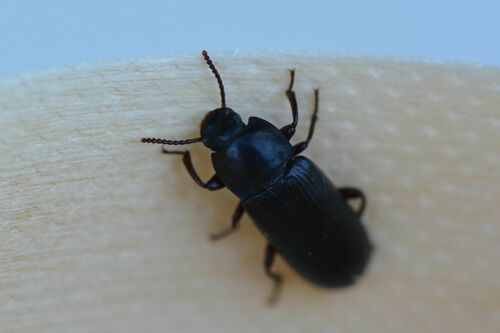
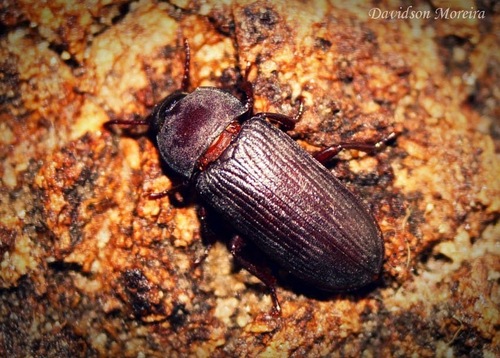
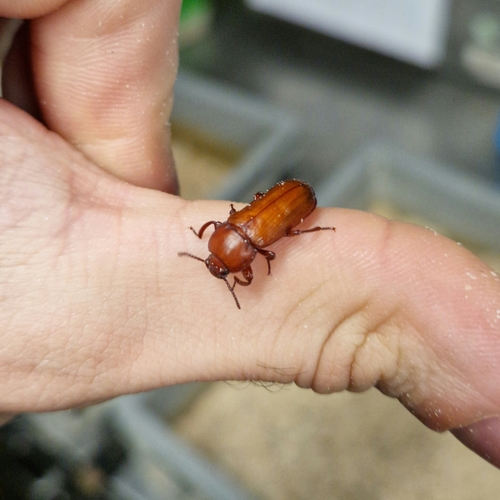
Adult mealworm beetles are elongate, somewhat flattened, and dull to moderately shiny. They are uniformly dark brown to black or mid-brown, with a hard exoskeleton and distinct segmented antennae. Adults are about 12-18 mm long. Larvae (mealworms) are cylindrical, smooth, and elongated, cream to yellow-brown when mature, and can reach 20-30 mm long. Pupae are cream-colored and immobile before darkening into adults.
- Adults 12-18 mm, elongate, dark brown to black, hard-bodied beetles with segmented antennae.
- Larvae (mealworms) are smooth, cylindrical, cream to yellow-brown and up to 20-30 mm long.
- Found in or near stored grains, flour, pet food, bran or compost; presence of shed skins and frass indicates infestation.
- No bright markings or spots—uniform dark brown adults distinguish them from some other stored-product beetles.
Lookalikes
Dark mealworm beetle Tenebrio obscurus
Tenebrio obscurus (sometimes called the dark mealworm) is similar in size and habit but often slightly darker and used in insect production; accurate distinction often requires close morphological inspection or expert ID.
Flour beetles Tribolium spp.
Flour beetles are smaller (3-4 mm) and reddish-brown; mealworm beetles are larger (12-18 mm) and more elongated.
Larder beetle Dermestes lardarius
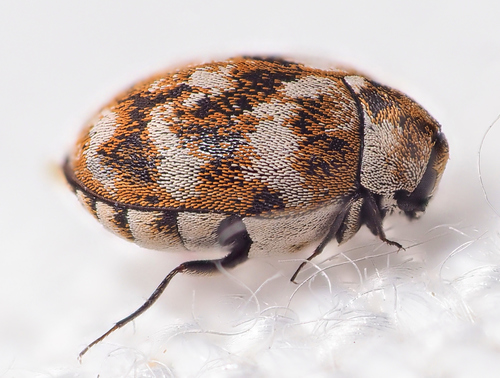
Larder beetles are smaller (about 7-9 mm) and have a pale greyish band with dark spots across the front of the elytra, unlike the uniformly colored Tenebrio molitor.
↻Life cycle
Egg
Small, white eggs laid in crevices of food or substrate; hatch in 4-19 days depending on temperature and humidity.
Larva (mealworm)
Creamy-yellow, wormlike larvae that feed on grain and decaying matter for weeks to months; larvae go through multiple molts and are the longest life stage.
Pupa
Immobile, pale pupa where transformation to the adult occurs over days to weeks.
Adult (mealworm beetle)
Dark brown beetle that emerges from the pupa; adults mate and females lay eggs, continuing the cycle.
🍃Diet and predators
Young eat
Bran, flour, grain, decaying plant matter, dried vegetable matter and occasionally animal feed and bedding materials.
Adults eat
Seed and grain-based foodstuffs, cereals, bran, and decaying plant material; adults eat less than larvae but can survive on stored products.
Predators of the young
Birds, rodents, reptiles, amphibians, predatory beetles, parasitic wasps and mites.
Predators of adults
Birds, small mammals, reptiles and predatory insects.
🌱Effect on plants and gardens
Larvae feed on stored grains, bran, flour, decaying plant material and vegetable matter; they are not major live-plant pests but may damage stored seeds and grain-based products.
How to get rid of mealworm beetles
Remove and discard infested food; vacuum and clean shelves and crevices. Store dry foods in airtight containers. Freeze suspect packages at -18 C for at least 72 hours or heat at 60 degrees C for one hour to kill all life stages. Reduce humidity and clean spills. For large-scale infestations in grain stores, contact a pest-control professional; chemical controls exist but sanitation and exclusion are the primary measures.
📍Where and when to find it
Check flour, bran, cereal, pet-food bags, birdseed, compost, animal bedding and cracks in pantry shelving. Larvae are visible as pale, wormlike grubs; adults are dark beetles often found near food sources or in crevices.
Best time
Year-round indoors; outdoors most likely in late spring to summer and active at night.
Observation tips
Look for piles of frass (fine powder) and shed larval skins in pantry corners. Use a flashlight and inspect sealed bags and cardboard; transfer suspect dry goods to clear containers to monitor activity.
✨Fun facts
- Mealworms (T. molitor larvae) are farmed worldwide as a sustainable protein source for pets and human food.
- They are used in scientific research on insect physiology, digestion and biodegradation; mealworms can ingest and break down some plastics in lab studies.
- The species has been transported around the world by humans and is now cosmopolitan, thriving wherever stored grain and dry food are available.
?Frequently asked questions
Are mealworm beetles dangerous?
Only mildly — they are not venomous and do not pose a direct health threat. However, they can contaminate food and their dust may trigger allergies in sensitive people.
Do mealworms bite?
Mealworm larvae and adults do not bite humans in any medically significant way. Adults may pinch if handled improperly, but this is rare and harmless.
Why are mealworms in my house?
They are attracted to stored grains, flour, pet food, bran and decaying organic matter. Infestations usually start from contaminated packages or bedding and grow if food is available.
How do I get rid of mealworms in my pantry?
Throw away infested food, vacuum thoroughly, clean shelves, store dry goods in airtight containers, and freeze suspect items at -18 C for 72 hours or heat at 60 degrees C for one hour to kill all stages.
Can I feed wild-caught mealworms to my pets?
It is safer to use commercially reared, food-grade mealworms because wild or pantry-caught mealworms may carry molds, mites or contaminants.
📷Photos of the mealworm beetle

More beetles
This guide was written with AI assistance and fact-checked, last updated 2026-10-10. Identification from photos is never certain: don't handle insects you can't identify, and get medical advice for bites, stings or allergic reactions. More about the mealworm beetle: iNaturalist, Wikipedia.