
Larder beetle
Dermestes lardarius · Carpet and skin beetles
A 7-9 mm scavenger beetle that feeds on dried animal products and can infest pantries, dried meats, hides and museum collections.
!Is the larder beetle dangerous?
No. Larder beetles are not venomous and do not transmit human diseases. Adults rarely bite and any bite would be incidental and not medically significant. Some people may develop mild skin irritation or allergic dermatitis from contact with larval hairs or shed skins; wash the area and seek medical advice if a severe reaction occurs.
Pets
Larvae and adults will feed on pet food, dried meats and animal materials; infestations can contaminate pet food. Larval hairs may irritate skin but do not pose a toxic risk to pets.
📖Overview
Dermestes lardarius is a common dermestid beetle associated with stored animal products, carcasses, dried meats, hides, leather and biological collections. Adults are strong fliers and are often found near windows or light sources when dispersing. Larvae are hairy, elongate and are the stage most responsible for damage to fabrics, leather and stored food. The species thrives in warm indoor environments and in outdoor sites where animal material accumulates.
🔍How to identify a larder beetle
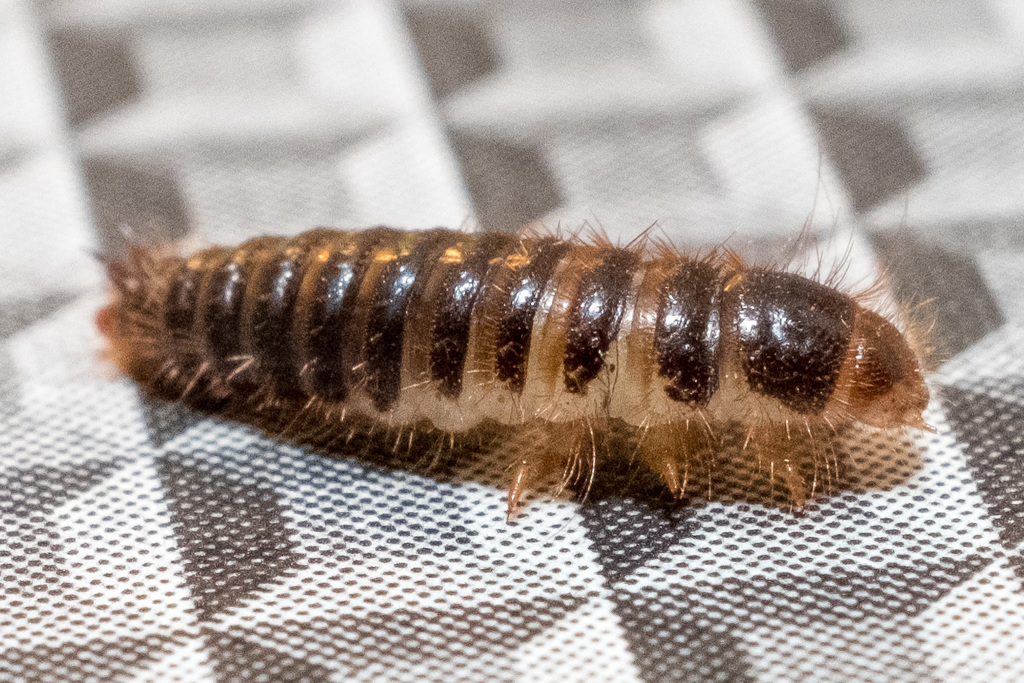
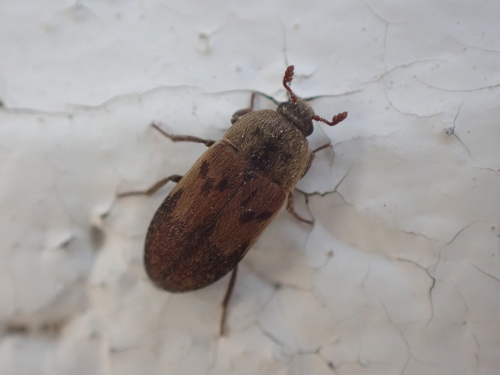
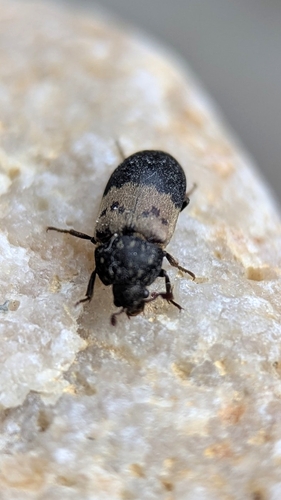
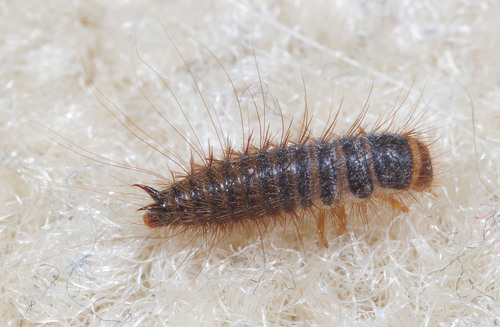
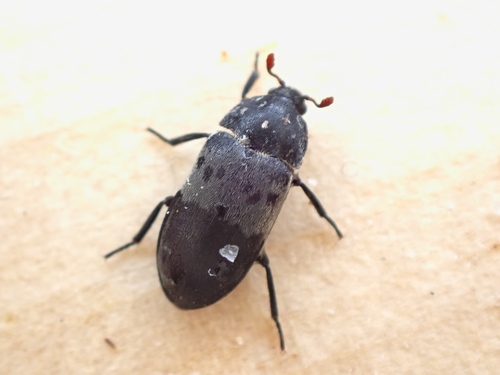
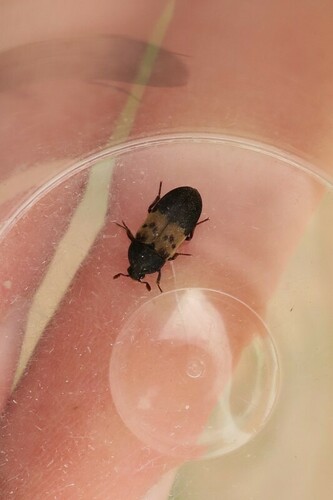
Adults are oval, slightly flattened beetles about 7-9 mm long, dark brown to black overall. The front (basal) half of the elytra (wing covers) has a broad pale yellowish-grey band of fine hairs bearing about six dark spots (three on each elytron). Legs and antennae are short; antennae end in a small club. Larvae are elongated, brown, 10-15 mm when mature, densely covered with long hairs and bear a pair of short curved spines at the rear end.
- Look for a broad pale yellowish band across the front half of the elytra containing about six dark spots
- Adults are 7-9 mm, oval and slightly flattened, dark with a pale band across the base of the wing covers
- Hairy, brown, elongate larvae with a pair of curved spines at the rear are a strong indication of a Dermestes infestation
- Adults are often found near light sources indoors and larvae in hidden crevices within infested materials
Lookalikes
Hide beetle Dermestes maculatus
D. maculatus is similar in size but lacks the pale band across the wing covers, has a white underside and a tiny spine at the tip of each elytron.
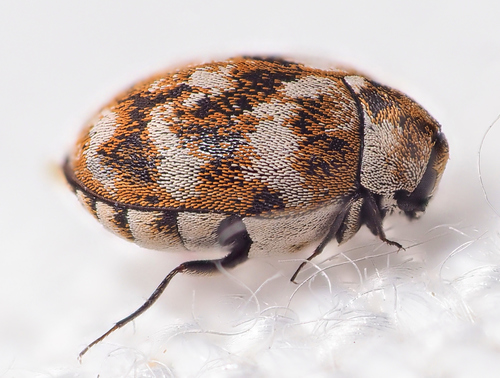
Warehouse beetle Trogoderma variabile
Trogoderma adults are much smaller (about 2-4 mm) with wavy, mottled pale bands rather than a single broad band across the base of the wing covers.
↻Life cycle
Egg
Females lay small, white eggs in cracks, crevices or directly on suitable food sources; eggs hatch in about 1-2 weeks depending on temperature.
Larva (grub)
Larvae are hairy, voracious feeders on dried animal matter and are the stage that causes most damage; they pass through multiple instars over several weeks to months.
Pupa
Larvae pupate in concealed locations (cracks, packaging, hollow spaces) for several days to weeks before emerging as adults.
Adult
Adults are mobile, capable of flight and disperse to find new food sources and mating sites; they feed less aggressively than larvae but will consume suitable dried animal products.
🍃Diet and predators
Young eat
Dried animal material: meat, bacon, cheese, carrion, skins, feathers, fur, dead insects and museum specimens
Adults eat
Similar to larvae but feed less actively; attracted to protein-rich, fatty and dried animal products
Predators of the young
Ants, spiders, predatory beetles and parasitoid wasps; vertebrate scavengers at carcasses
Predators of adults
Birds, small mammals, spiders and predatory insects
🌱Effect on plants and gardens
Does not feed on live plants; mainly consumes dried animal matter, carcasses, hides, leather and occasionally stored dry food of animal origin.
How to get rid of larder beetles
Find and remove the food source (old pet food, cured meats, dead insects, rodent or bird carcasses, nests in attics or chimneys). Discard heavily infested items, vacuum cracks, shelves and baseboards thoroughly and empty the vacuum outside, and store susceptible foods in sealed containers. Freezing small infested items for several days kills all stages. For persistent infestations, consult a pest control professional.
📍Where and when to find it
Adults on windows, light fixtures and near food-storage areas; larvae hidden in cracks, behind baseboards, inside furniture, in dried meats, pet food and among taxidermy or museum specimens.
Best time
Year-round indoors; late spring to early autumn outdoors. Adults often active at night and attracted to lights.
Observation tips
Inspect stored pet food, dried meat, leather goods and museum specimens. Use a flashlight to check crevices and beneath shelving; vacuuming often dislodges larvae and eggs for detection.
✨Fun facts
- Dermestid beetles, especially the related hide beetle (Dermestes maculatus), are used by museums and taxidermists to clean flesh from skeletons because they remove soft tissue without damaging bone.
- Adults are attracted to light and are often the first visible sign of an infestation as they fly to windows at night.
- The larvae’s dense hairs help protect them from predators and can cause minor skin irritation in people handling infested material.
?Frequently asked questions
Do larder beetles bite?
No, they are not known to bite people intentionally. Any contact bites would be accidental and not medically significant.
Are larder beetles dangerous to humans or pets?
They are not venomous and do not spread serious disease, but larvae can damage clothing, leather and stored foods, and larval hairs can cause mild skin irritation in sensitive individuals.
Why are larder beetles in my house?
They are attracted to and feed on dried animal products: old pet food, cured meats, cheese, dead insects, feathers, leather, or hidden carcasses (rodents, birds) and will infest pantries, basements, attics and collections.
How do I get rid of larder beetles?
Clean thoroughly: remove and discard infested items, vacuum cracks and crevices, store susceptible foods in sealed metal or thick plastic containers, launder or freeze affected fabrics (minus temperatures for several days), and maintain good sanitation. For large infestations consider targeted insecticide treatments or a pest professional.
Where do larder beetles typically live?
Indoors in kitchens, pantries, basements, attics, museums and anywhere dried animal material accumulates; outdoors they occur at animal carcasses, bird nests and in similar natural food sources.
📷Photos of the larder beetle
More beetles
This guide was written with AI assistance and fact-checked, last updated 2026-10-10. Identification from photos is never certain: don't handle insects you can't identify, and get medical advice for bites, stings or allergic reactions. More about the larder beetle: iNaturalist, Wikipedia.