
Larder beetle vs Mealworm beetle
These two are easy to mix up. Here's how to tell a larder beetle from a mealworm beetle, and whether either one bites or stings.
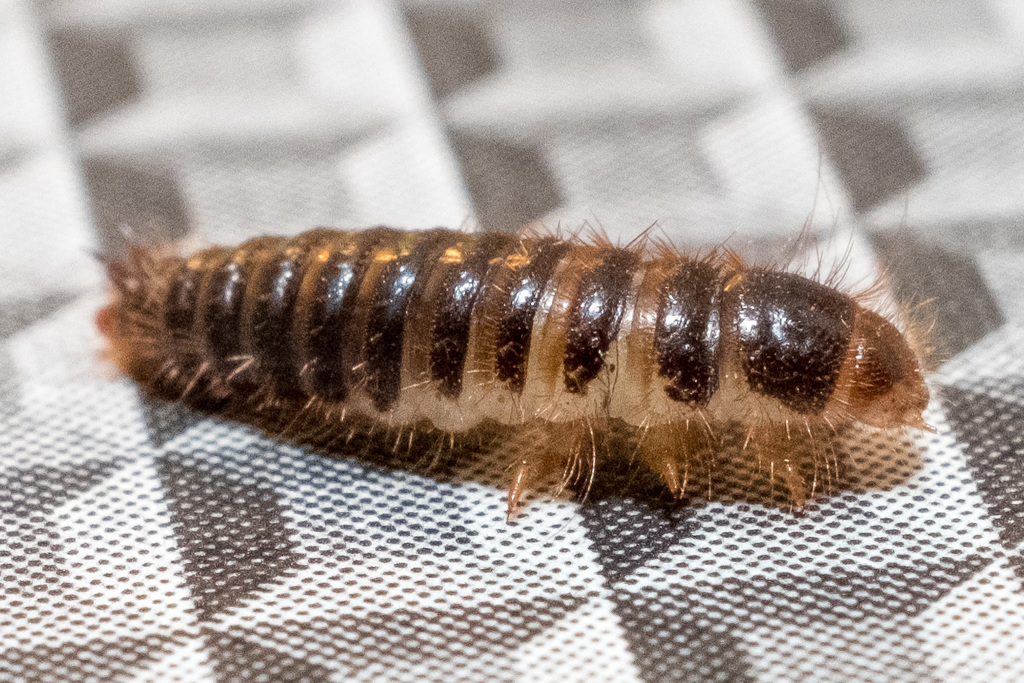
Larder beetle
Dermestes lardarius
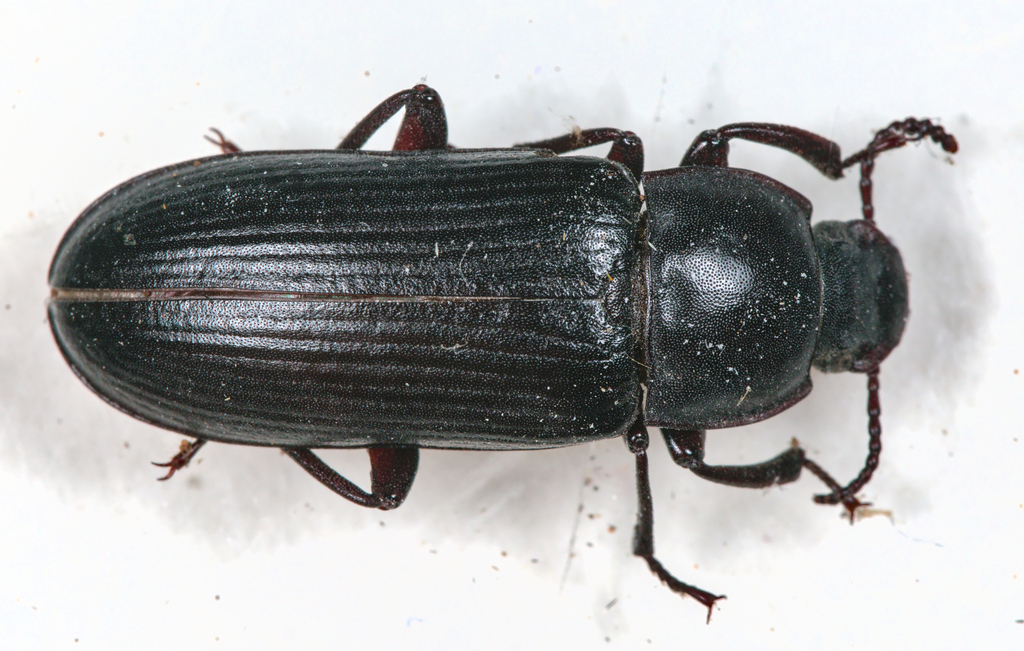
Mealworm beetle
Tenebrio molitor
≠The key differences
Larder beetles are smaller (about 7-9 mm) and have a pale greyish band with dark spots across the front of the elytra, unlike the uniformly colored Tenebrio molitor.
⚖︎Side by side
| Larder beetle | Mealworm beetle | |
|---|---|---|
| To humans | Non-toxic | Allergen risk |
| Size | 7-9 mm long | 12-18 mm body length |
| Colours | Dark brown / black, Pale yellow band, Light brown | Dark brown, Black, Pale cream (larva) |
| Family | Dermestidae | Tenebrionidae |
| Habitat | Buildings (pantries, kitchens, basements), food storage, butcher shops, drying rooms, bird nests, carcasses, museums and taxidermy collections | Stored grain, flour, pet-food bins, compost, decaying plant material, under bark and in animal bedding; also in commercial insect farms. |
| Range | Cosmopolitan: widely distributed in temperate regions worldwide | Cosmopolitan: widespread across temperate and tropical regions due to association with human-stored products and deliberate rearing. |
| Active | Year-round indoors where warm; outdoors mainly late spring to autumn; adults often active at night and attracted to light | Active year-round where heated (indoors); outdoors most active in warm months, primarily nocturnal. |
| Pest? | Yes | Yes |
🔍How to spot a larder beetle
- Look for a broad pale yellowish band across the front half of the elytra containing about six dark spots
- Adults are 7-9 mm, oval and slightly flattened, dark with a pale band across the base of the wing covers
- Hairy, brown, elongate larvae with a pair of curved spines at the rear are a strong indication of a Dermestes infestation
- Adults are often found near light sources indoors and larvae in hidden crevices within infested materials
🔍How to spot a mealworm beetle
- Adults 12-18 mm, elongate, dark brown to black, hard-bodied beetles with segmented antennae.
- Larvae (mealworms) are smooth, cylindrical, cream to yellow-brown and up to 20-30 mm long.
- Found in or near stored grains, flour, pet food, bran or compost; presence of shed skins and frass indicates infestation.
- No bright markings or spots—uniform dark brown adults distinguish them from some other stored-product beetles.
?Frequently asked questions
What is the difference between a larder beetle and a mealworm beetle?
Larder beetles are smaller (about 7-9 mm) and have a pale greyish band with dark spots across the front of the elytra, unlike the uniformly colored Tenebrio molitor.
Is a larder beetle or a mealworm beetle more dangerous?
Larder beetle: Non-toxic. Mealworm beetle: Allergen risk. Larder beetles are not venomous and do not transmit human diseases. Mealworm beetles and their larvae are not venomous and do not pose a toxic threat.
Identification from photos is never certain: don't handle insects you can't identify, and get medical advice for bites, stings or allergic reactions.