
Japanese beetle vs Oriental beetle
These two are easy to mix up. Here's how to tell a Japanese beetle from an Oriental beetle, and whether either one bites or stings.
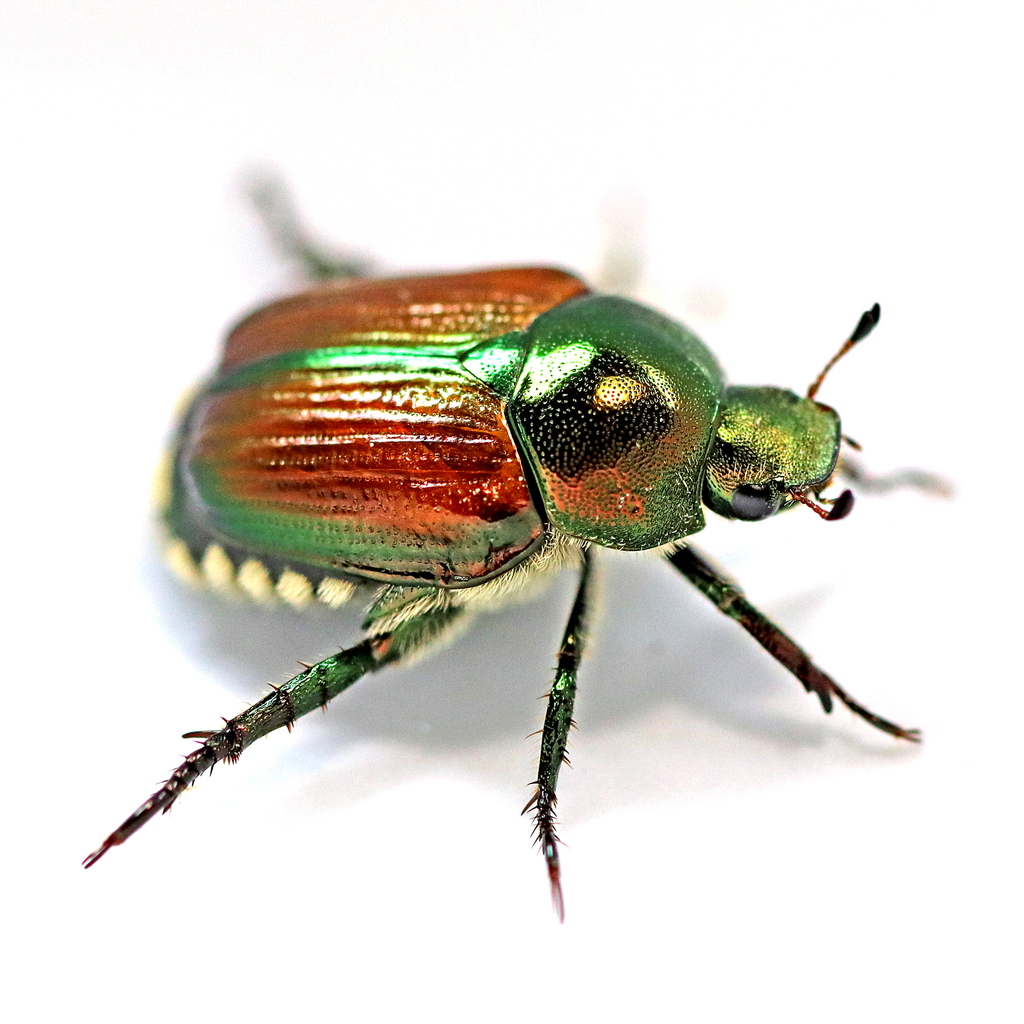
Japanese beetle
Popillia japonica
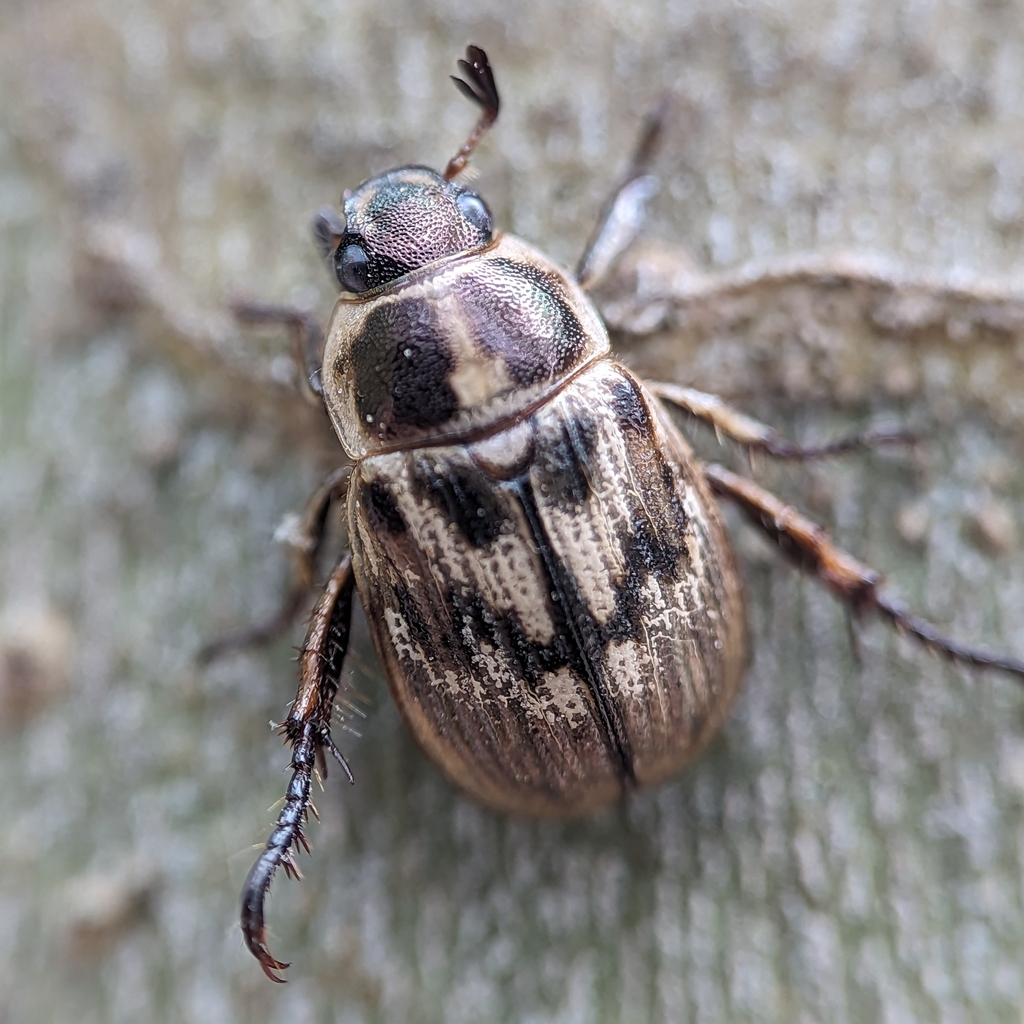
Oriental beetle
Anomala orientalis
≠The key differences
Similar in size but straw-colored with variable dark mottling, without the metallic green head and the white abdominal hair tufts.
Japanese beetle is more metallic green and copper with distinct tufts of white hairs along the abdomen; oriental beetle is smaller and mottled brown/tan rather than metallic.
⚖︎Side by side
| Japanese beetle | Oriental beetle | |
|---|---|---|
| To humans | Non-toxic | Non-toxic |
| Size | 8-11 mm long | 8-11 mm long |
| Colours | Metallic green, Coppery brown, Cream (larva), White (abdominal tufts) | Brown, Tan, Black, White |
| Family | Scarabaeidae | Scarabaeidae |
| Habitat | Adults found on shrubs, trees, flowers and crops in sunny locations; larvae live in turf, lawns, pastures and grassy areas with soil organic matter. | Lawns, turf, gardens, grassy fields, edges of wooded areas and landscaped sites; adults visit flowers and are attracted to lights. |
| Range | Native to Japan; invasive across much of eastern and midwestern North America with spreading populations in parts of western North America, and established in Europe in the Azores, northern Italy and Switzerland. | Native to East Asia; introduced and established in parts of eastern North America (northeastern United States and adjacent Canada). |
| Active | Adults active in summer months (commonly June-August); larvae active in late summer through spring while feeding on roots. | Adults active in summer months (varies by region, commonly June-August); mostly nocturnal/crepuscular and attracted to lights. |
| Pest? | Yes | Yes |
🔍How to spot a Japanese beetle
- Adults 8-11 mm, metallic emerald-green head and thorax with coppery-brown elytra
- Five small white tufts of hair along each side of the abdomen plus two at the tip, visible just below the edge of the elytra
- Adults skeletonize leaves, leaving a lace-like appearance on foliage
🔍How to spot an Oriental beetle
- Small, rounded scarab beetle 8-11 mm long with mottled brown/tan/black elytra (checkered appearance).
- C-shaped white grubs with brown head in soil, 1-3 cm when mature, found feeding on grass roots.
- Adults active in summer and often attracted to porch lights or seen on flowers at dusk.
?Frequently asked questions
What is the difference between a Japanese beetle and an Oriental beetle?
Similar in size but straw-colored with variable dark mottling, without the metallic green head and the white abdominal hair tufts. Japanese beetle is more metallic green and copper with distinct tufts of white hairs along the abdomen; oriental beetle is smaller and mottled brown/tan rather than metallic.
Is a Japanese beetle or an Oriental beetle more dangerous?
Japanese beetle: Non-toxic. Oriental beetle: Non-toxic. Japanese beetles are not poisonous and do not pose a medical threat. Oriental beetles do not bite or sting and are not dangerous to humans.
Identification from photos is never certain: don't handle insects you can't identify, and get medical advice for bites, stings or allergic reactions.