
Eastern Hercules beetle vs Ox beetle
These two are easy to mix up. Here's how to tell an eastern Hercules beetle from an ox beetle, and whether either one bites or stings.
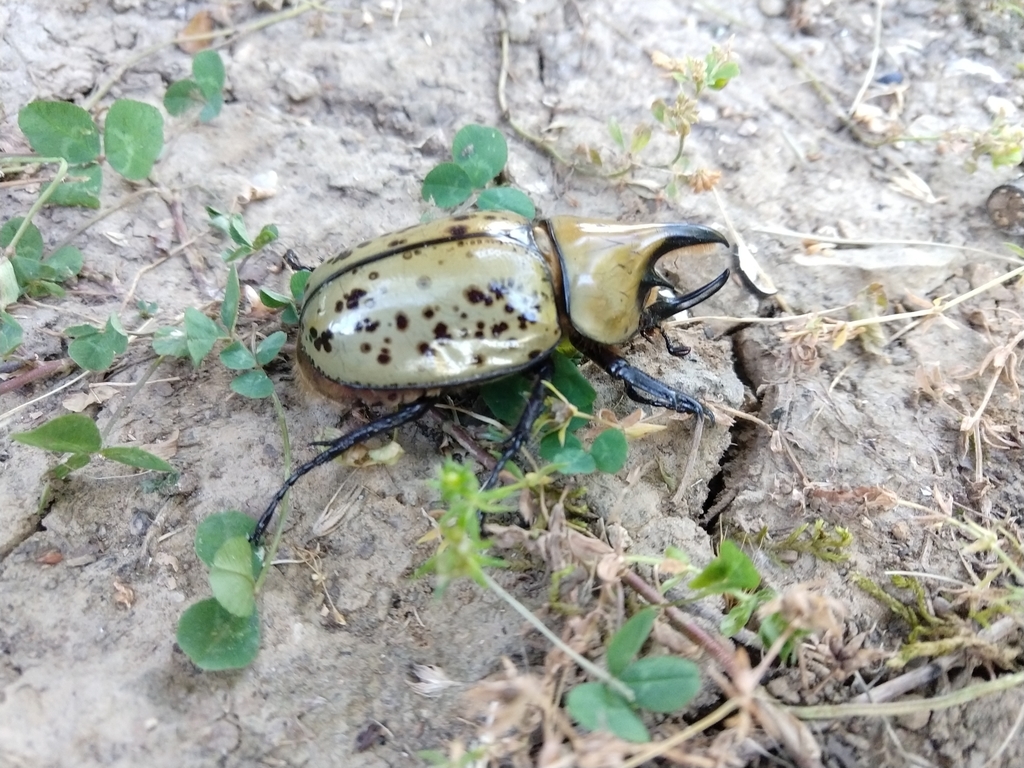
Eastern Hercules beetle
Dynastes tityus
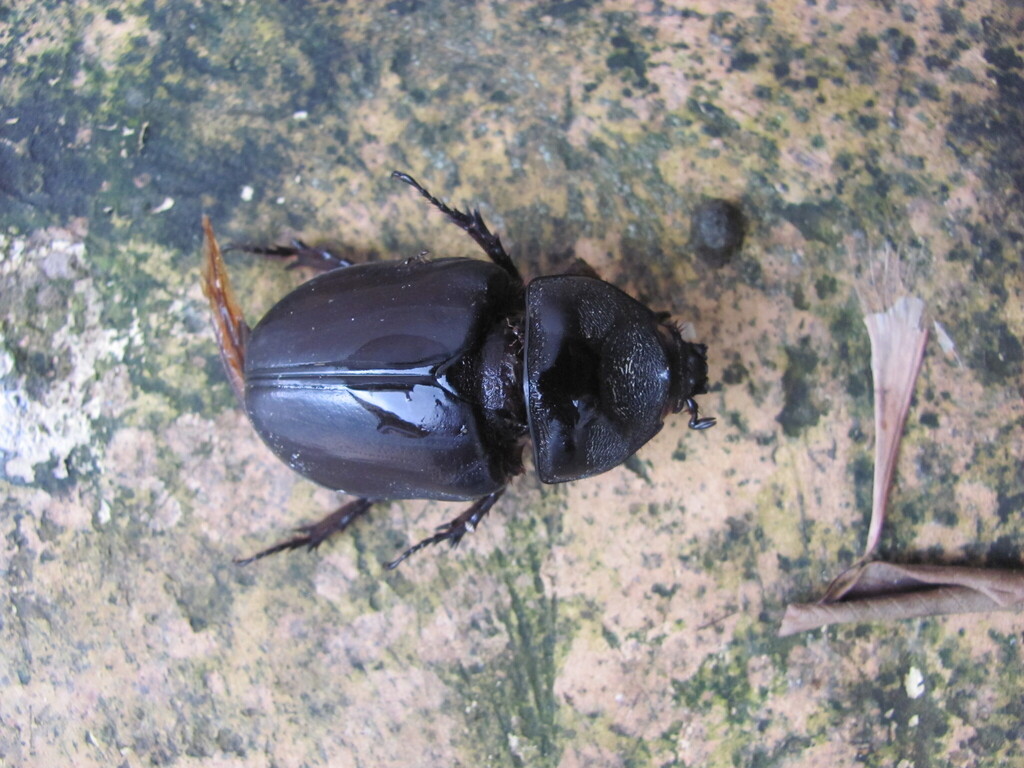
Ox beetle
Strategus aloeus
≠The key differences
Also a large rhinoceros beetle of similar shape; usually uniformly brown to dark and with different horn shape (shorter and broader) and a different geographic range and habitat preferences.
Eastern Hercules beetles usually have greenish-grey to tan elytra with dark spots, and males have a long thoracic horn that curves forward over a head horn; ox beetles are uniformly glossy dark brown to black.
⚖︎Side by side
| Eastern Hercules beetle | Ox beetle | |
|---|---|---|
| To humans | Non-toxic | Non-toxic |
| Size | 40-60 mm body length including horns (males generally larger than females) | 20-60 mm long (adults vary; males often larger due to horns) |
| Colours | Yellow-green, Olive, Black, Brown (underside/legs) | Black, Dark brown, Reddish brown (on some specimens) |
| Family | Scarabaeidae | Scarabaeidae |
| Habitat | Deciduous forests, woodlots and areas with abundant rotting hardwood and leaf litter; adults visit sap flows, overripe fruit, and lights at night. | Tropical and subtropical forests, woodlands, pasture edges, gardens; common in areas with decaying wood or rich organic soil |
| Range | Eastern United States, from southern New England and New York west to Illinois, Missouri and eastern Texas, and south to Florida. | Southern United States through Mexico and Central America into much of South America |
| Active | Late spring through summer (varies by latitude); primarily nocturnal but may be active at dusk and on warm days. | Mostly nocturnal; adults commonly seen in warm months and at night, attracted to lights and fermenting fruit |
| Pest? | No | No |
🔍How to spot an eastern Hercules beetle
- Large size (40-60 mm) with heavy, glossy body and strong legs with toothed tibiae.
- Males have a long forward-projecting horn on the pronotum and a shorter upcurved horn on the head; females lack the long horns.
- Elytra yellow-green to olive with variable dark blotches or spots; the pattern can darken with moisture or humidity.
- Head, horns and legs dark brown to black, contrasting with the paler, spotted pronotum and elytra.
🔍How to spot an ox beetle
- Large, heavy-bodied scarab with smooth elytra and strong legs with digging claws
- Males with a prominent head horn and often a thoracic horn or tubercles; females without large horns
- Glossy black to dark brown coloration; size typically 20-60 mm
?Frequently asked questions
What is the difference between an eastern Hercules beetle and an ox beetle?
Also a large rhinoceros beetle of similar shape; usually uniformly brown to dark and with different horn shape (shorter and broader) and a different geographic range and habitat preferences. Eastern Hercules beetles usually have greenish-grey to tan elytra with dark spots, and males have a long thoracic horn that curves forward over a head horn; ox beetles are uniformly glossy dark brown to black.
Is an eastern Hercules beetle or an ox beetle more dangerous?
Eastern Hercules beetle: Non-toxic. Ox beetle: Non-toxic. Not venomous and not dangerous. Ox beetles are not venomous and do not transmit disease.
Identification from photos is never certain: don't handle insects you can't identify, and get medical advice for bites, stings or allergic reactions.