
Ox beetle
Strategus aloeus · Rhinoceros beetles
A large, robust rhinoceros beetle from the Americas; males have prominent horns used in fights, larvae develop in decaying wood and compost.
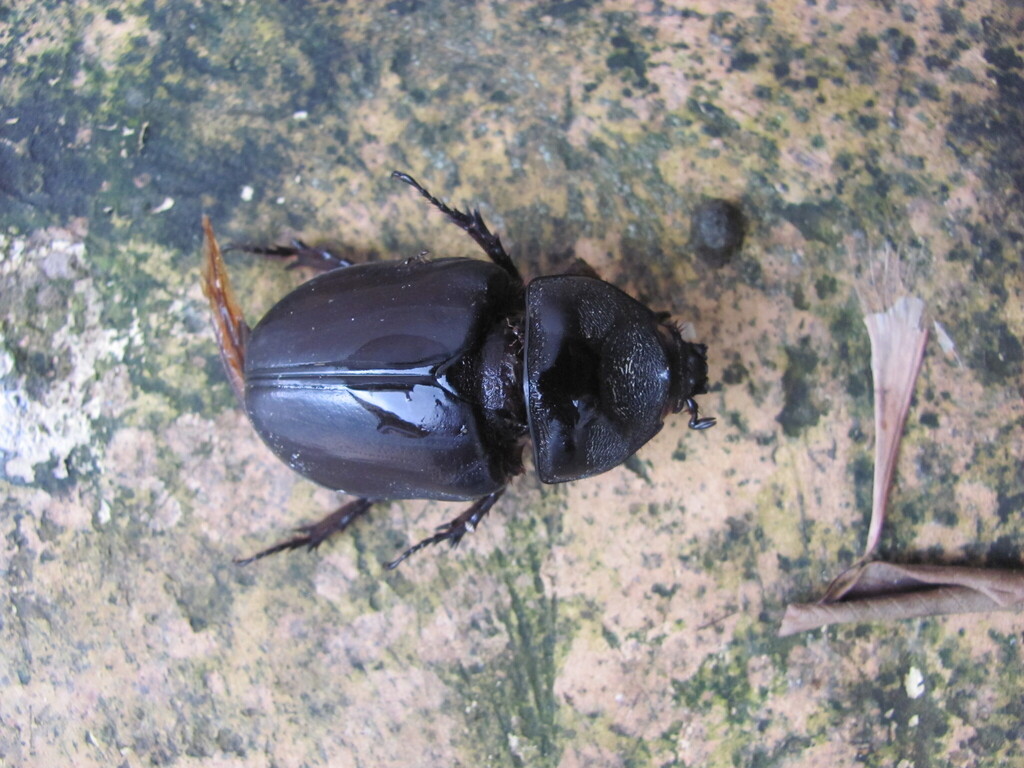
!Is the ox beetle dangerous?
No. Ox beetles are not venomous and do not transmit disease. They can pinch mildly with their strong mandibles or legs if handled roughly, and male horns can catch skin but are not dangerous. First aid: wash any minor pinch or scratch with soap and water and monitor for infection.
Pets
Generally harmless to pets. Large beetles may startle animals; ingestion of whole beetles could cause mild digestive upset but is not known to be toxic.
📖Overview
Strategus aloeus is a large scarab beetle (subfamily Dynastinae) found from the southern United States through Mexico and Central America into much of South America. Adults are robust and compact; males carry one or more horns on the head and thorax used in male-male combat for mates. Larvae are C-shaped white grubs that feed on decaying wood and rich organic matter and commonly develop in rotting logs, stumps and compost piles. Adults are most active at night and are attracted to lights and ripe or fermenting fruit.
🔍How to identify an ox beetle
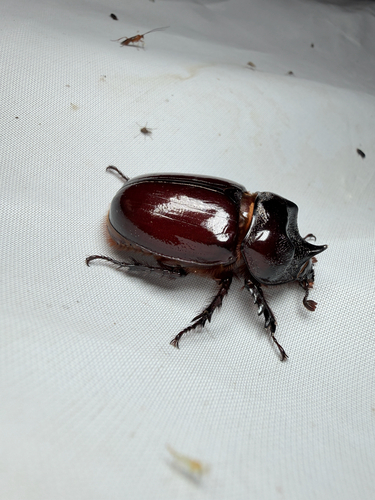
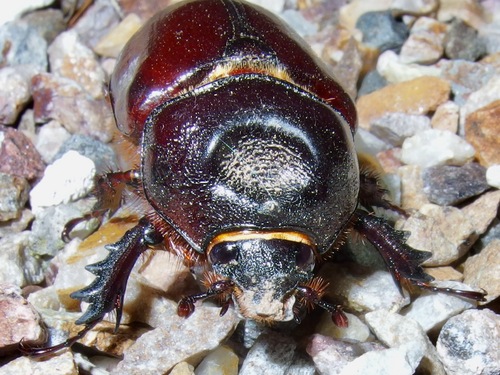
Adults are large, heavy-bodied scarabs with a glossy to slightly dull surface. Males have a forward-projecting horn on the head and a thoracic horn or tubercles; horn size and shape vary with individual and region. Females lack the pronounced horns and are smoother-headed. Elytra (wing covers) are smooth and cover the abdomen fully; legs end in strong tarsal claws adapted for digging and clinging. Size and horn development can vary with nutrition during the larval stage.
- Large, heavy-bodied scarab with smooth elytra and strong legs with digging claws
- Males with a prominent head horn and often a thoracic horn or tubercles; females without large horns
- Glossy black to dark brown coloration; size typically 20-60 mm
Lookalikes
Eastern ox beetle Strategus antaeus
Very similar but mainly found in the eastern United States; separating Strategus species usually requires comparing the shape of the male's thoracic horns and the locality.
Dynastes hercules (Hercules beetle) Dynastes hercules
Hercules beetles are generally larger, often have spotted elytra (in some subspecies), and males have very long horns; geographic range differs.
Eastern Hercules beetle Dynastes tityus
Eastern Hercules beetles usually have greenish-grey to tan elytra with dark spots, and males have a long thoracic horn that curves forward over a head horn; ox beetles are uniformly glossy dark brown to black.
↻Life cycle
Egg
Females lay eggs in soil rich in organic matter or inside decomposing logs and stumps.
Larva (grub)
White C-shaped scarab grubs feed on decaying wood and organic detritus for many months to over a year, growing through several instars.
Pupa
Larvae pupate in earthen cells in the substrate; pupation lasts days to weeks depending on temperature.
Adult
Adults emerge to mate; males use horns in fights. Adults live for weeks to a few months and are active at night.
🍃Diet and predators
Young eat
Decaying wood, rotting roots and rich organic matter
Adults eat
Sap, nectar, fermenting or ripe fruit and occasionally other plant juices
Predators of the young
Soil predators, parasitic wasps and flies, birds and small mammals that dig for grubs
Predators of adults
Birds, bats, small mammals and larger predatory insects; nocturnal activity and heavy armor reduce some predation
🌱Effect on plants and gardens
Larvae feed on decaying wood and organic matter, helping decomposition. Adults may feed on sap and ripe or fallen fruit; in parts of Latin America adults bore into the base of young oil palms and coconut palms and are a recognised plantation pest, but they rarely cause damage in gardens.
📍Where and when to find it
Adults: on or near lights at night, on tree trunks with sap flows, or on ripe/fermenting fruit. Larvae: inside rotting logs, stumps, compost piles and rich soil.
Best time
Warm months; nocturnal—best observed at night or around porch lights. Local seasons vary with latitude.
Observation tips
Check compost piles and decaying logs for grubs by carefully lifting bark or rotted wood. Photograph adults at night using a flashlight; watch for flashing or sudden flight.
✨Fun facts
- Male ox beetles use their horns to flip or push rivals during fights for mates.
- Larvae are important decomposers, breaking down dead wood and returning nutrients to the soil.
?Frequently asked questions
Do ox beetles bite?
Not really. They are not aggressive; if handled roughly they may pinch with their spiny legs or mouthparts, but this is not dangerous.
Do ox beetles sting?
No. Ox beetles do not have stingers or venom.
Why is an ox beetle in my house?
Adults are attracted to lights at night and may wander indoors, especially if fruit or fermenting matter is present nearby.
How do I get rid of ox beetles?
They can be picked up and released outdoors. Reduce attractants by removing fallen or fermenting fruit, secure compost bins, and remove rotting logs near buildings.
Are ox beetles harmful to my garden?
Not usually. Larvae help decompose wood and enrich soil; adults eat sap and fruit but rarely cause major damage.
📷Photos of the ox beetle
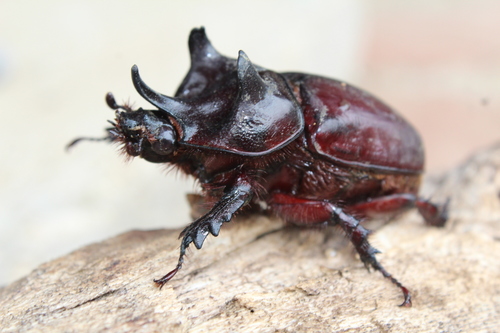
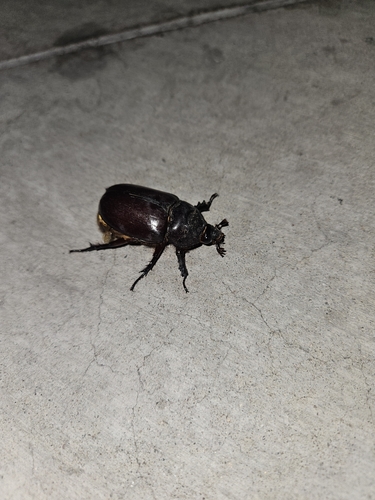
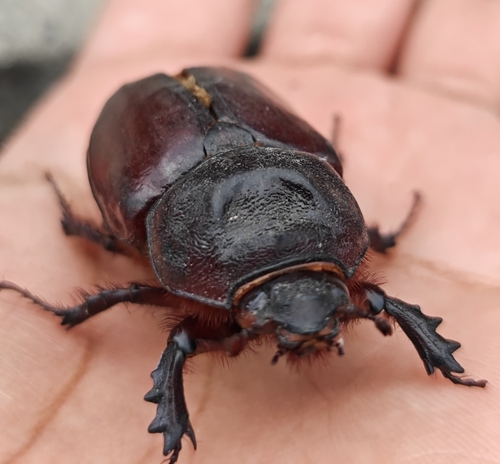
More beetles
This guide was written with AI assistance and fact-checked, last updated 2026-10-10. Identification from photos is never certain: don't handle insects you can't identify, and get medical advice for bites, stings or allergic reactions. More about the ox beetle: iNaturalist, Wikipedia.