
Obscure darkling beetle
Eleodes obscura · Darkling beetles
A common, flightless black darkling beetle of western and central North America that feeds on decaying plant material and can release a defensive odor when handled.
!Is the obscure darkling beetle dangerous?
No. Not venomous and do not bite as a normal defense. They can emit a strong, unpleasant-smelling defensive secretion that can irritate eyes or skin in sensitive individuals; avoid handling and wash skin if contacted.
Pets
Generally harmless to pets. The odor may deter animals; ingestion of many beetles could cause mild stomach upset but serious poisoning is unlikely.
📖Overview
Eleodes obscura is a medium-sized darkling beetle (family Tenebrionidae) often seen walking on soil, under rocks or in leaf litter. It is primarily a detritivore, feeding on decaying plant material, seeds and fungi. Adults are flightless and typically active at night or during cool parts of the day. When threatened they commonly raise their abdomen and may release a strong-smelling defensive secretion that deters predators. They are widespread and not dangerous to people, though they occasionally wander into garages and basements.
🔍How to identify an obscure darkling beetle
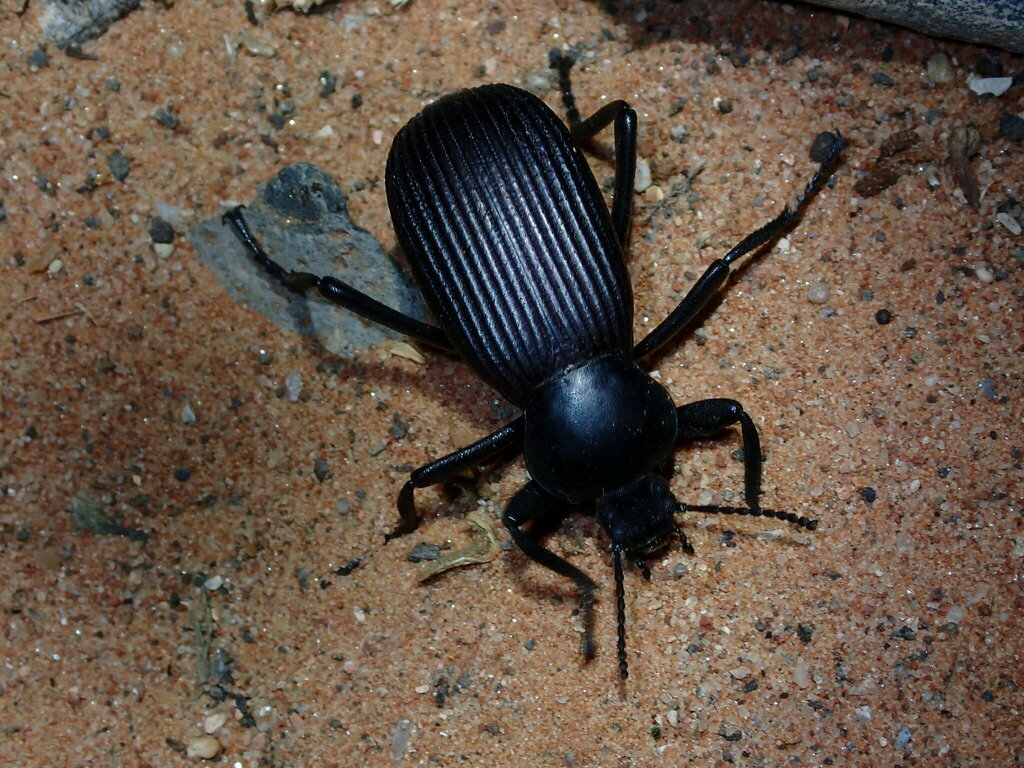
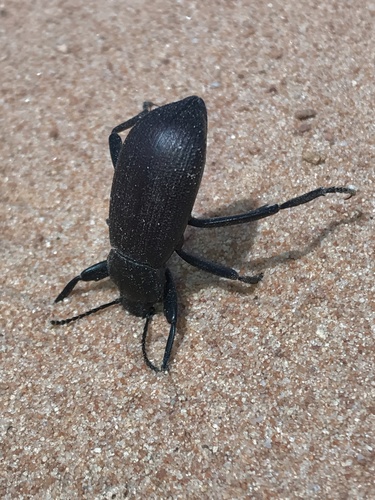
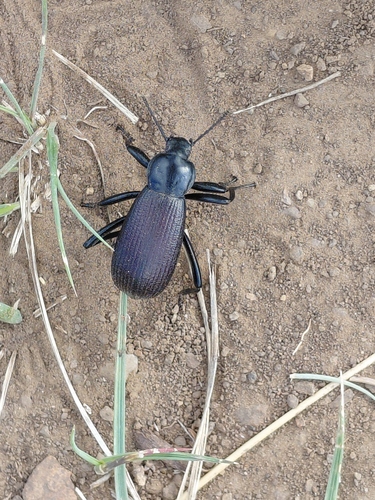
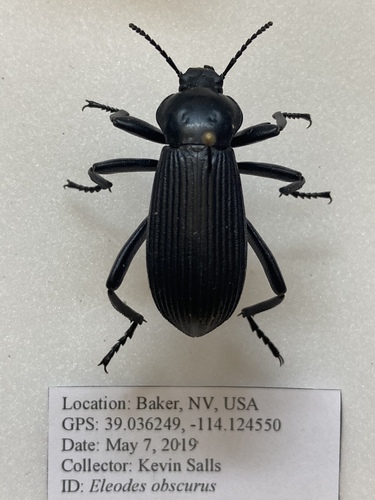
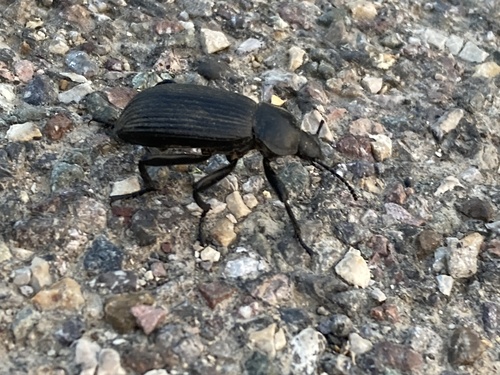
Adults are elongate, robust and somewhat flattened, uniformly dark (black to very dark brown). The pronotum (area just behind the head) is distinct and the elytra (hardened wing covers) are finely ridged or punctate and cover the abdomen completely. Legs are relatively short and adapted for walking; wings are absent or nonfunctional, so adults cannot fly. When disturbed many hold their abdomen up in a characteristic 'head-down, rear-up' posture before producing an odor.
- Uniformly very dark (black to very dark brown), elongate and robust beetle about 20-35 mm long.
- Elytra with fine longitudinal ridging or punctures and pronotum distinct from head; no obvious bright markings.
- Flightless: wings absent or nonfunctional and beetle walks rather than flies.
- When threatened often lifts the rear end and may emit a strong, unpleasant odor.
Lookalikes
Other pinacate / Eleodes darkling beetles Eleodes spp.
Many Eleodes species look similar (black, elongate). Identification to species often requires examination of subtle body shape differences or the beetle's sculpture under magnification; geographic range and size help narrow options.
↻Life cycle
Egg
Laid in soil or hidden detritus; small and white. Development time varies with temperature and moisture.
Larva (mealworm-like)
Soft-bodied, elongated larvae that feed on decaying organic matter in soil; look like traditional mealworms (tenebrionid larvae).
Pupa
Pupation occurs in the soil; the pupal stage lasts days to weeks depending on conditions.
Adult
Wingless or flightless beetle that forages on the surface at night and reproduces to continue the cycle.
🍃Diet and predators
Young eat
Decaying plant material, detritus, fungi and organic matter in soil.
Adults eat
Detritus, dead plant material, fungi and seeds.
Predators of the young
Ground-dwelling predators such as beetles, ants, spiders, small mammals and birds.
Predators of adults
Birds, small mammals, lizards and predatory insects; the defensive scent reduces predation by many animals.
🌱Effect on plants and gardens
Adults feed mainly on decaying plant material, seeds and fungi. Eleodes larvae (false wireworms) live in soil and can occasionally damage germinating seeds and seedlings in dryland crops.
📍Where and when to find it
Search under stones, logs, leaf litter, at the edges of fields, in gardens and around foundations. Larvae are in soil and decaying material.
Best time
Spring to fall; mainly at night or during cool cloudy days.
Observation tips
Photograph from above to show body shape and elytra texture. Use a low-angle light at night to spot moving individuals. Do not handle directly to avoid the defensive odor.
✨Fun facts
- Many Eleodes species are called 'pinacate' or 'stink beetles' because of the defensive odor they produce.
- Their characteristic head-down, rear-up posture is a warning display that often prevents predators from attacking.
- Darkling beetle larvae (mealworms) are widely used as feeder insects and in research, though not all species are the same as the common mealworm (Tenebrio).
?Frequently asked questions
Do obscure darkling beetles bite?
No. They are not known to bite people; their main defense is a smelly chemical release, not biting or stinging.
Do Eleodes obscura stink?
Yes. When handled or threatened they can release a strong-smelling defensive secretion that many people find unpleasant.
Why is this beetle in my house?
They usually wander in by accident from nearby yards and fields, seeking shelter in cool, dark places like garages and basements. They do not infest homes.
Are they dangerous to my family or pets?
No serious risk. The secretion can irritate skin or eyes in sensitive individuals or pets, so avoid handling and wash affected areas.
How do I get rid of them?
Seal entry points, remove debris and food sources, store dry food in sealed containers, reduce outdoor lighting at night, and sweep or vacuum beetles found indoors. For large infestations in stored products follow integrated pest management steps or consult a pest professional.
📷Photos of the obscure darkling beetle
More beetles
This guide was written with AI assistance and fact-checked, last updated 2026-10-10. Identification from photos is never certain: don't handle insects you can't identify, and get medical advice for bites, stings or allergic reactions. More about the obscure darkling beetle: iNaturalist, Wikipedia.