
Eastern Hercules beetle
Dynastes tityus · Rhinoceros beetles
A large North American rhinoceros beetle; males have a prominent horn and adults are harmless to people.
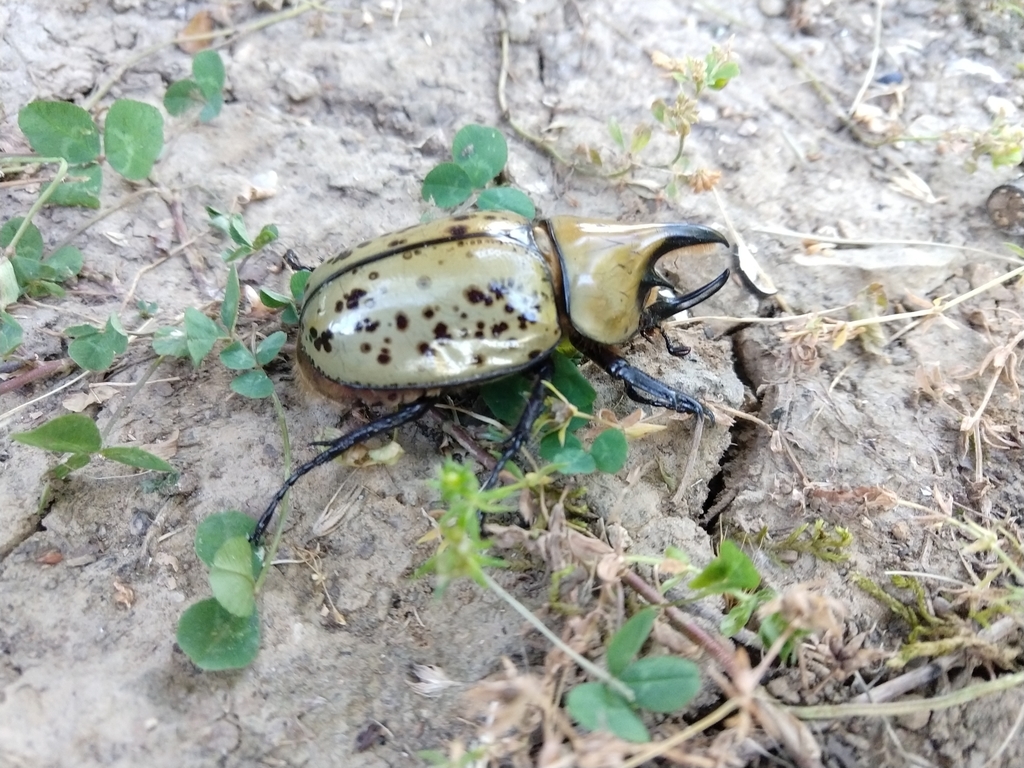
!Is the eastern hercules beetle dangerous?
No. Not venomous and not dangerous. They cannot sting; males may pinch with their horns or grip firmly with their spiny legs if handled, but this are neither toxic nor medically significant. Handle gently or use gloves if you wish to avoid a pinch.
Pets
Generally harmless to pets. Large beetles might startle or be chewed by curious dogs or cats; they are not poisonous but can be crushed, which may cause mess or minor mouth irritation.
📖Overview
Dynastes tityus is a large scarab beetle native to eastern North America. Males are notable for a long horn projecting forward from the pronotum and a shorter, upcurved horn on the head; females lack these horns and are more rounded. Larvae develop in decaying hardwood and can take 1-2 years to mature. Adults are most active in warm months and are often found on fallen fruit, tree sap, or attracted to lights at night.
🔍How to identify a eastern hercules beetle
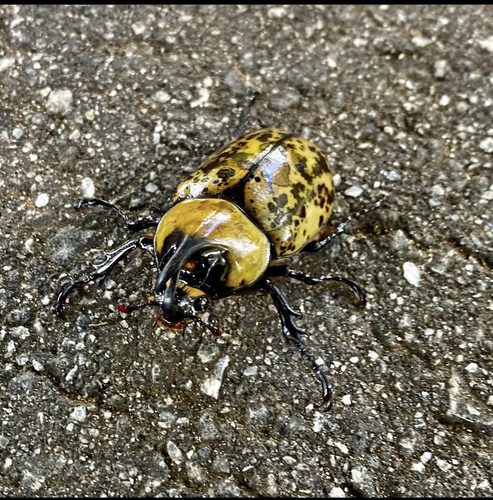
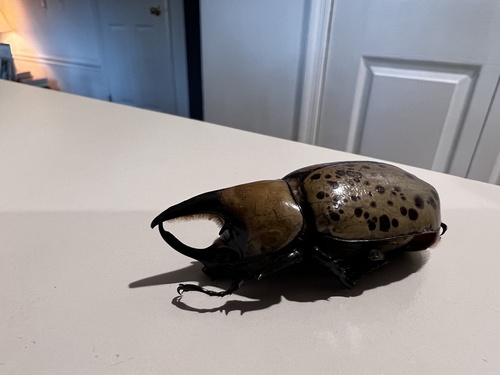
Adults are robust, with smooth, shiny elytra that are typically yellow-green to olive with variable dark blotches or spots; the pattern can darken when the beetle is wet or at high humidity. Males have a long, forward-projecting horn on the pronotum (with a small horn on each side) and a shorter, upcurved horn on the head, used in male-male combat; females lack the long horns and have a shorter, broadly rounded pronotum. Legs are strong with toothed tibiae for digging and clinging to wood.
- Large size (40-60 mm) with heavy, glossy body and strong legs with toothed tibiae.
- Males have a long forward-projecting horn on the pronotum and a shorter upcurved horn on the head; females lack the long horns.
- Elytra yellow-green to olive with variable dark blotches or spots; the pattern can darken with moisture or humidity.
- Head, horns and legs dark brown to black, contrasting with the paler, spotted pronotum and elytra.
Lookalikes
Western Hercules beetle Dynastes grantii
Very similar but found in the southwestern US (Arizona, New Mexico, Utah) and Mexico; males have a longer thoracic horn, and the ranges do not overlap with D. tityus.
Ox beetle Strategus antaeus
Also a large rhinoceros beetle of similar shape; usually uniformly brown to dark and with different horn shape (shorter and broader) and a different geographic range and habitat preferences.
Eastern june beetles (Phyllophaga spp.) Phyllophaga spp.
Smaller and lacking horns; june beetles are more uniformly brown and commonly seen in numbers at lights in summer.
↻Life cycle
Egg
Females lay eggs in decaying wood or soil near rotting hardwood. Eggs hatch in a few weeks.
Larva (grub)
White C-shaped grubs feed on decaying wood and organic matter; the larval stage lasts many months to over a year depending on food quality and climate.
Pupa
Larvae pupate in a soil or wood chamber; pupation lasts weeks to months before the adult emerges.
Adult
Adults emerge in warmer months, mate, and live for weeks to a few months while feeding on sap, fruit, and tree exudates.
🍃Diet and predators
Young eat
Decaying hardwood and decomposing organic matter.
Adults eat
Tree sap, overripe or fallen fruit, and sometimes nectar or fluids from damaged plant tissue.
Predators of the young
Soil-dwelling predators (beetle predators), parasitic wasps and flies, small mammals and birds that dig for grubs.
Predators of adults
Birds, small mammals, amphibians, predatory insects, and nocturnal mammals; adults may also fall prey to bats or owls when active at night.
🌱Effect on plants and gardens
Larvae feed on decaying hardwood and contribute to decomposition; adults feed on sap and overripe fruit but do not cause significant damage to living trees or crops.
📍Where and when to find it
Look for adults at night on tree trunks with sap flows, on fallen fruit, near porch lights, and on low branches; search for larvae in rotting logs and stumps.
Best time
Late spring through summer evenings and warm nights are best for spotting adults.
Observation tips
Use a flashlight at dusk to find active adults; photograph from above to show elytral spot pattern and from the side to show the male horn for identification.
✨Fun facts
- The dark spots on the elytra can change intensity with humidity: beetles often appear darker when wet.
- Males fight other males using their horns to win access to females, pushing and flipping rivals.
- Because larvae feed on dead wood, these beetles play an important role in nutrient recycling in forests.
?Frequently asked questions
Are Eastern Hercules beetles dangerous?
No. They are non-venomous and do not pose a medical threat. They may give a mild pinch if handled roughly.
Do Eastern Hercules beetles bite?
They do not bite in a harmful way and are not poisonous; males can give a pinch with their horns and the spiny legs grip firmly.
Why is an Eastern Hercules beetle in my house?
Adults are attracted to lights at night and to overripe fruit; they sometimes wander indoors from nearby woods or gardens.
How can I get rid of an Eastern Hercules beetle?
They can be picked up gently (use gloves if concerned) and released outside near trees or decaying wood. They are beneficial decomposers and do not require eradication.
Where do Eastern Hercules beetles live?
Deciduous forests and woodlands across the eastern United States, especially where there is abundant rotting hardwood and leaf litter for larval development.
📷Photos of the eastern hercules beetle
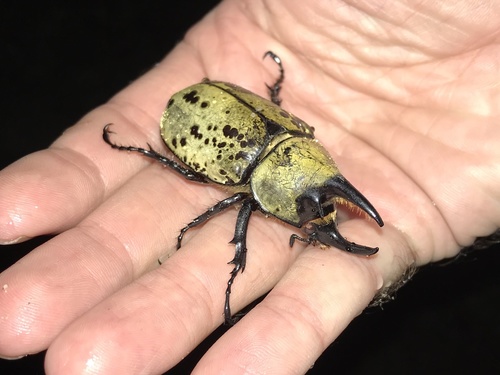
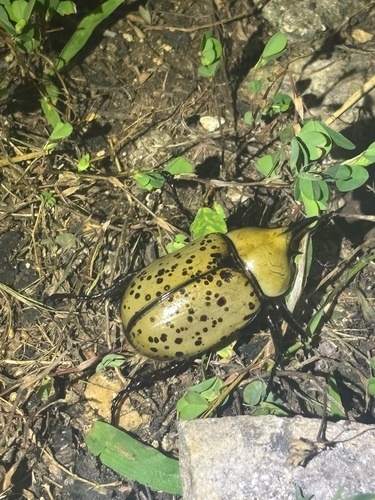
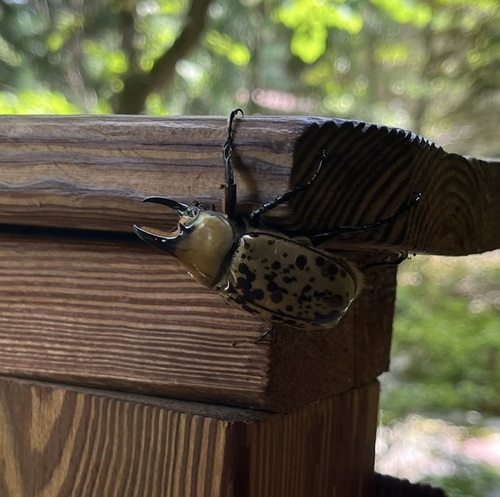
More beetles
This guide was written with AI assistance and fact-checked, last updated 2026-10-09. Identification from photos is never certain: don't handle insects you can't identify, and get medical advice for bites, stings or allergic reactions.