
Six-spotted tiger beetle
Cicindela sexguttata · Tiger beetles
A small, fast, metallic green predatory beetle with six white spots on the elytra common along shaded trails and woodland edges in eastern North America.
!Is the six-spotted tiger beetle dangerous?
No. Not venomous or dangerous. Adults can deliver a small bite with their mandibles if handled roughly; the bite may pinch and cause brief pain but no lasting harm. Wash the area with soap and water if bitten and apply basic first aid for minor wounds.
Pets
Harmless to pets. Beetles may be eaten by curious pets without causing known poisoning, though the hard exoskeleton could be a choking risk for very small animals.
📖Overview
The six-spotted tiger beetle is a slender, fast-running predatory beetle that hunts small insects on the ground during warm months. Adults are often seen on shaded woodland paths, gravel trails and at the edges of open woods. They are diurnal and very alert: when approached they run quickly and often fly a short distance before landing and resuming hunting.
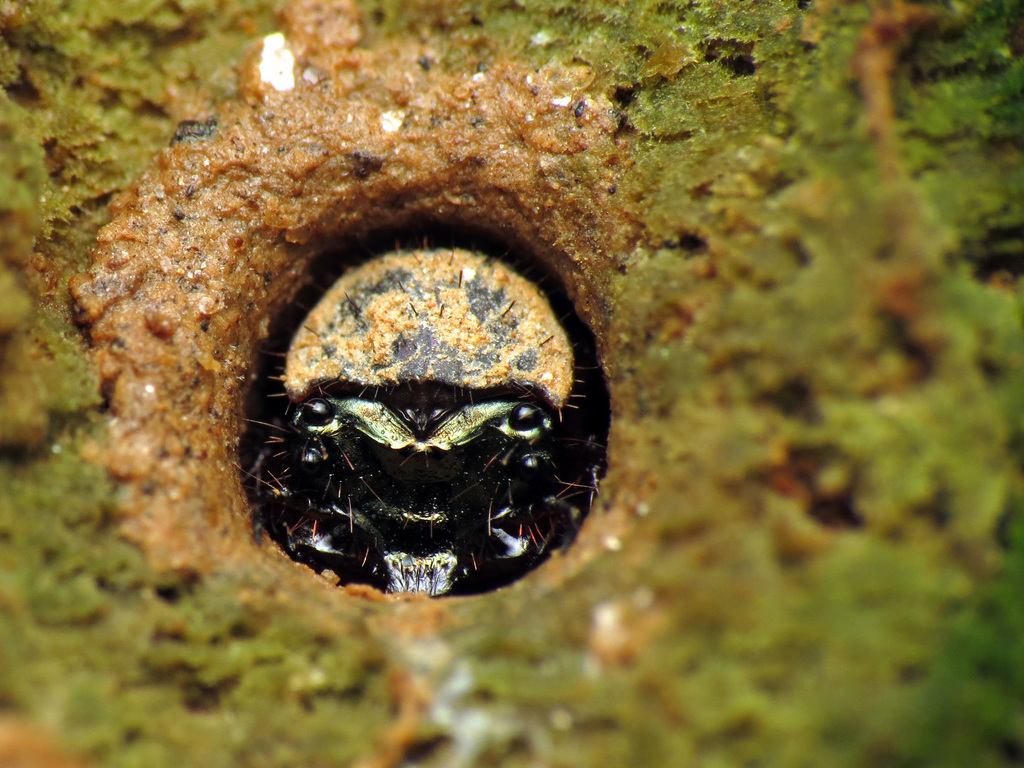
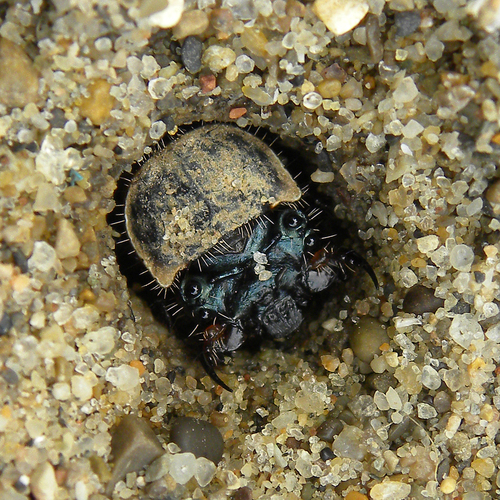
Larvae live in vertical burrows in bare soil or compacted paths and ambush passing prey from the burrow entrance. The species is widespread and common where suitable habitat exists and is not considered a pest; it is a beneficial predator of small arthropods.
🔍How to identify a six-spotted tiger beetle
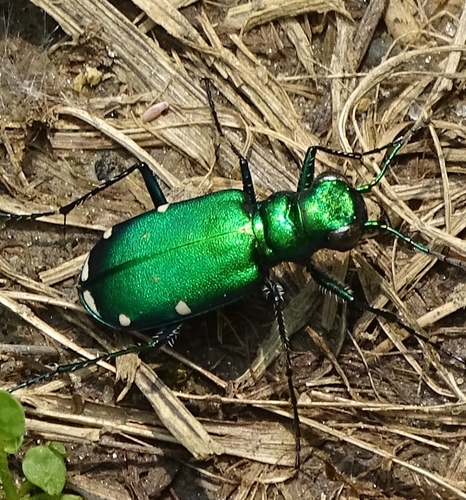
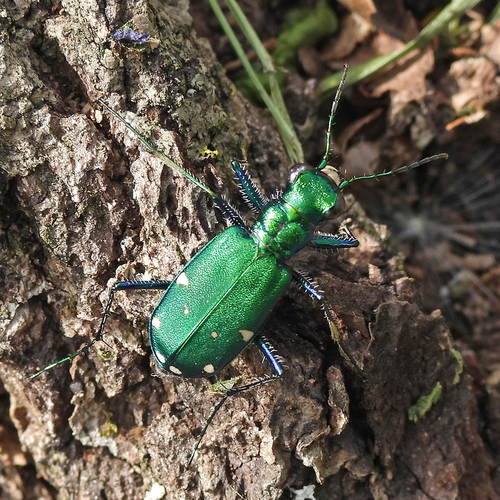
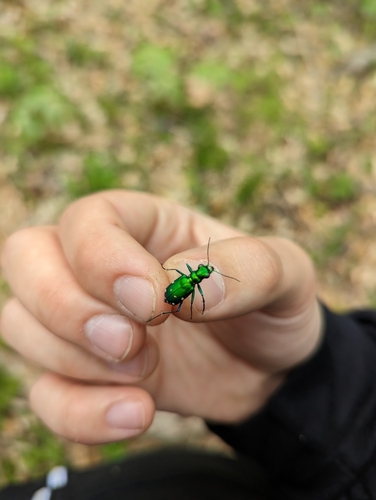
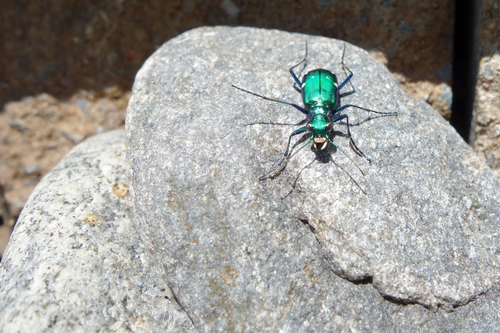
Adults are metallic green to blue-green, usually with up to three small white or cream spots on each elytron (six spots total), although the number varies and some individuals have fewer or none. The head has large, bulging eyes and long, sickle-shaped mandibles used to seize prey. The legs are long and slender, adapted for rapid running. Size is small—about 10-14 mm in length. Females are similar to males; sex differences are subtle and not obvious in the field.
- Brilliant metallic green or blue-green body, usually with up to three small white spots on each elytron (number varies; some have fewer or none).
- Slim body, large bulging eyes, long legs and prominent, curved mandibles for grasping prey.
- Active on bare or compacted soil along shaded woodland paths and trails during daylight.
- Small size, about 10-14 mm in length; rapid running paired with short, startled flights.
Lookalikes
Bronzed tiger beetle Cicindela repanda
Often bronzy or brownish rather than bright metallic green; markings and habitat can overlap but bronzed tiger beetle usually has different elytral patterns and a broader, more open-habitat preference.
Splendid tiger beetle Cicindela splendida
Has a metallic green head and pronotum but coppery-red elytra, usually with a white margin; found on open clay banks and roadcuts rather than shaded woodland trails.
↻Life cycle
Egg
Laid in soil; eggs hatch into larvae after a variable period depending on temperature and conditions.
Larva
Grublike, white larvae live in vertical burrows and ambush passing prey from the burrow entrance; larvae molt through several instars while enlarging the burrow.
Pupa
Pupation occurs in an enlarged chamber near the bottom of the larval burrow; pupal stage lasts days to weeks before the adult emerges.
Adult
Active, fast-running predators that hunt on the soil surface; adults mate and lay eggs to continue the cycle.
🍃Diet and predators
Young eat
Larvae feed on small arthropods that pass the burrow entrance, such as ants, small beetles and other insects.
Adults eat
Active predators that capture small flying or running insects and other arthropods on the ground.
Predators of the young
Parasitic wasps, ants, ground predators and small vertebrates that can excavate burrows.
Predators of adults
Birds, small mammals, larger predatory insects, and spiders.
🌱Effect on plants and gardens
Does not feed on live plants; adults and larvae prey on small arthropods and therefore are beneficial in controlling insect populations.
📍Where and when to find it
Look on shaded woodland paths, gravel trails, riverbanks and bare soil patches for adults; look for small vertical burrows in compacted soil for larvae.
Best time
Spring to early summer, during daylight (late morning to afternoon on warm days).
Observation tips
Approach slowly and crouch low to avoid startling them. Use a telephoto or zoom lens; photographs are easiest when the beetle pauses after a short flight.
✨Fun facts
- Tiger beetles are among the fastest-running insects relative to body size; they can be hard to follow with the eye.
- The 'six-spotted' name comes from three pale spots on each elytron; spot visibility can vary with age and wear.
- Larvae are sit-and-wait predators that defend a burrow and snatch passing prey with powerful jaws.
?Frequently asked questions
Are six-spotted tiger beetles dangerous?
No. They are not venomous or poisonous. They can bite if handled, which may cause a brief pinch, but they are not dangerous to humans.
Do six-spotted tiger beetles bite?
They can bite with their mandibles if grabbed, producing a painful pinch for a short time. Avoid handling them to prevent this.
Why is this beetle in my yard or on the trail?
They hunt small insects on bare or compacted soil, so shaded trails, garden paths and woodland edges provide good hunting grounds and places for larvae to dig burrows.
How can I get rid of them?
There is usually no need to remove them; they are beneficial predators. If necessary, reduce bare, compacted soil patches and restore vegetation to make habitat less attractive. Avoid pesticides which kill beneficial insects.
Where do six-spotted tiger beetle larvae live?
Larvae live in vertical burrows in bare soil or hard-packed paths where they wait at the entrance to ambush prey.
When can I see them?
Adults are most commonly seen in spring and early summer during warm, sunny periods of the day, often on trails and path edges.
📷Photos of the six-spotted tiger beetle
More beetles

This guide was written with AI assistance and fact-checked, last updated 2026-10-09. Identification from photos is never certain: don't handle insects you can't identify, and get medical advice for bites, stings or allergic reactions.