
Red milkweed beetle
Tetraopes tetrophthalmus · Longhorn beetles
A bright red-and-black longhorn beetle that lives on milkweed, sequesters plant toxins, and is harmless to people.
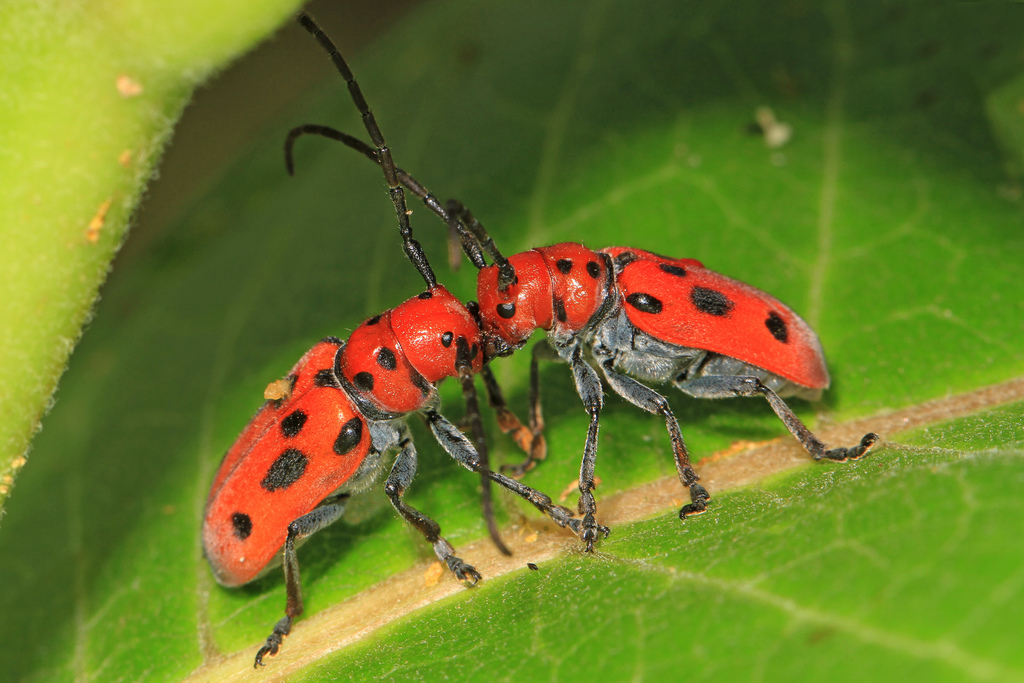
!Is the red milkweed beetle dangerous?
No. Not dangerous or venomous. Adults do not sting; when handled they often squeak (stridulate) and may give a weak pinch with their jaws, which is not medically significant. Wash hands after handling, as they may carry small amounts of bitter milkweed compounds.
Pets
Generally not dangerous to pets. Small pets that eat large numbers of these beetles could experience stomach upset because of the cardenolides they carry; avoid allowing pets to eat them.
📖Overview
Tetraopes tetrophthalmus is a common North American longhorn beetle closely associated with milkweed plants (Asclepias spp.). Adults feed on leaves, stems and sometimes flowers, while larvae develop on milkweed roots. Their red-and-black coloration warns predators that they may retain bitter cardenolide compounds from their host plants. They are not dangerous to humans and are most noticeable on milkweed in summer.
🔍How to identify a red milkweed beetle
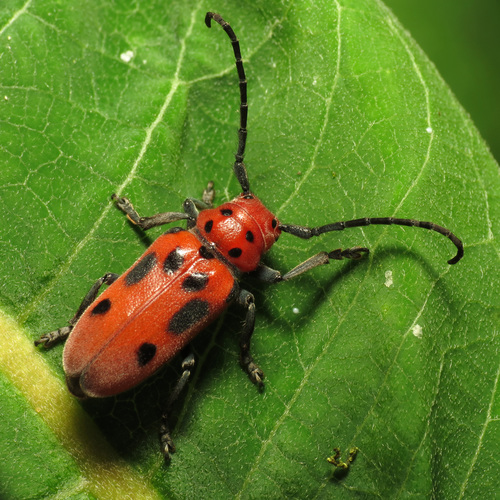
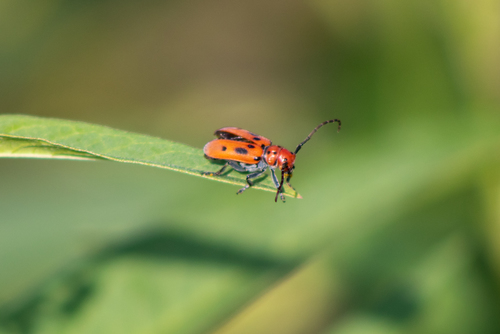
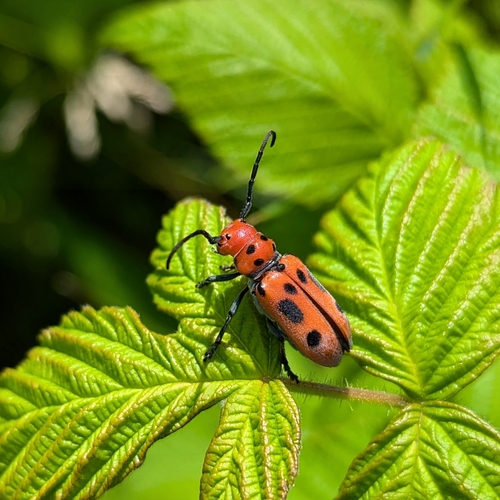
Adults are stout, rounded longhorn beetles about 9-16 mm long with red elytra (wing covers) bearing one or more large black spots. The antennae are relatively short for a longhorn beetle and arise within the margins of the eyes; the eyes are deeply notched so each looks divided, giving the species its name tetrophthalmus ("four-eyed"). Legs and head are black to dark red. Males are slightly smaller and may have proportionally longer antennae than females.
- Bright red elytra with large black spots over a compact, rounded body
- Eyes deeply notched so antennae appear to arise between divided eye lobes ("four-eyed" look)
- Shortish antennae for a longhorn beetle and black legs/head
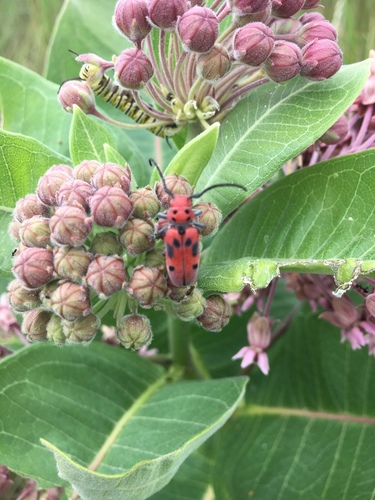
- Almost always found on milkweed plants in summer
Lookalikes
Red-femured milkweed borer Tetraopes femoratus
Similar red-and-black pattern but differs in spot arrangement and leg coloration; range and host milkweed preferences can help separate them.
Large milkweed bug Oncopeltus fasciatus
Milkweed bugs are true bugs (Hemiptera) with a more elongated body and visible beak; they lack the beetle's hard elytra and divided eyes.
↻Life cycle
Egg
Females lay eggs at the base of milkweed plants or on nearby soil in late summer. Eggs hatch in a few days to weeks depending on temperature.
Larva (grub)
Larvae burrow into the soil and feed on milkweed roots for most of their development; this stage can last several weeks to months.
Pupa
Larvae pupate in the soil near the roots of milkweed. Pupation lasts long enough for adults to emerge in late spring to summer.
Adult
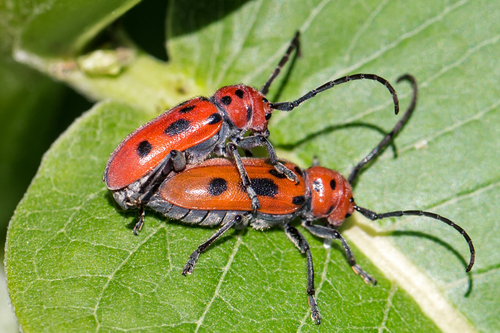
Adults emerge and feed on milkweed foliage and flowers, mate, and the cycle repeats annually.
🍃Diet and predators
Young eat
Roots of milkweed (Asclepias species)
Adults eat
Leaves, stems and flowers of milkweed plants; sometimes pollen
Predators of the young
Soil-dwelling predators and parasitoids; small mammals and beetle predators may attack larvae in some cases
Predators of adults
Birds and predatory insects are potential predators, but many birds avoid them because of retained milkweed toxins; mantids and some spiders may attack them despite the toxins
🌱Effect on plants and gardens
Adults feed on milkweed leaves, stems and flowers; larvae feed on milkweed roots. Heavy local feeding can damage individual plants but they rarely eliminate milkweed populations.
📍Where and when to find it
On milkweed leaves, stems and flowers (adults); in soil near milkweed roots (eggs, larvae, pupae).
Best time
Late spring to late summer during warm, sunny daytime hours.
Observation tips
Look on common milkweed and other Asclepias species at eye level; photograph the divided eyes and spot pattern for a confident ID. Wear gloves if you plan to handle them.
✨Fun facts
- The species name tetrophthalmus means "four-eyed" because the beetle's eye is split by the antennal base.
- By feeding on milkweed, these beetles accumulate toxic cardenolides that make them distasteful to many predators.
- They are one of several insect species that specialize on milkweed, the same plant group important to monarch butterflies.
?Frequently asked questions
Are red milkweed beetles dangerous?
No, they are not dangerous or venomous to people. They may squeak when picked up; wash your hands after handling them.
Do red milkweed beetles bite or sting?
They do not sting. A pinch from their jaws is rare and not medically significant.
Why are they on my milkweed plants?
They feed and reproduce on milkweed. Adults eat leaves and flowers, while larvae develop on the plant's roots.
Will they kill my milkweed or garden plants?
Ordinarily they cause only localized damage. Heavy infestations can weaken individual plants, but they rarely destroy entire milkweed beds.
How do I get rid of red milkweed beetles?
Handpick adults and destroy eggs or remove infested plants and roots. Reducing nearby milkweed will lower numbers, but consider the ecological role of milkweed before removing it.
Do pesticides work against them?
Some insecticides labeled for beetle control will kill them, but chemical control can harm beneficial insects. Nonchemical methods are preferred, especially on milkweed used by pollinators and monarchs.
📷Photos of the red milkweed beetle
More beetles
This guide was written with AI assistance and fact-checked, last updated 2026-10-10. Identification from photos is never certain: don't handle insects you can't identify, and get medical advice for bites, stings or allergic reactions. More about the red milkweed beetle: iNaturalist, Wikipedia.