
Bess beetle
Odontotaenius disjunctus · Bess beetles and passalids
A large, glossy black or dark-brown wood‑living beetle of eastern North America known for living in decaying logs and caring for its young.
!Is the bess beetle dangerous?
No. Not venomous and not known to transmit disease. They do not normally bite, though a large adult may give a pinch if handled roughly. Wash hands after handling as with any wild insect.
Pets
Harmless to pets. Unlikely to be eaten by dogs or cats because of tough body; if a pet swallows one, expect minor digestive upset at most. Consult a veterinarian for specific concerns.
📖Overview
Odontotaenius disjunctus is a member of the bess beetle family (Passalidae). Adults live in and feed on moist, decaying hardwood logs and form small family groups with parental care — adults help feed and defend larvae. They are relatively slow-moving, produce audible squeaks when disturbed, and are most often encountered in forested areas where fallen logs remain on the ground. They are not agricultural pests and play an important role breaking down dead wood.
🔍How to identify a bess beetle
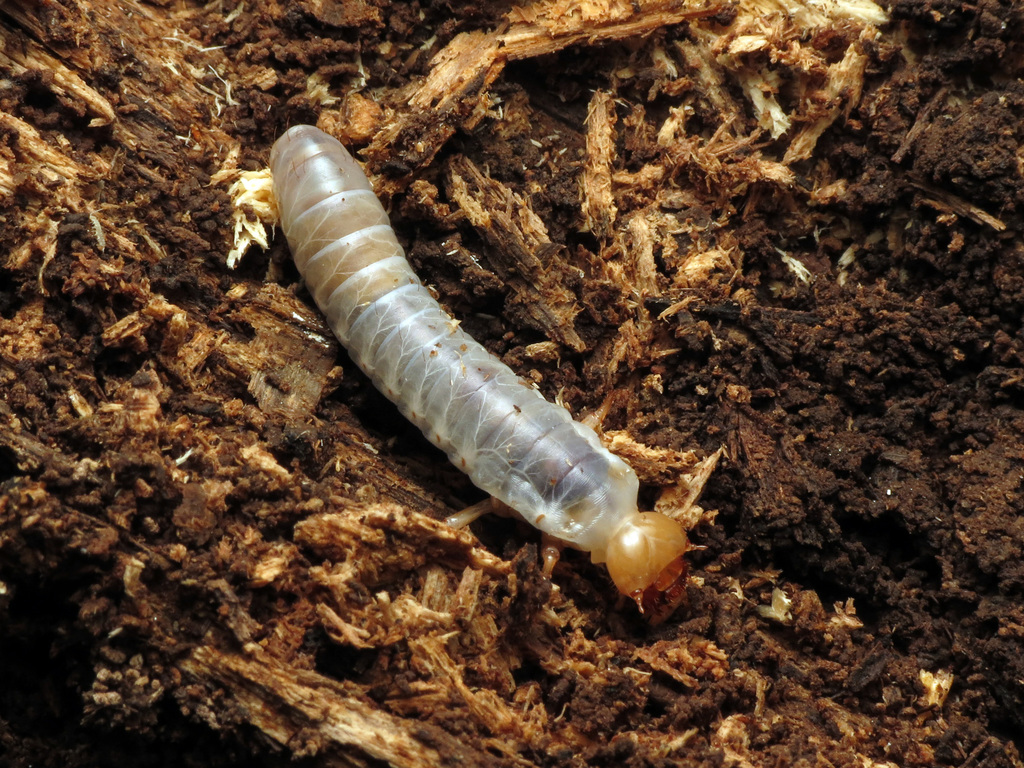
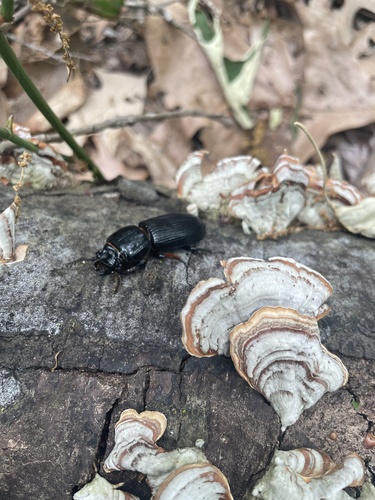
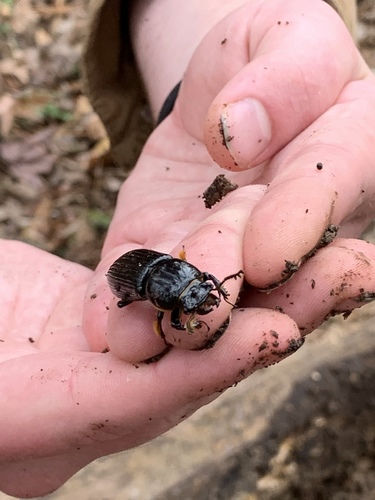
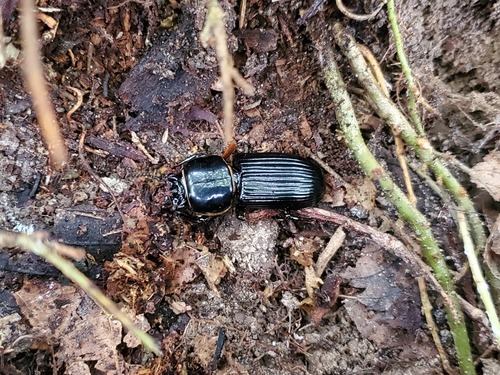
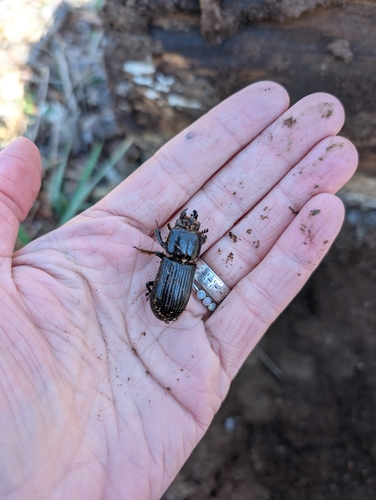
Adults are large, elongated, somewhat flattened and very shiny black. They have a short, forward-curved horn on the head and deeply grooved elytra (wing covers). The legs are short and adapted for life in tunnels in rotting wood. Larvae are elongated, creamy-white grubs with a brown head; the third pair of legs is greatly reduced.
- Shiny black, elongate body 30-40 mm long with a short, forward-curved horn on the head.
- Deeply grooved elytra (parallel longitudinal grooves) and a smooth, glossy surface like polished leather.
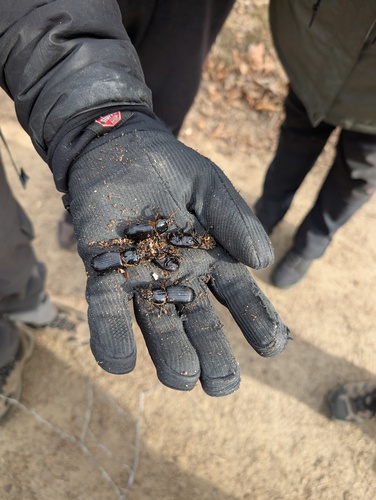
- Found inside or just outside moist, decaying hardwood logs; often seen in family groups or with sawdust-like frass at log entrances.
Lookalikes
Other bess beetles Other Passalidae species
Most passalids are similar in shape and habits; Odontotaenius disjunctus is the widespread eastern species and tends to be larger and more uniformly dark than some regional relatives.
↻Life cycle
Egg
Females lay eggs in galleries within decaying wood; eggs are laid in protected chambers.
Larva (grub)
Larvae are cared for by adults and fed predigested wood paste. They are elongated, whitish grubs that remain in the log while developing.
Pupa
Pupation takes place within a pupal cell inside the wood; the pupa develops into the adult form before emerging into the gallery.
Adult
Adults maintain galleries, feed, care for young, and can live many months; family groups commonly include parents and offspring.
🍃Diet and predators
Young eat
Predigested wood particles and wood paste provided by adults; primarily decaying hardwood.
Adults eat
Decaying hardwood (softened wood and associated fungi), feeding on wood particles and fungal material within rotten logs.
Predators of the young
Wood-rotting beetles, ants, parasitic wasps and woodpeckers that can access logs.
Predators of adults
Small mammals, birds (woodpeckers), amphibians, and predatory insects when beetles are exposed outside their logs.
🌱Effect on plants and gardens
Feeds on decaying hardwood (dead wood) and helps break down lignocellulose, returning nutrients to the forest floor. They do not attack healthy living trees or crops.
📍Where and when to find it
Look under loose bark and inside moist, decaying hardwood logs and stumps. Adults and larvae are best seen by carefully opening rotten logs (do so minimally to avoid destroying habitat).
Best time
Year-round inside logs; best to observe adults moving or exiting logs on warm, humid evenings from spring through fall.
Observation tips
Search shaded forest floors with lots of fallen hardwood. Use a headlamp for evening observations and photograph beetles at close range from the side to show the horn and grooved elytra.
✨Fun facts
- Bess beetles produce audible squeaks by rubbing body parts together (stridulation) when disturbed.
- They show subsocial behavior: parents feed and groom larvae, uncommon among beetles.
- Families sometimes tunnel extensive galleries in a single log and may reuse the same log for multiple generations.
?Frequently asked questions
Do bess beetles bite?
They are not aggressive and do not normally bite people. A large individual might give a defensive pinch if handled roughly, but bites are rare and not harmful.
Are bess beetles harmful to houses or furniture?
No. They eat already decaying hardwood and do not infest sound structural timber. They are typically found only in rotten logs and stumps.
Why is a bess beetle in my house or yard?
If you have stacked, decaying firewood, old logs, or a fallen tree near your house, bess beetles may be living there. They occasionally wander while searching for new wood.
How do I get rid of bess beetles?
Remove or properly store decaying wood and logs near buildings. For a single beetle found indoors, gently return it to a moist log outside. Pesticides are unnecessary and ineffective for controlling beetles living inside logs.
Do bess beetles make noise?
Yes; they often produce a chirping or squeaking sound (stridulation) when disturbed or interacting with other beetles.
📷Photos of the bess beetle
More beetles
This guide was written with AI assistance and fact-checked, last updated 2026-10-10. Identification from photos is never certain: don't handle insects you can't identify, and get medical advice for bites, stings or allergic reactions. More about the bess beetle: iNaturalist, Wikipedia.